AI Workflow Automation in 2026: Why Team Processes Still Stall
AI workflow automation fails when agents lack context, permissions, handoffs, and review loops. Learn how teams connect tools, knowledge, and reusable workflows.
AI Workflow Automation in 2026: Why Team Processes Still Stall
We are living in an era of profound contradiction: digital tools are proliferating at an unprecedented rate, yet human energy is being drained by fragmented collaboration. In 2026, the operational trajectory of every enterprise is essentially woven together by countless workflows. However, in my deep conversations with hundreds of team leaders, I’ve found that the vast majority of these workflows are in a state of "sub-health." They often struggle to survive on broken memories, scattered chat logs across various instant messaging apps, and an over-reliance on the self-discipline of team members.
This state of affairs brings about a lingering sense of execution anxiety. We invest significant time in documenting processes and purchasing expensive SaaS software, yet when the moment comes for actual implementation, everything seems to revert to square one: manual reminders, repeated follow-ups, and context scattered across tools.
AI workflow automation stalls when teams only automate notifications. Real automation needs five connected layers: shared context, tool access, reusable process logic, human review, and persistent workspace memory. This is why we built Kollab: a shared AI agent workspace where Connectors give agents access to team tools, Skills make repeatable processes reusable, and Bots bring those workflows into Slack, Telegram, and other team conversations.
The 5 missing layers of AI workflow automation
Shared context: Agents need access to the same project background, files, decisions, and knowledge your team uses.
Tool access: Automation cannot stop at chat. Agents need permissioned connections to source systems, work apps, and delivery surfaces.
Reusable process logic: Teams need saved workflows, not one-off prompts that disappear after each session.
Human review: The right person still needs to approve, correct, or redirect high-stakes work.
Persistent memory: Recurring workflows need history, preferences, and prior decisions, not a cold start every time.
1. The Truth About Automation: Documentation Does Not Equal Automation
Many teams harbor a serious misconception that simply writing an SOP (Standard Operating Procedure) into Notion or a Wiki constitutes process building. However, through extensive practice at Kollab, we have discovered a massive chasm between "documenting a process" and "executing a process."
Documentation: In essence, this is a post-mortem review or a static guide. It tells people what they "theoretically" should do. However, it relies heavily on the executor's memory and initiative; during busy peak periods, these documents are often relegated to the back shelf.
Execution: This is an instantaneous response based on preset logic. This means the process is no longer dead text lying in a cloud document; instead, through Kollab, it becomes a self-driven, automatically circulating business engine.
Through Kollab, you can transform those dormant business logics in manuals directly into Kollab playbooks with real-time execution capabilities, ensuring that every critical task reaches 100% completion without human intervention.
2. Kollab: An AI-Powered Growth Engine for Modern Teams
To achieve a true business closed-loop, Kollab has redefined the form of workflows. It is not just a support tool, but an intelligent workspace that allows AI agents to deeply participate and contribute value.
Shared Workspace
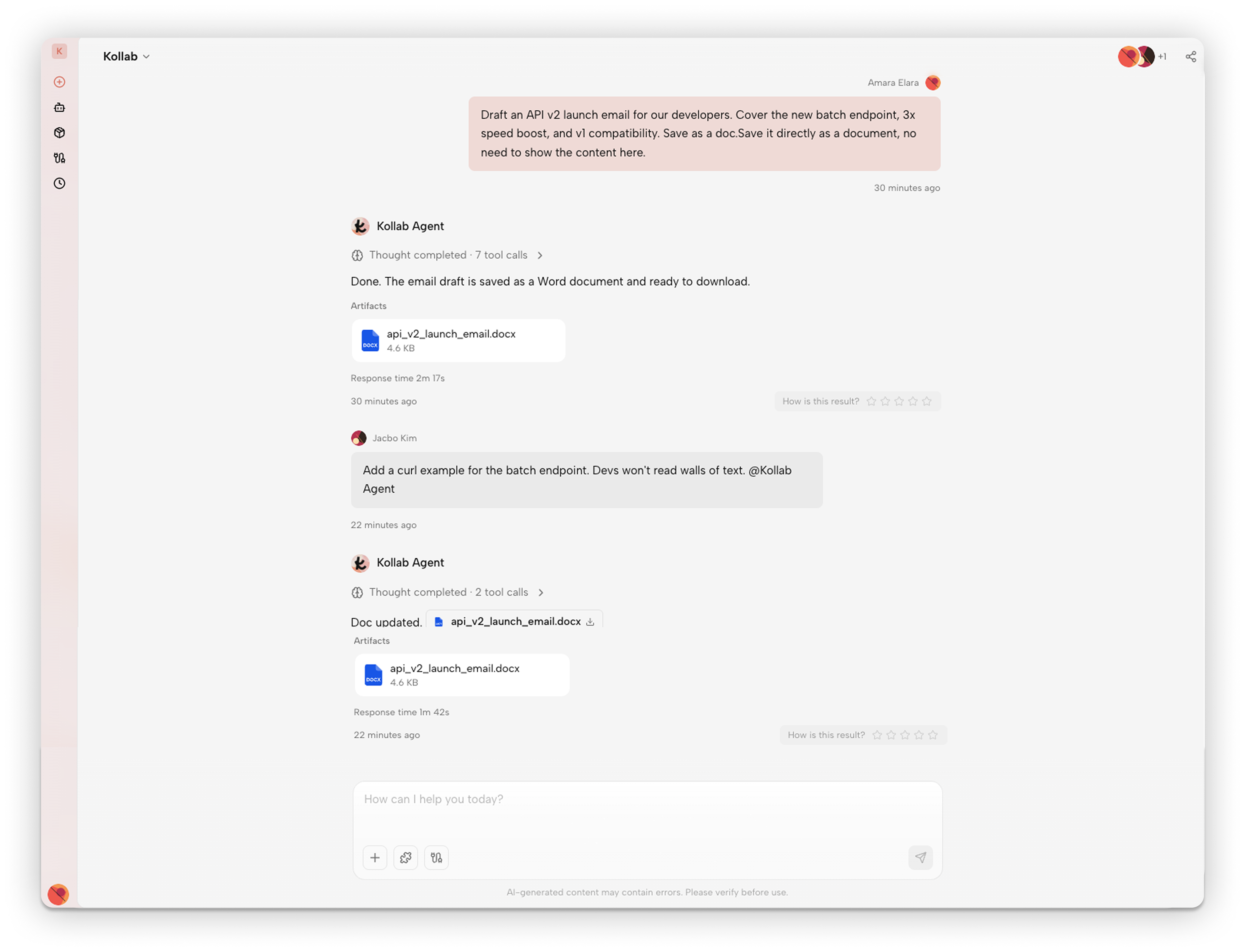
Within the Project and Task dimensions of Kollab, an AI agent is no longer just a simple background script, but a "digital teammate" fighting alongside you. The core breakthrough of Kollab lies in its support for multiple members to enter the same Task simultaneously to engage in real-time dialogue and collaboration with the AI agent. You can see firsthand how the agent calls upon Skills to handle business, and you can interrupt, correct, or provide additional information at any time during the conversation. This deep interaction model turns the Kollab space into a true war room, where even complex segments involving external partners can reach consensus and achieve delivery within a shared session.
Embedded Bot Interaction
We believe tools should adapt to human habits, not the other way around. Kollab can connect extensively with various mainstream communication platforms, including popular tools like Slack and Telegram. You simply issue commands within your existing communication channels, and Kollab will silently call upon your preset Skills in the background to handle complex cross-platform business. This means your team never has to leave their familiar chat tools to drive Kollab through heavy lifting. For example, if you send "help me organize today's user feedback" in Slack or Telegram, Kollab will automatically complete the entire process in the background.
The Skill and Connector Capability Matrix
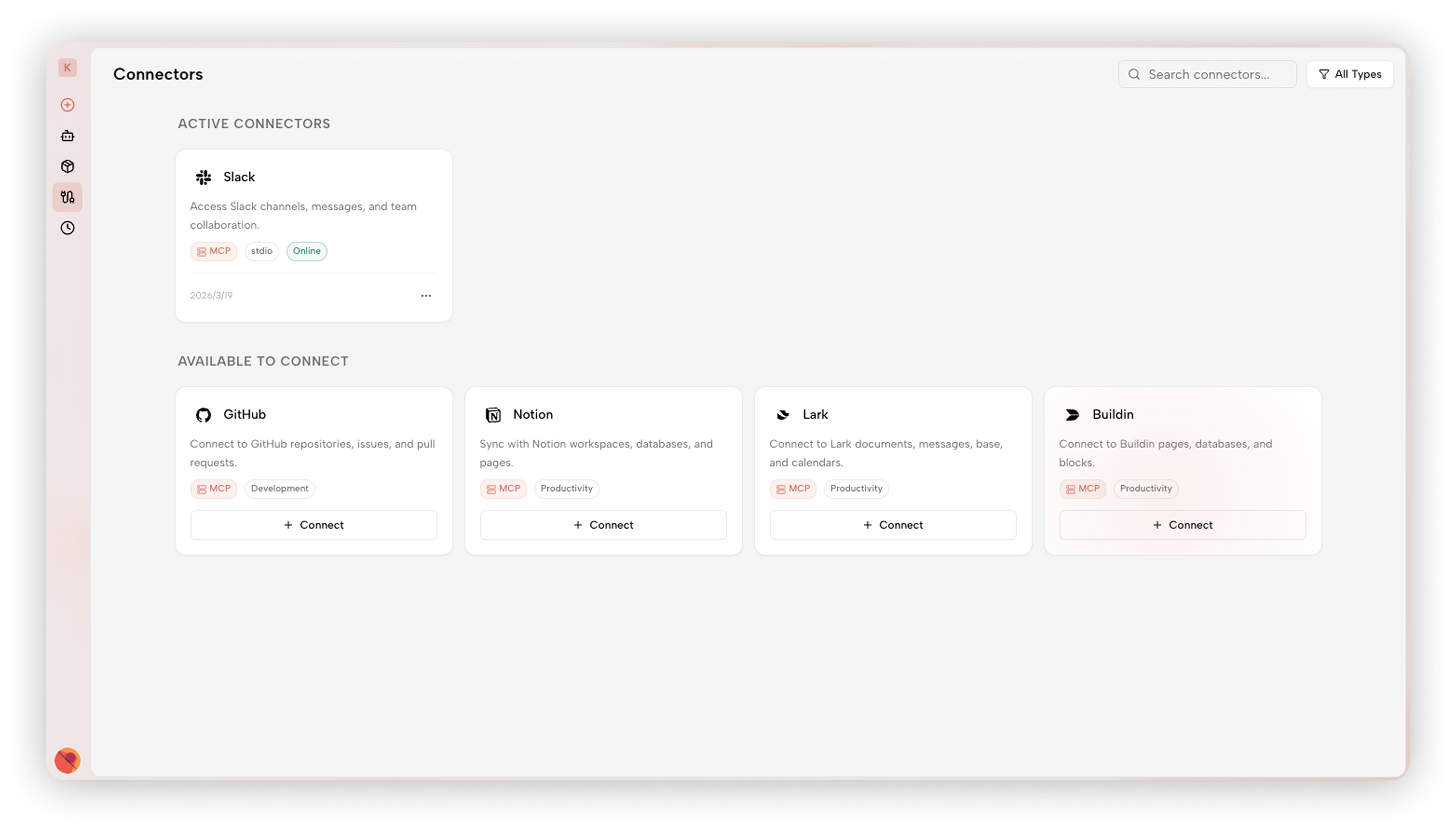
- Skill: You can encapsulate your team’s most core and private business logic into Skills within Kollab. Whether it’s automated financial compliance auditing or multi-channel content distribution, once defined in Kollab, it is available for the entire team on demand.
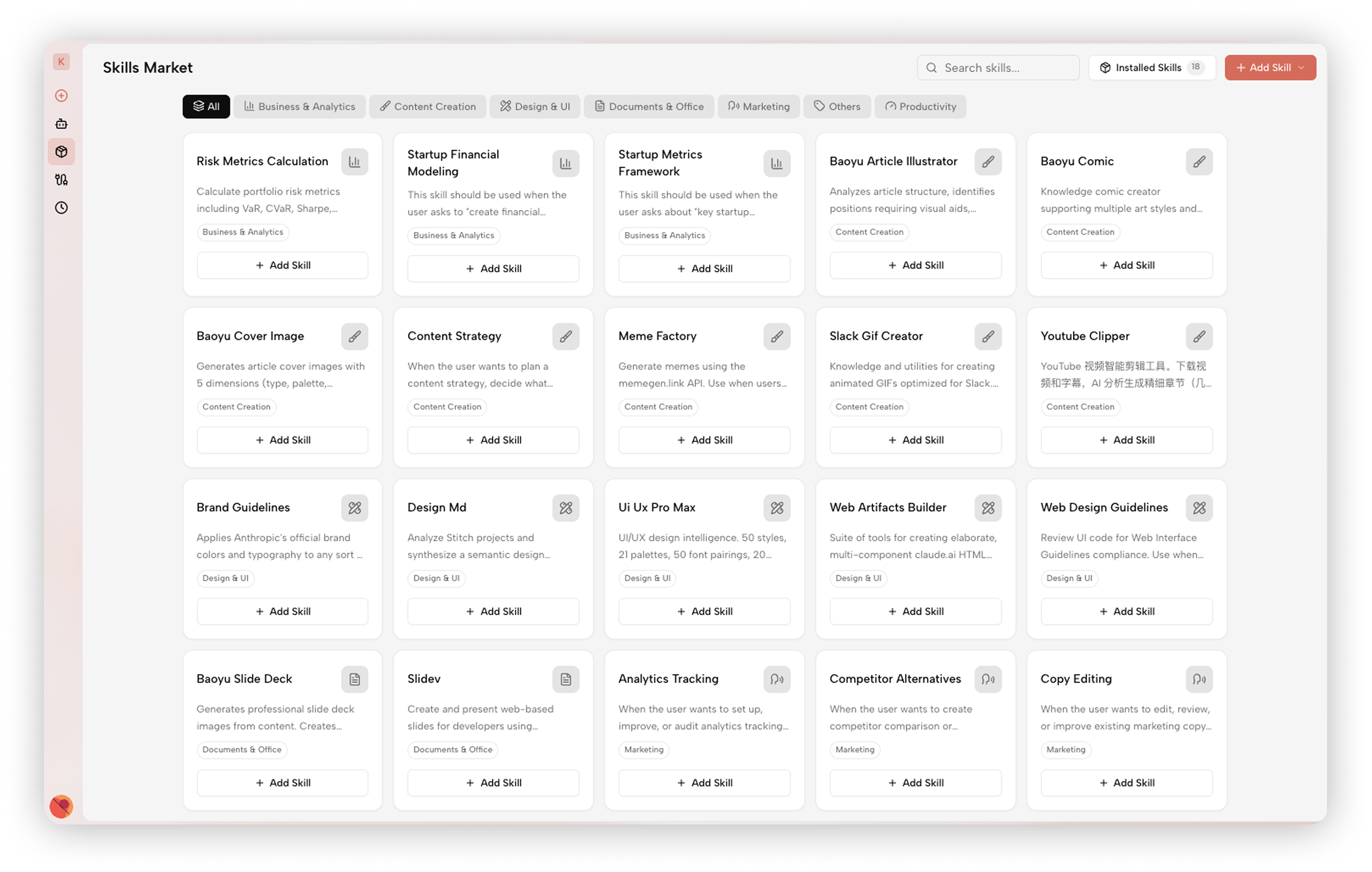
- Connector: Kollab can quickly hook into your existing CRM, databases, and various office software through connectors. This allows the AI within Kollab to read real-time data and take action, rather than making inferences based on outdated information.
Intelligent Memory and Scheduled Tasks
Memory: While most AI today possesses basic memory functions, within Kollab, this memory is structured and shared across the team. Kollab empowers AI agents with long-term memory capabilities, enabling Kollab to maintain cognitive continuity in complex projects lasting months and remember specific business preferences.
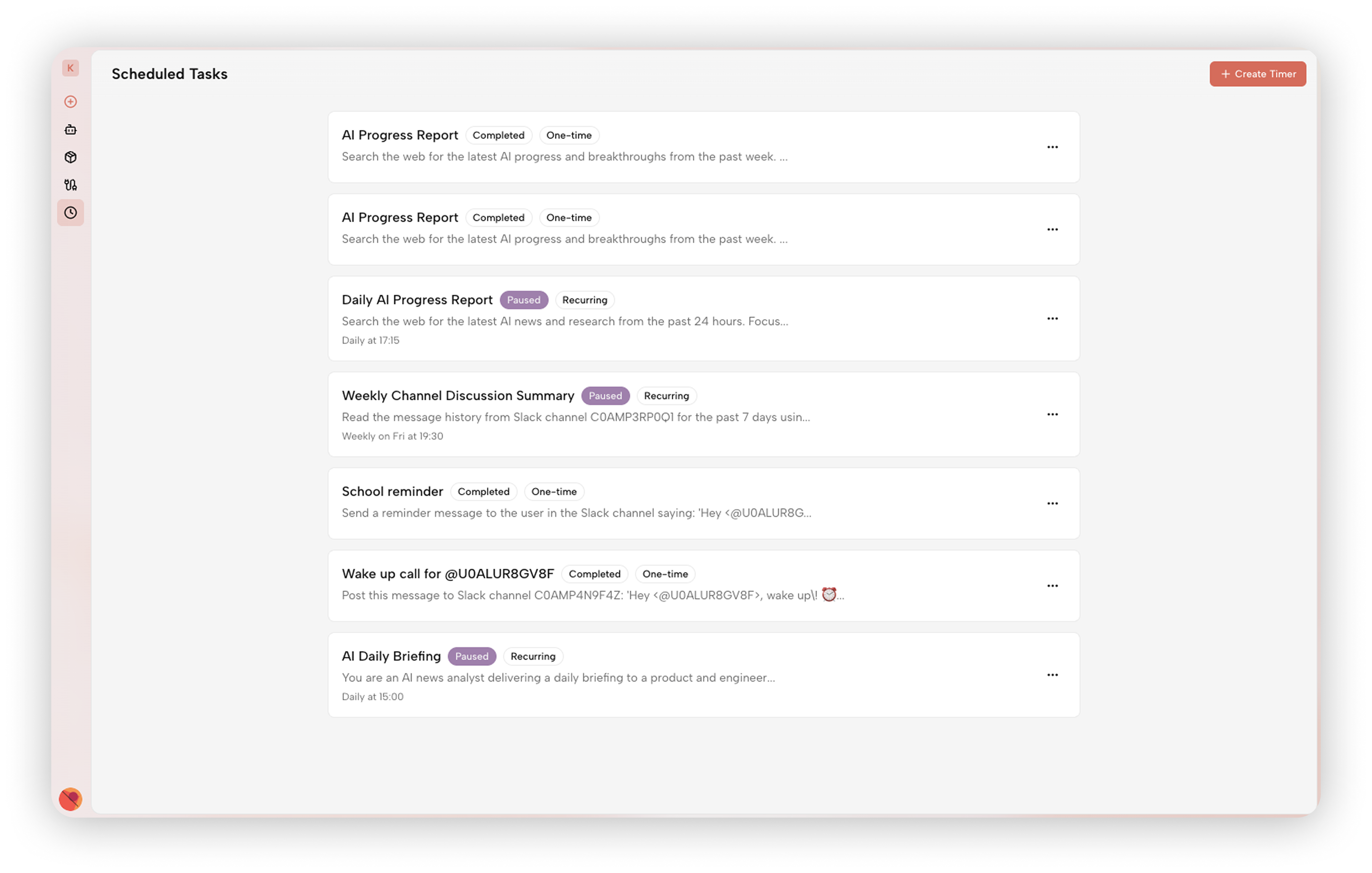
Scheduled Tasks: Through the automated trigger mechanism of Kollab, whether it’s a daily summary across time zones or periodic market trend monitoring, Kollab will deliver precisely at the appointed time without any human reminders.
3. How to Start Your Execution Revolution
The path to efficiency is actually quite clear. I suggest starting with the following steps:
Identify High-Frequency Pain Points: Find a process that is most frequent, most reliant on manual repetition, and most prone to error.
Map the Path in Kollab: Ditch the fluff and honestly draw the flow of every step within Kollab, clarifying who is responsible for execution and who is responsible for approval.
Empower Your Agent with Specific Skills: Configure the corresponding Kollab Skills for your agent and connect the necessary Connector interfaces to give it operational capability. For example, a team can turn bug reports into GitHub issues, run an automated content pipeline, or set up a recurring thought leader monitoring workflow.
Fine-tune Through Practice: Utilize the feedback and Memory mechanisms of Kollab to continuously optimize the AI’s performance during every run.
Final Thoughts:
Against the backdrop of the global AI wave, the core competitiveness of an enterprise is shifting from "how much information you own" to "the speed of business execution." The reason we emphasize "executability" so strongly at Kollab is that in this age of information overload, only certain, perceivable output holds commercial value.
Joining Kollab is not just about choosing a new piece of software; it’s about choosing a work philosophy oriented toward the future: transforming from a tedious "process maintainer" into a true "business director." Let us leave the energy-draining chores to Kollab, and return the most precious creativity and decision-making power to ourselves.