8 herramientas de YouTube a texto en 2026
Encuentre la mejor herramienta de texto YouTube en 2026. Compare Kollab, Descript, Otter, VEED, Notta, HappyScribe, Rev y NoteGPT uno al lado del otro.
Abra su lista YouTube "Watch Later" y cuente cuántos videos han estado ahí intactos. No es un problema de fuerza de voluntad —, es un problema medio. Una entrevista de un minuto 45 es lineal. Hasta hace poco, la única forma de saber qué cinco minutos valía la pena recordar era verlo completo.
Con 2026, este problema se ha resuelto en gran medida. Los modelos de transcripción AI alcanzan consistentemente una precisión de 90%+, y las mejores aplicaciones de transcripción han evolucionado mucho más allá de la simple conversión de voz a texto, y convertir un video de una hora a texto lleva minutos, no horas. La línea divisoria ya no es "¿puede transcribir?" — es si la salida es realmente utilizable. ¿Viene con marcas de tiempo? ¿Puede generar resúmenes estructurados? Y una vez que tienes la transcripción, ¿fluye naturalmente en las herramientas que ya utilizas para notas y contenido?
Este resumen cubre el espectro completo —, desde extensiones de navegador livianas hasta plataformas de colaboración en equipo — ordenadas por profundidad de flujo de trabajo, de más pesada a más liviana. Para una visión más amplia de la categoría, el directorio de software de transcripción de G2 agrega reseñas de usuarios en todos los servicios de 90+. Encuentre el más cercano a su caso de uso y luego ejecute un video real a través de su nivel gratuito.
Tabla de comparación rápida
| Herramienta | Lo mejor para | Fuerza central | Precios |
|---|---|---|---|
| Kollab | Transcripción, resumen y creación de contenido —, todo en un solo espacio de trabajo | Pega un enlace para obtener la transcripción completa, luego escribe e investiga en el mismo espacio. | Nivel gratuito; Pro $20/mo; Max $200/mo |
| Descript | Editar vídeo mientras se transcribe | Edite vídeo como un documento y elimine automáticamente las palabras de relleno | Nivel gratuito; pagado ~$16–50/mo (anual) |
| Otter.ai | Reuniones y audio de formato largo | Multilenguaje, identificación de hablantes, integraciones empresariales | Gratis 300 min/mes; Pro ~$16.99/mo (anual ~$8.33) |
| VEED.IO | Subtítulos + transcripción en una sola herramienta | Edición en el navegador, subtítulos automáticos, traducción de subtítulos al idioma 125+ | Nivel gratuito; Creator $20/mo (anual ~$10); Pro $44/mo (anual ~$21) |
| Notta | Transcripción multilingüe y entre dispositivos | 58+ idiomas, cobertura web/móvil/complementos | Gratis 120 min/mes; Pro $13.49/mo (anual ~$8.17) |
| HappyScribe | Subtítulos y transcripción en varios idiomas. | Idiomas 150+, revisión humana opcional | Prueba mínima gratuita de 10; $17/mo básico ($8.50 anual) |
| Rev | Uso profesional de alta precisión | AI + híbrido humano, suscripción transcripción AI con revisión humana opcional | Gratis 45 min/mes; Essentials $25.49/seat/mo (5,000 mín.); Pro $47.99/seat/mo (10,000 mín.) |
| NoteGPT | Resúmenes rápidos y transcripción | Resumen con un clic + transcripción + mapa mental, extensión del navegador | Cuotas 15 gratuitas/mes; Pro ~$9/mo (anual) |
1. Kollab
Kollab es una plataforma de colaboración AI que reúne la transcripción, la investigación, la redacción y la producción de contenido en un único espacio de trabajo. La mayoría de las herramientas de transcripción se detienen en "convertir video a texto" —. Una vez que tienes la transcripción, aún tienes que cambiar a otra herramienta para tomar notas, redactar y organizar, y ese cambio es exactamente donde reside la brecha entre la materia prima y el resultado final. El enfoque de Kollab elimina esa brecha: la transcripción es el punto de partida, y todo lo que sigue al resumen, la reescritura y la reutilización de — sucede dentro del mismo espacio del proyecto.
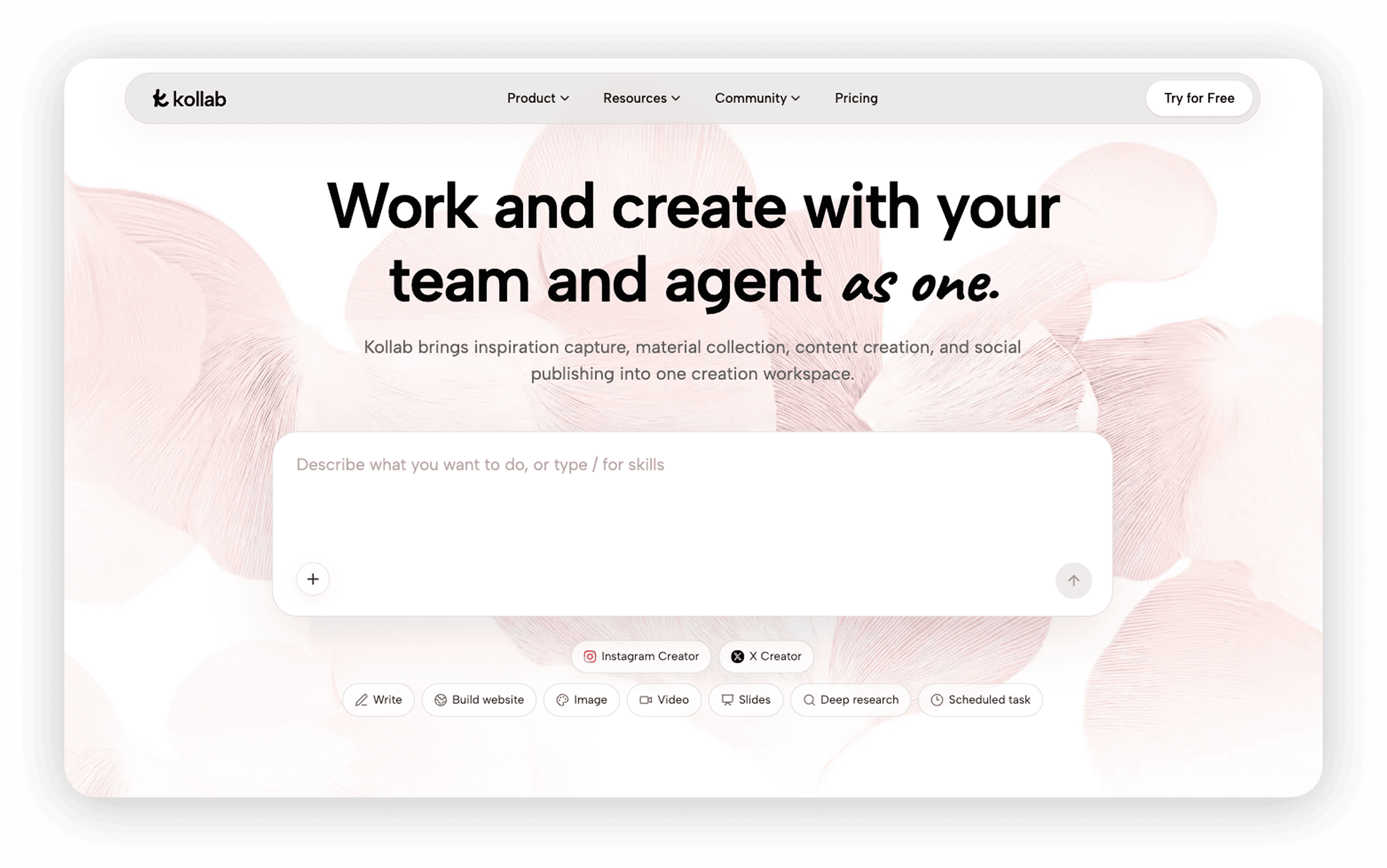
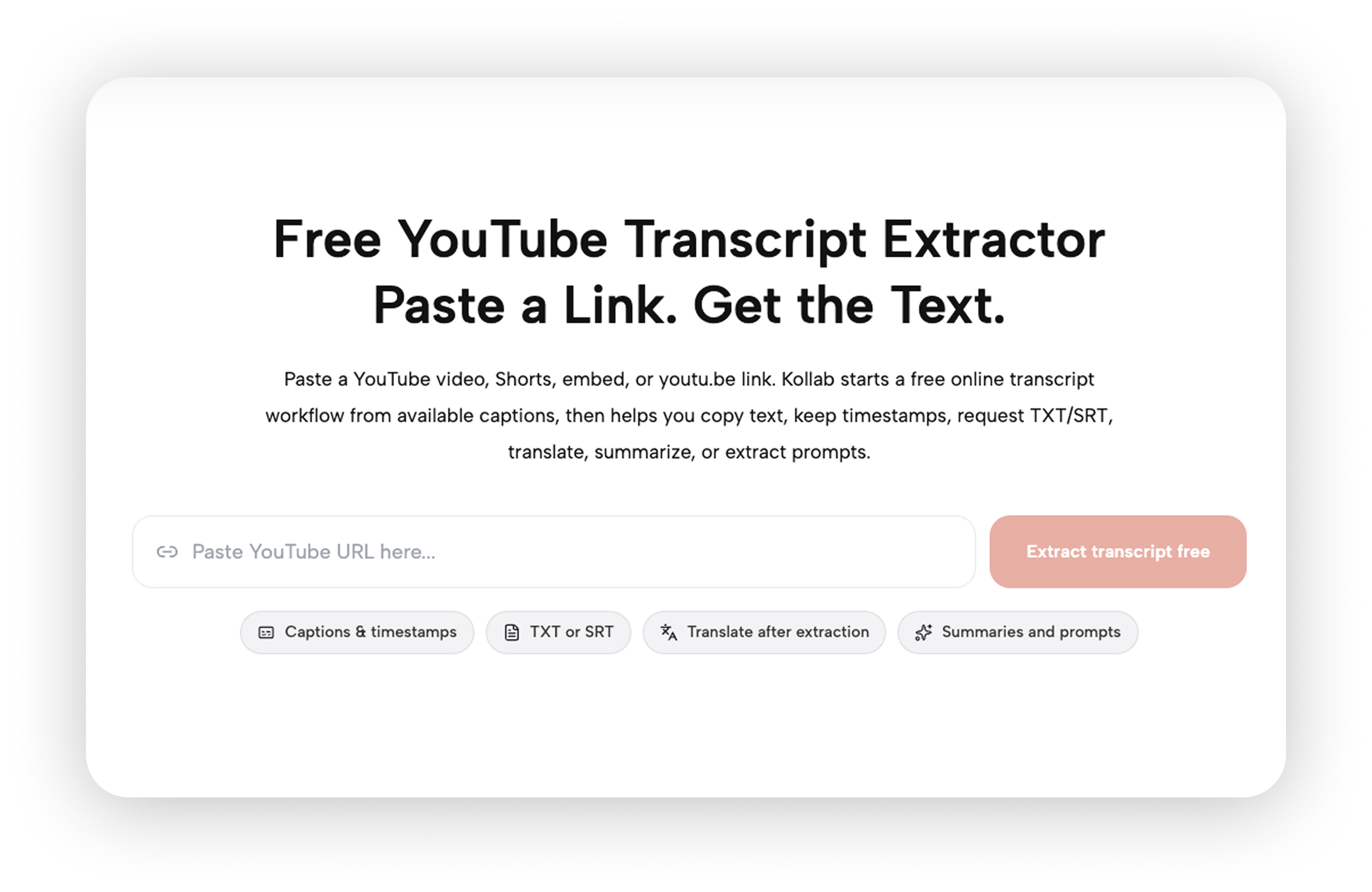
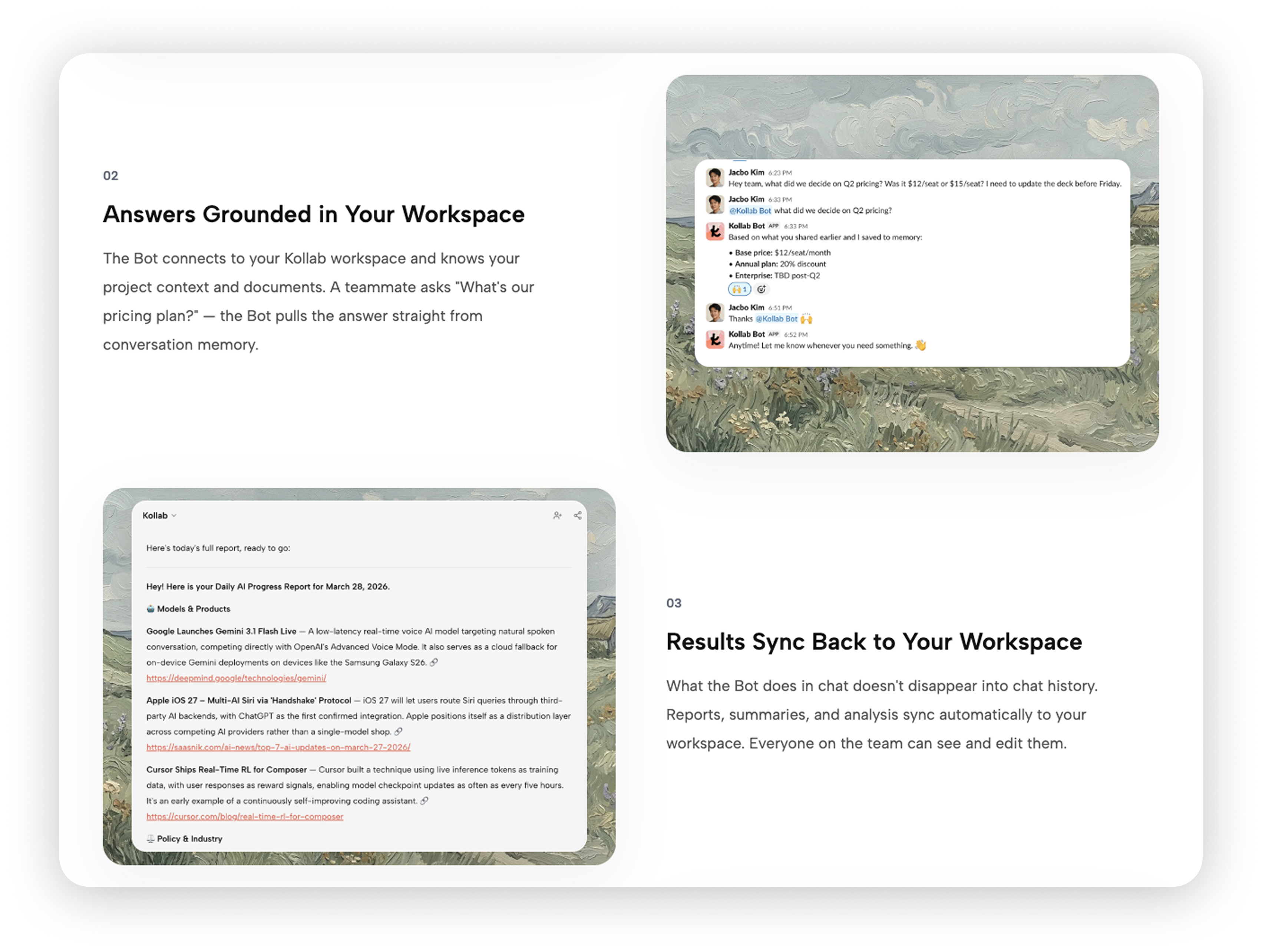
Las habilidades integradas de Kollab manejan los enlaces YouTube directamente: pegue un enlace y automáticamente extrae el audio, lo transcribe y devuelve una transcripción con marca de tiempo — sin descargas manuales, no se requieren extensiones. Para cualquiera que convierta regularmente contenido de video en artículos, informes de investigación o publicaciones en redes sociales, la verdadera recompensa comienza después de la transcripción: en el mismo espacio del proyecto, puede hacer que el AI resuma la transcripción, extraiga puntos clave o genere copia social y borradores de formato largo, sin exportar la transcripción y comenzar desde cero en otra herramienta. Los miembros del equipo comparten la misma base de conocimientos y el mismo historial generacional, por lo que dos personas nunca terminan transcribiendo el mismo vídeo dos veces.
Características principales:
- Pegue un enlace YouTube para la transcripción automática con una transcripción con marca de tiempo — sin necesidad de manejo manual de audio
Las transcripciones, la redacción, la investigación y la generación de contenido comparten el mismo espacio del proyecto, por lo que el resumen, la reescritura y la reutilización ocurren en un solo flujo.
La base de conocimientos compartida por el equipo y el historial de generación evitan la transcripción duplicada del mismo vídeo.
La compatibilidad con Slack y Telegram Bot permite a los equipos activar la transcripción directamente desde los canales
- También es compatible con Spotify, Apple Podcasts y otros enlaces de plataformas.
Ideal para: Creator y equipos que necesitan convertir videos de YouTube directamente en artículos, informes o contenido de redes sociales. — pega un enlace → obtiene la transcripción completa → sigue escribiendo, todo en un solo espacio de trabajo, sin exportar ni volver a importar entre herramientas.
Precios: Nivel gratuito disponible; Pro $20/mo; Max $200/mo. Todos los planes utilizan un sistema de crédito con créditos 200 que se actualizan diariamente.
2. Descript
Descript es el producto estrella en la categoría "editar vídeo como un documento". Sube un video y Descript genera una transcripción primero, — y luego cada acción de edición que realizas en esa transcripción (eliminar palabras de relleno, cortar una sección, reorganizar párrafos) se sincroniza automáticamente con la línea de tiempo del video.
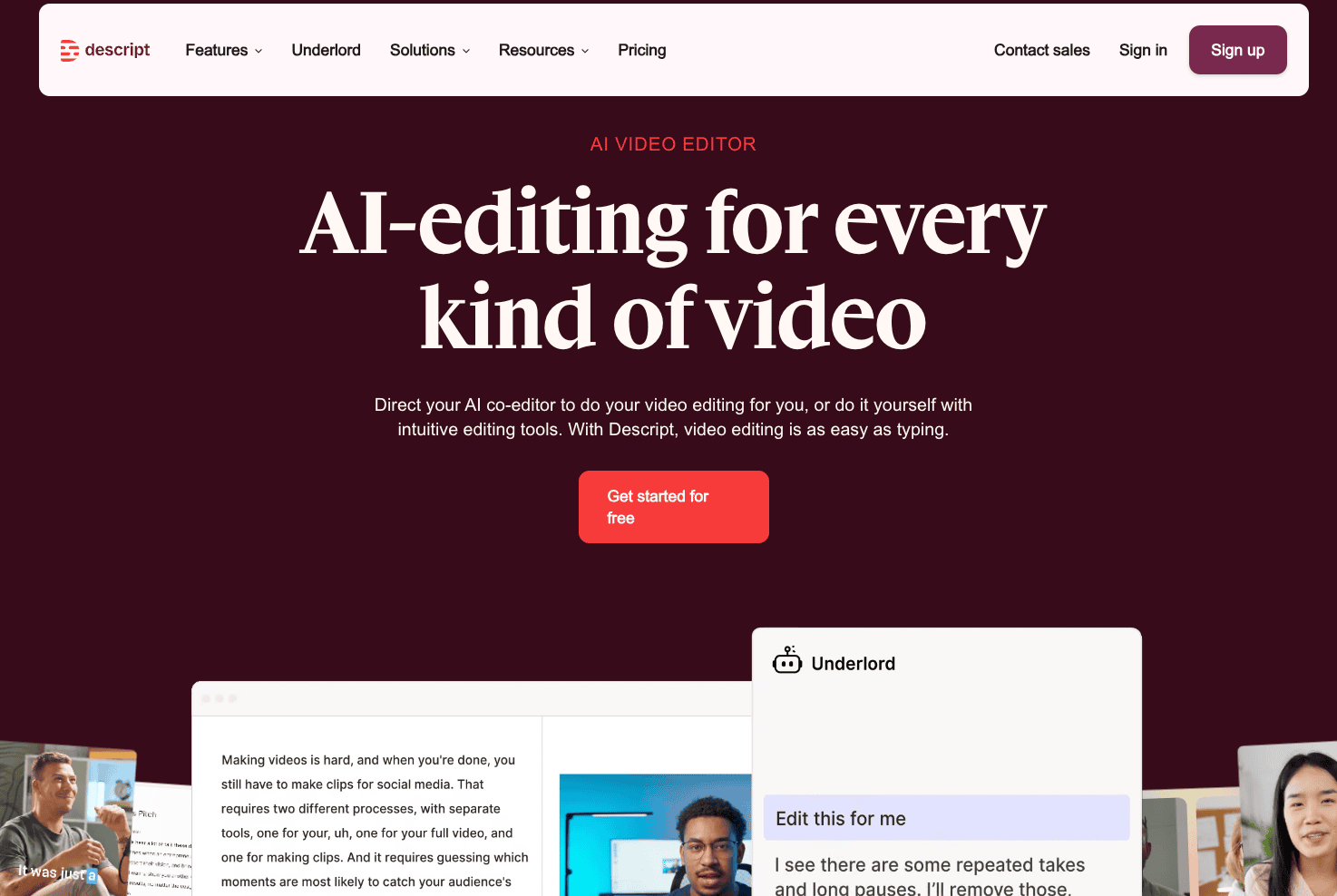
Su transcripción es más un paso de la línea de ensamblaje que un entregable independiente —, un patrón que refleja cómo AI ha remodelado la industria de la transcripción: la transcripción existe para servir al proceso de edición, y los capítulos y resúmenes que genera son bonificaciones para la audiencia. Esta es la diferencia principal entre Descript y las herramientas de conversión de voz a texto pura —. Está diseñada para creadores de videos, no solo para personas que quieren leer.
Características principales:
Transcripción como editor: corte video y audio editando texto, como trabajar en un documento de Word
Eliminación con un solo clic de palabras de relleno, silencios y repeticiones
Capítulos, resúmenes y subtítulos generados por AI
Reparación de voz AI — corrige una palabra mal pronunciada directamente en la transcripción y AI regenera el audio
Grabación remota de habitaciones para grabaciones multipista limpias con anfitriones e invitados remotos
Ideal para: Los creadores de videos — eliminan una oración en la transcripción y el clip correspondiente desaparece del video. La transcripción y la edición son la misma acción, no dos tareas separadas. Para los creadores que envían contenido con regularidad, esto elimina el intercambio entre el software de edición y las herramientas de transcripción.
Precio: Nivel gratuito $0; Aficionado ~$16/mo (anual, mensual ~$24); Creator ~$24/mo (anual, mensual ~$35); Business ~$50/seat/mo (anual, mensual ~$65); Precios personalizados de Enterprise.
3. Otter.ai
Otter.ai fue una de las primeras empresas en convertir la transcripción automática en un producto para el mercado masivo y sigue siendo el nombre más reconocible en el sector. Su caso de uso principal son los subtítulos en tiempo real de — y la unión automática para Zoom, Google Meet y Teams —, pero la misma tecnología subyacente maneja archivos de audio y video largos, y muchos creadores descargan videos de YouTube y los colocan en Otter para transcripciones.
La fortaleza de Otter es la madurez: soporte en varios idiomas (inglés, español, francés, alemán, japonés y más), identificación de hablantes, archivos con capacidad de búsqueda y una profunda integración con los flujos de trabajo empresariales se han perfeccionado a lo largo de los años. La contrapartida es una estructura de precios basada en suscripción —. Si supera su límite mensual, actualiza los niveles en lugar de pagar de manera flexible por el uso real.
Características principales:
Subtítulos en tiempo real y unión automática para Zoom, Google Meet y Teams
Transcripción en varios idiomas (inglés, español, francés, alemán, japonés y más)
Identificación y etiquetado automático de locutores
Archivo de transcripciones con capacidad de búsqueda para compartir en equipo
Integración con CRM, Slack y otras herramientas empresariales
Ideal para: usuarios cuyo trabajo diario gira en torno a reuniones y que ocasionalmente necesitan transcribir videos YouTube. Las capacidades de reunión de — Otter (unión automática, subtítulos en tiempo real, identificación del orador) son el evento principal, y la transcripción de YouTube es algo que puede hacer de forma adicional sin pagar una suscripción por separado.
Precio: Gratis 300 min/mes; Pro ~$16.99/mo (anual ~$8.33/mo, 1,200 min/mes); Business ~$30/mo (anual ~$19.99/mo, 6,000 mínimo); Precios personalizados de Enterprise.
4. VEED.IO
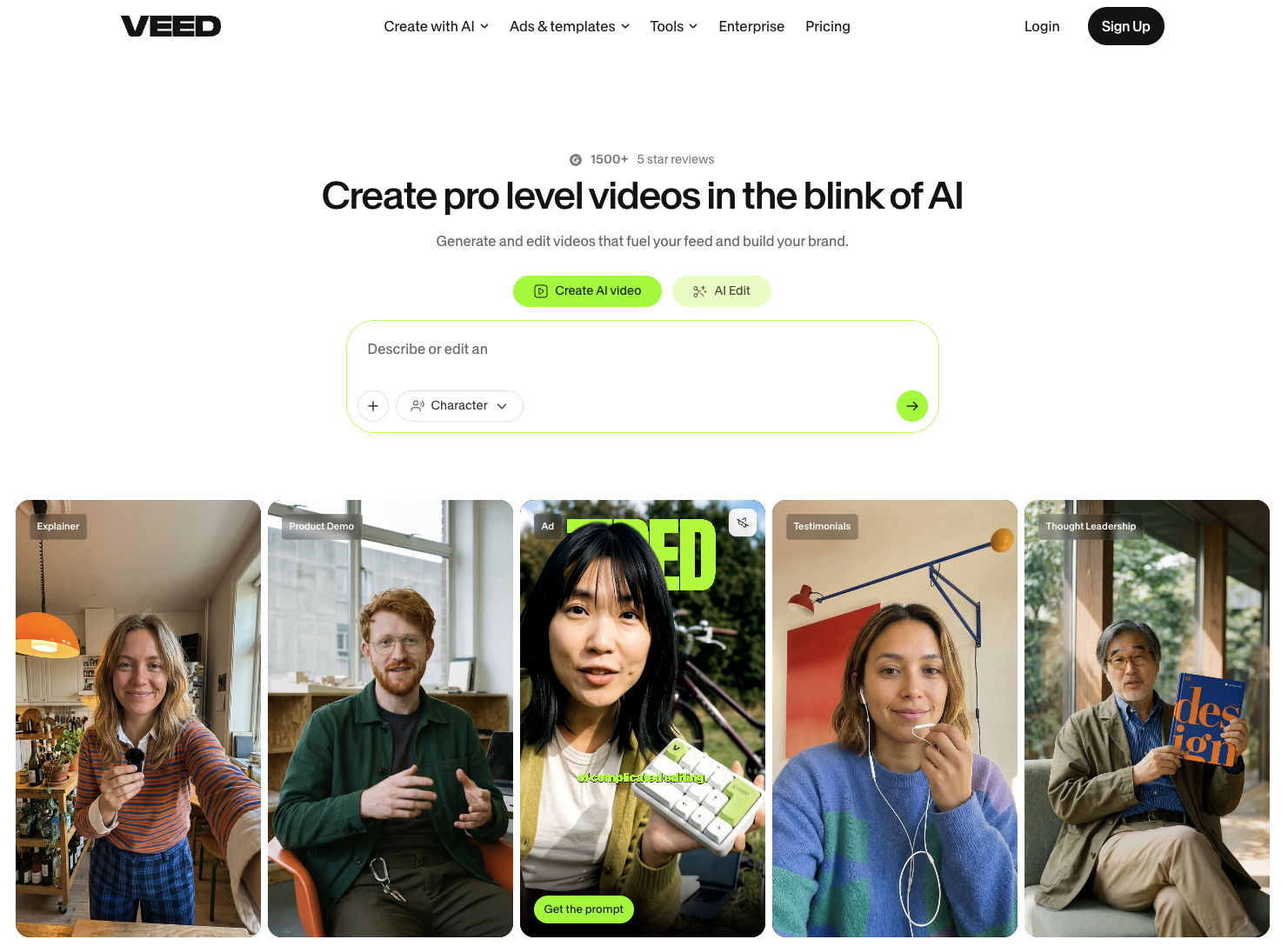
VEED.IO es el editor de vídeo en línea donde la transcripción y los subtítulos se sienten más integrados. Es un editor basado en navegador con subtítulos automáticos y generación de transcripciones como funciones nativas: cargue un video, obtenga subtítulos automáticos y una transcripción, luego traduzca los subtítulos a los idiomas 125+ o use el doblaje AI para producir versiones en otros idiomas.
Si su objetivo final es subtitular sus videos YouTube y crear versiones en varios idiomas, — no solo obtiene una transcripción, — VEED combina ambos en una sola herramienta, lo que le ahorra tener que exportar e importar entre software de transcripción y edición.
Características principales:
Edición en el navegador, subtítulos automáticos y generación de transcripciones — sin necesidad de instalación de software
Traducción de subtítulos a idiomas 125+, doblaje de AI a idiomas 29
Línea de tiempo de transcripción y subtítulos vinculada — edita el texto y los subtítulos se actualizan automáticamente
Exportación 4K (nivel Pro) y colaboración en equipo (nivel Studio)
Ideal para: usuarios cuyo objetivo final es agregar subtítulos y crear versiones en varios idiomas de videos YouTube —, no solo obtener una transcripción. VEED combina la transcripción, la traducción de subtítulos del idioma 125+ y el doblaje de AI en una sola herramienta de navegador, eliminando el proceso de "transcribir → exportar → reimportar al software de edición de subtítulos".
Precios: Nivel gratuito (marca de agua, exportación 720p); Creator $20/mo (~$10/mo anual, 1080p sin marca de agua); Pro $44/mo (exportación anual ~$21/mo, 4K); Studio $79/mo (anual ~$39/mo); Precios personalizados de Enterprise.
5. Notta
Notta es una conocida herramienta de transcripción multilingüe con alcance internacional, que admite la transcripción en los idiomas 58+ y la traducción en los idiomas 40+, con cobertura completa en la web, la aplicación móvil y la extensión Chrome. Para los equipos que trabajan con material fuente multilingüe, por ejemplo —, videos YouTube en inglés, japonés y español, la cobertura de idiomas de — Notta es su ventaja más clara.
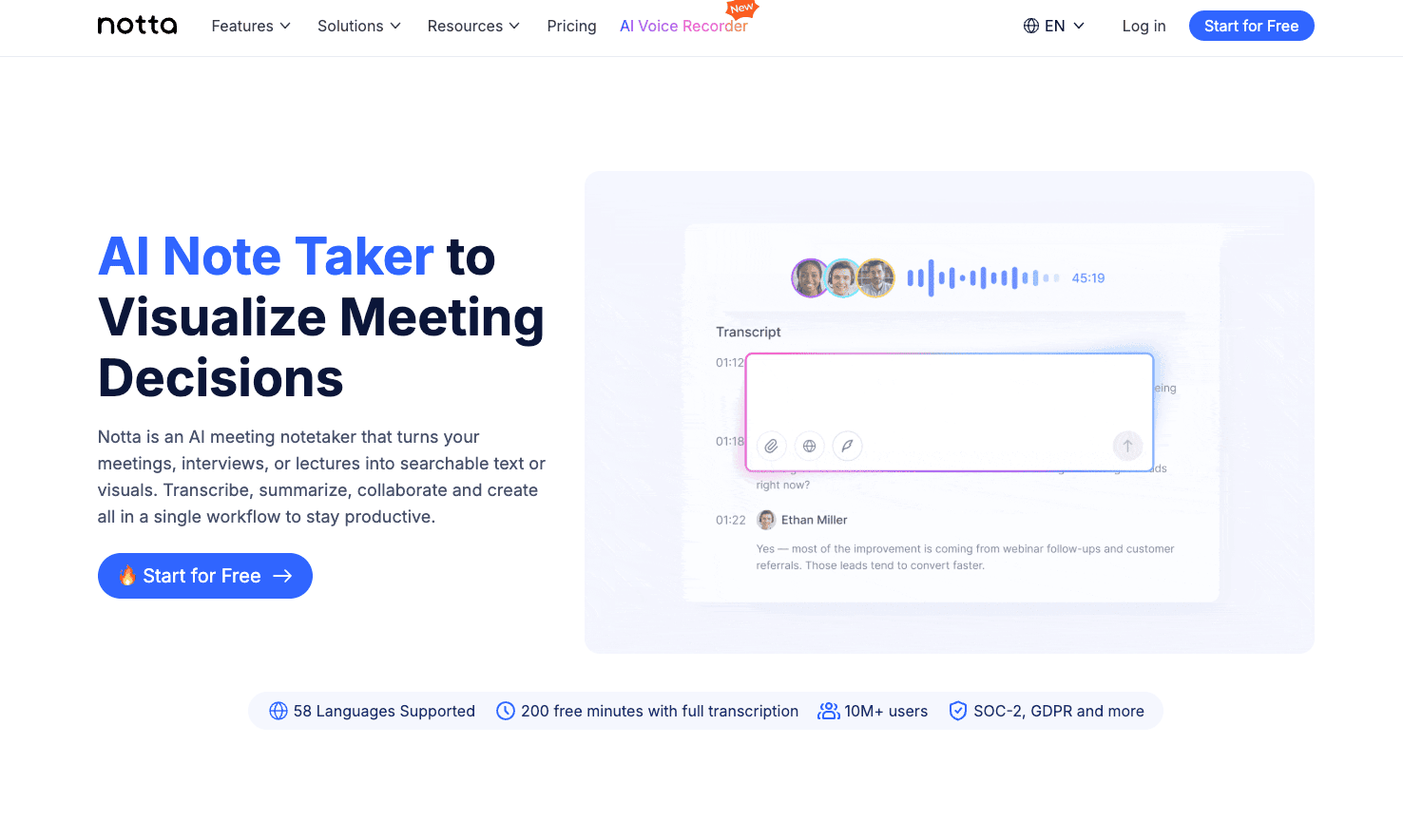
Sus rutas de uso también son flexibles: cargue archivos de audio/vídeo directamente, grabe y transcriba en tiempo real o conéctese a Zoom, Meet y Teams a través del robot de reuniones. Las transcripciones se pueden exportar como TXT, SRT o DOCX, con resúmenes de AI incluidos.
Características principales:
Transcripción en idiomas 58+, traducción en idiomas 40+
Sincronización de plataforma completa en web, dispositivos móviles y extensión Chrome
Integración del robot de reuniones con Zoom, Google Meet y Teams
Exportación de transcripciones como TXT, SRT, DOCX con resúmenes de AI
Ideal para: creadores individuales o equipos cuyo material original abarca varios idiomas, por ejemplo, videos — en inglés, japonés y español. La cobertura de idiomas 58+ y la sincronización multiplataforma de Notta significan que los usuarios multilingües no necesitan una herramienta separada para cada idioma. YouTube
Precio: 120 min/mes gratis (límite mínimo de 3 por sesión); Pro $13.99/mo (anual ~$8.17/mo, 1,800 min/mes); Business $27.99/mo (~$16.67/mo anual, minutos ilimitados); Precios personalizados de Enterprise.
6. HappyScribe
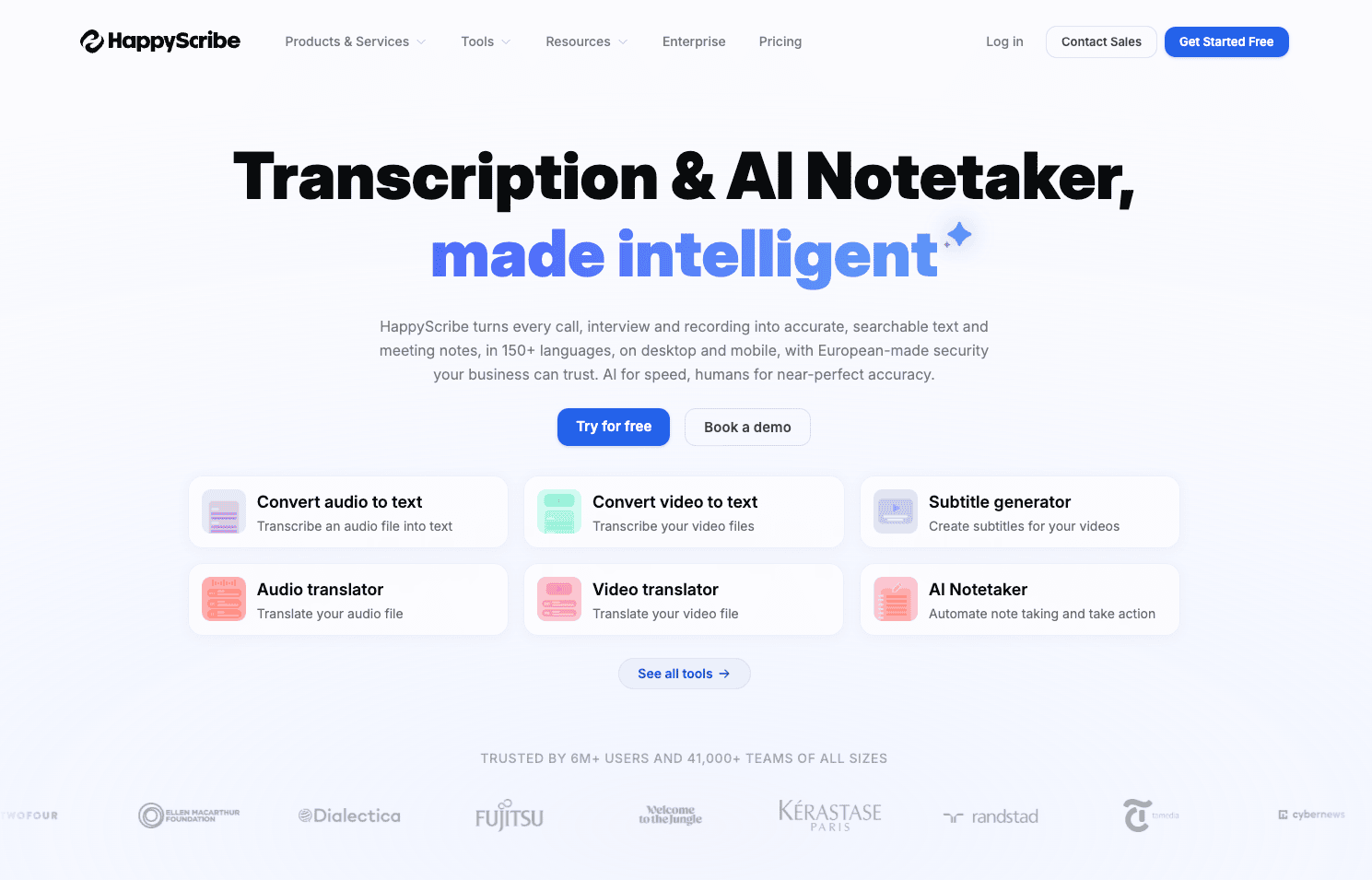
HappyScribe es un veterano servicio europeo de transcripción y subtitulado que cubre los idiomas 150+, una opción común para equipos de contenido multilingüe y producción de subtítulos de cine y televisión. Su precisión de transcripción AI ronda el% 85 y, para casos de uso que exigen mayor precisión, puede pagar más por la revisión humana.
Para los equipos que necesitan subtítulos en varios idiomas para videos YouTube, o cuyo material fuente incluye idiomas menos comunes, la cobertura de idiomas de HappyScribe es su ventaja más clara sobre las otras herramientas de esta lista.
Características principales:
Transcripción de AI en idiomas 150+
Transcripción y revisión humana paga opcional
Generación de subtítulos con exportación multiformato (SRT, VTT y más)
Procesamiento por lotes para grandes volúmenes de archivos de audio y vídeo
Lo mejor para: Equipos de producción de subtítulos en varios idiomas que trabajan con idiomas menos comunes. — La cobertura de idiomas 150+ de 150+ y la revisión humana opcional lo convierten en una opción para subtítulos de películas, transcripciones de documentales y casos de uso similares, especialmente cuando el material fuente está en un idioma donde la precisión básica de AI es insuficiente y se puede agregar revisión humana. HappyScribe
Precios: Prueba gratuita de 10-min; $17/mo básico ($8.50/mo anual, $102/yr, 120 AI mín.); Pro $29/mo (anual $19/mo, 600 mínimo); Business $89/mo (anual $59/mo, 6,000 mínimo); transcripción excesiva de AI ~$0.20/min; transcripción humana de ~$2/min.
7. Rev
Rev es el abanderado del modelo de transcripción híbrido "AI + humano" — que llega temprano al mercado y tiene una reputación confiable. Su principal punto de venta: cuando los requisitos de precisión son extremos — registros legales, entrevistas médicas, periodismo de investigación que necesita verificación palabra por palabra — AI la transcripción por sí sola no es suficiente y puede comprar transcripción humana de transcriptores profesionales.
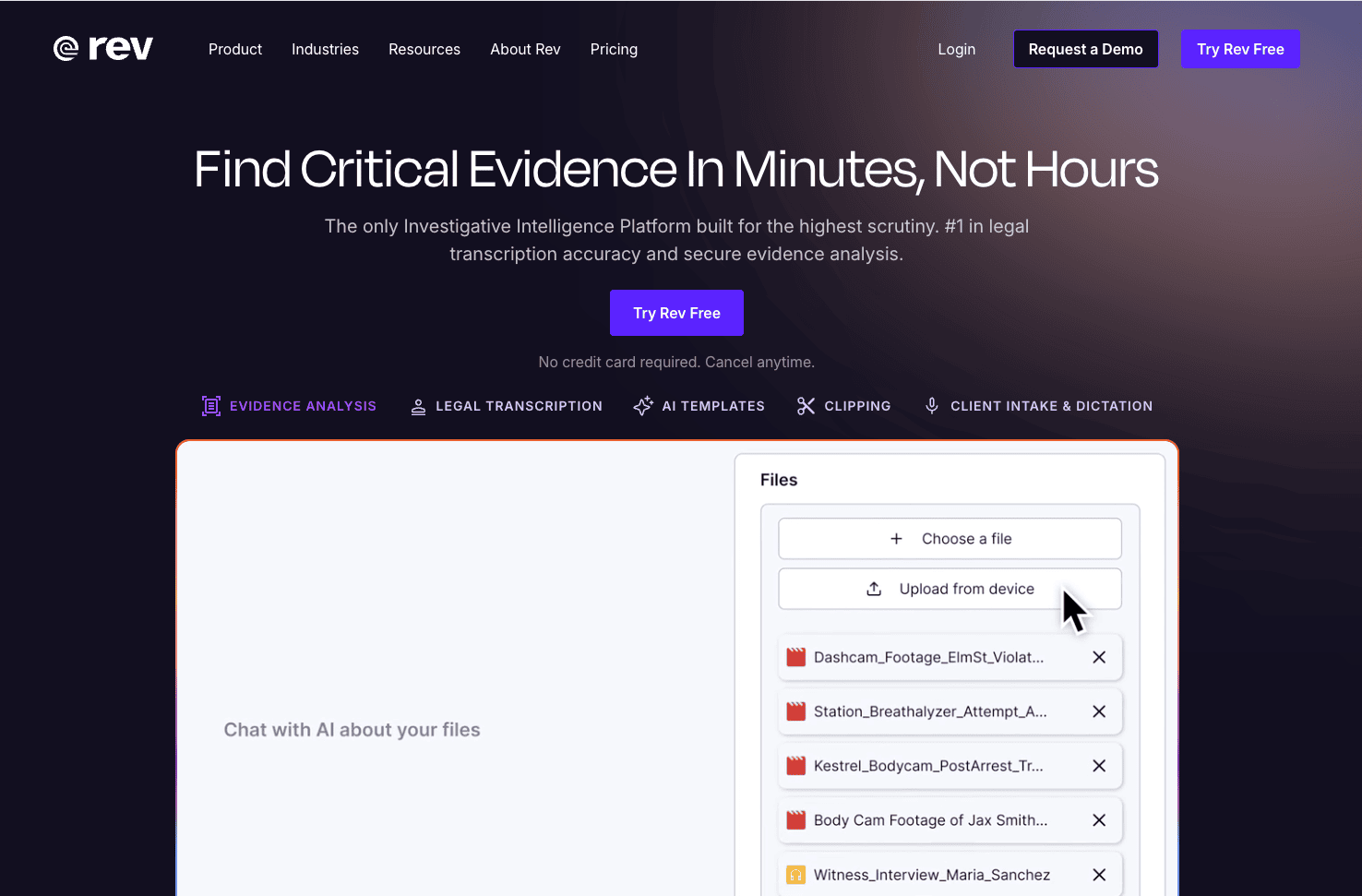
Específicamente para YouTube-to-text, Rev se adapta mejor a contenido profesional donde la precisión de la transcripción no es negociable (como videos de investigación en profundidad) en lugar de cargas diarias donde la velocidad y el costo son la prioridad. La transcripción AI de Rev se basa en suscripción, comenzando en 5,000 minutos/mes en el plan Essentials y escalando a 10,000 minutos/mes con idiomas 37+ en Pro — diseñado para equipos con volumen mensual constante.
Características principales:
Transcripción AI con cuotas mensuales basadas en suscripción (Essentials 5,000 min/mes, Pro 10,000 min/mes)
Transcripción y revisión humanas para casos de uso profesional de alta precisión, facturados por minuto
Servicios de traducción de subtítulos y subtítulos (idiomas 17)
API disponible para integrarlo en los flujos de trabajo de sus propios productos
Ideal para: Pro contenido profesional donde la precisión de las transcripciones es un requisito estricto — registros legales, entrevistas médicas y reportajes de investigación en profundidad. En estos escenarios, la transcripción AI no alcanza el% de precisión 100 y la revisión humana es la red de seguridad. El modelo híbrido humano AI + humano de Rev le permite cambiar entre modos en la misma plataforma en lugar de administrar dos proveedores separados para diferentes necesidades de precisión.
Precio: Gratis 45 min/mes; Essentials $25.49/seat/mo (anual, mensual $29.99, 5,000 min/mes); Pro $47.99/seat/mo (anual, mensual $59.99, 10,000 min/mes, 37+ idiomas); Precios personalizados de Enterprise. La transcripción humana se factura por separado, desde ~$1.50/min.
8. NoteGPT
NoteGPT es la herramienta liviana más "nativa de YouTube" de esta lista: una extensión de navegador que, en cualquier video de YouTube, genera un resumen, una transcripción completa y un mapa mental con un solo clic. Su mecanismo es inteligente — cuando el vídeo ya tiene subtítulos, trabaja directamente a partir de ellos, lo cual es rápido y apenas consume cuota; sólo cuando no hay subtítulos se ejecuta la transcripción AI.
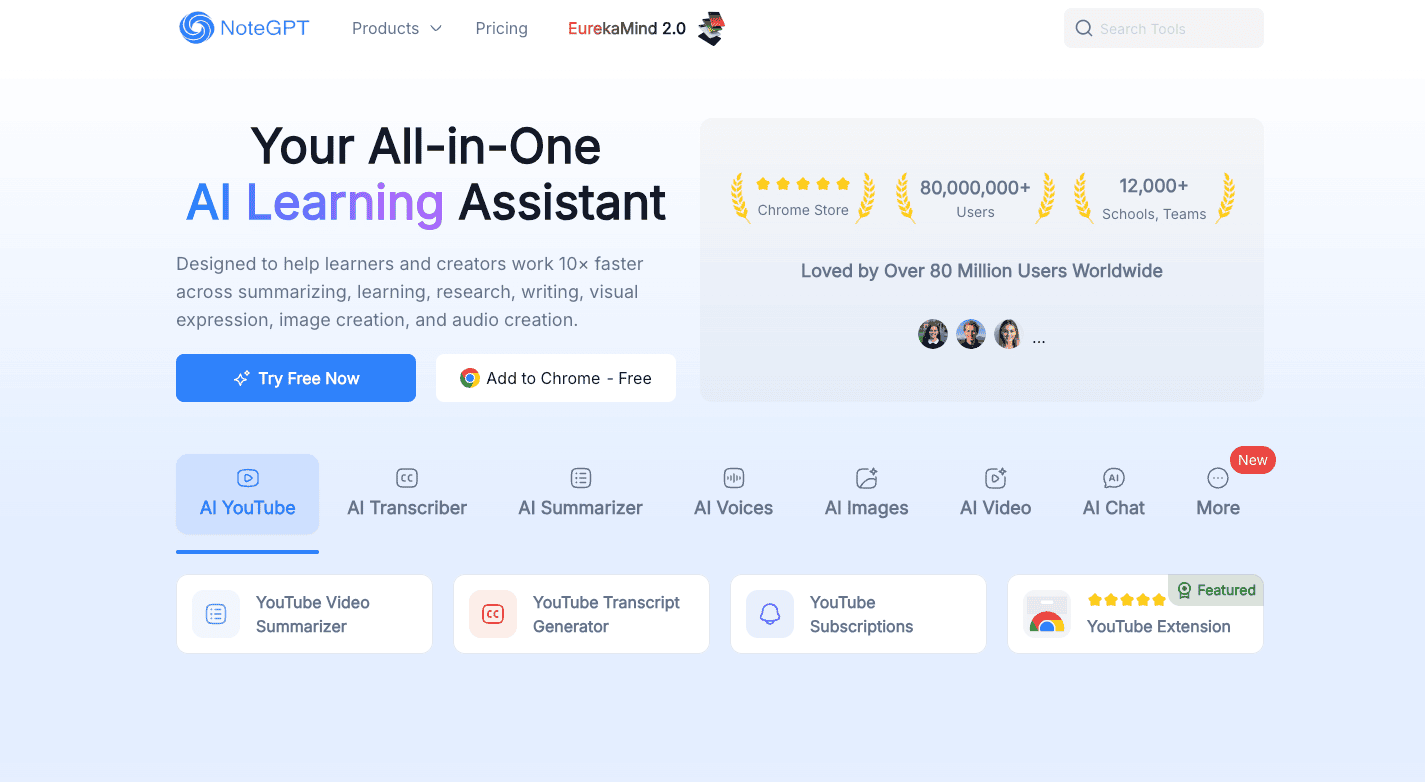
Para estudiantes, investigadores y cualquiera que simplemente quiera saber "qué dice realmente este video de minutos 40", NoteGPT tiene la barrera de entrada más baja de todas las opciones aquí. Está posicionado como una herramienta rápida de conversión de video a texto. —, un "lector rápido de video", no una plataforma de transcripción profesional. —, un "lector rápido de video", no es una plataforma de transcripción profesional, así que no espere precisión de marca de tiempo o identificación del hablante a nivel profesional.
Características principales:
Generación de resúmenes, transcripciones y mapas mentales con un solo clic directamente en la página YouTube
Procesamiento basado en subtítulos para vídeos con subtítulos existentes — rápido y con cuotas eficientes
AI Preguntas y respuestas — haga preguntas directamente sobre el contenido del video
Extensión Chrome para uso instantáneo, también admite la carga de archivos de audio/video locales
Ideal para: estudiantes e investigadores — abren un video YouTube, hacen clic en la extensión y obtienen un resumen y una transcripción completa en segundos, sin necesidad de descargar ni cambiar de herramienta. NoteGPT es fundamentalmente un "lector rápido de videos", ideal para borrar su lista Watch Later y decidir si vale la pena ver un video en su totalidad, en lugar de buscar una transcripción precisa palabra por palabra.
Precios: Cuotas 15 gratuitas al mes; Cuotas base Pro ~$9/mo, 1,000, procesamiento ilimitado para videos YouTube con subtítulos existentes.
Pensamientos finales
Con 2026, las herramientas de conversión de texto a texto de YouTube se han dividido en dos carriles claros: uno que sirve al "espectador", centrado en extraer la misma densidad de información en menos tiempo; el otro al servicio del "creador", centrado en automatizar todo lo que viene después de la transcripción. Plataformas como Kollab, que integran la transcripción dentro de un flujo de trabajo más amplio, están tratando de conectar ambos carriles. La transcripción — no es el punto final, es el punto de partida para la investigación y la producción de contenido.
Cuál elijas depende de dónde te sientes en esa cadena. Si sólo desea borrar su lista Watch Later y captar los puntos clave, una herramienta liviana como NoteGPT es suficiente. Si necesita precisión de nivel profesional, Rev y HappyScribe son las apuestas más seguras. Si a la transcripción le sigue la escritura, la investigación y la producción de contenido derivado en múltiples formatos, un espacio de trabajo que conecte la transcripción con todo lo relacionado con —, como Kollab —, le ahorrará una cantidad notable de tiempo al cambiar entre herramientas. Casi todas las herramientas de esta lista tienen un nivel gratuito. Ejecute uno de sus propios videos reales — que le dirá más que cualquier reseña.