Pitch Deck AI: How to Create an Investor-Ready Deck with AI
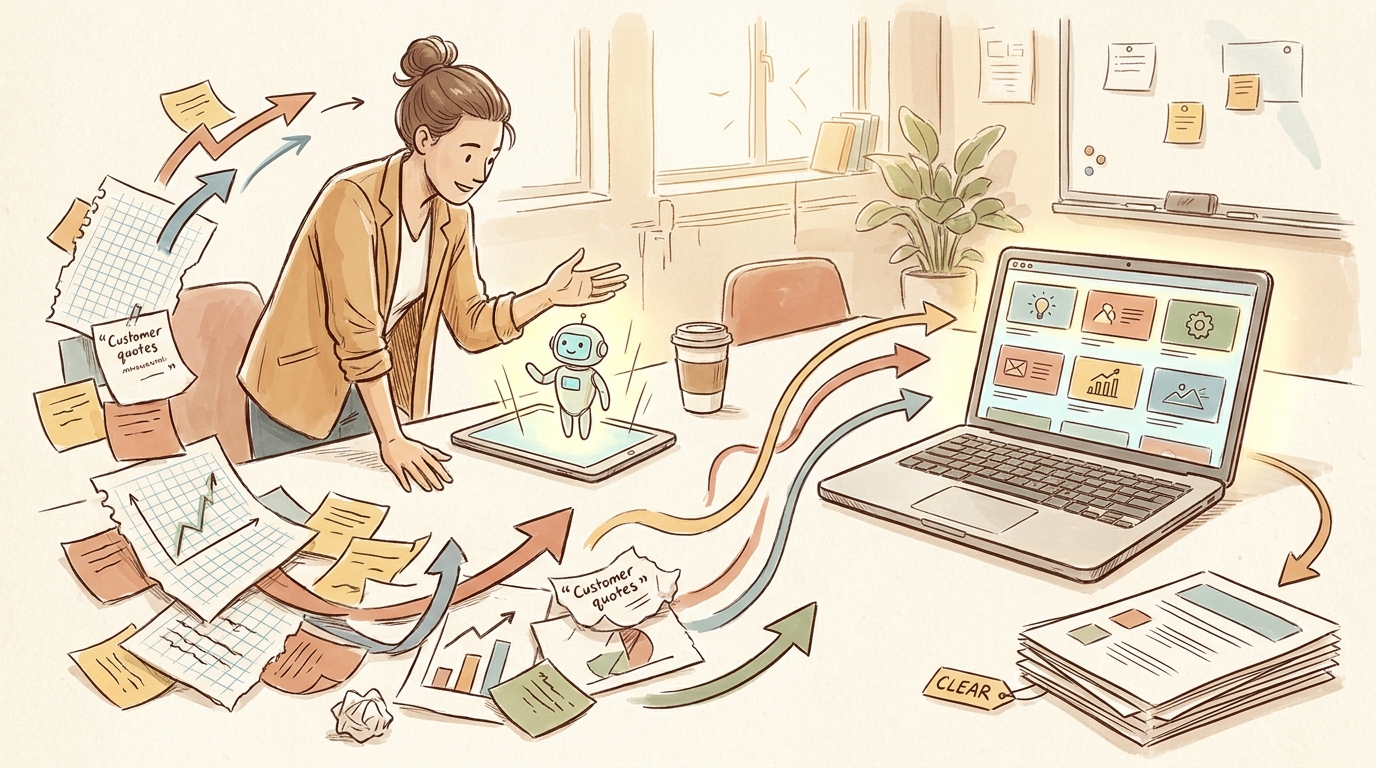
Learn how to use pitch deck AI and an AI pitch deck maker to create an investor-ready startup deck with stronger prompts, slide structure, proof points, and review workflow.
Introduction
A good pitch deck is not just a prettier version of your startup idea. It is a compressed investor argument: why this problem matters, why now, why your team, why this wedge, and why the next round of capital should go into this specific plan.
That is why pitch deck AI can be useful, but only when it does more than produce generic slide titles. The best AI workflow helps you turn a rough brief into a sharper investor narrative, then keeps the slide structure, evidence, assumptions, files, and feedback together while the deck evolves.
If you want to start quickly, you can use Kollab's free pitch deck AI creator to turn a startup idea into an investor-ready deck outline. This guide explains what to put into the prompt, which slides to generate first, and how to review the result before you share it with investors.
Quick answer: the best way to use pitch deck AI
The fastest workflow is not "ask AI for a finished deck." It is:
Write a concise founder brief with product, customer, traction, market, competitors, business model, and fundraising goal.
Use an AI pitch deck maker to generate the first slide structure, key messages, proof points, visuals, and speaker notes.
Review every claim, especially traction, market size, financial projections, competitor positioning, and customer outcomes.
Turn the validated outline into a designed presentation, then keep iterating with investor feedback.
If you only need a blank slide format, a template may be enough. If you need help shaping the investor story, an AI pitch deck generator is usually the better starting point.
What pitch deck AI should actually do
Many founders expect an AI pitch deck generator to create a complete deck in one click. That can be useful for a first draft, but the real value is more strategic.
Pitch deck AI should help you:
Find the cleanest narrative from a messy founder brief.
Turn that narrative into a slide-by-slide investor structure.
Identify proof points, missing data, and weak assumptions.
Suggest visual direction without inventing unsupported claims.
Create speaker notes that explain the story behind each slide.
Keep every revision connected to source files, feedback, and team comments.
A strong AI pitch deck workflow should also make the next step obvious. After each generated slide, you should know what data to add, what claim to remove, which visual would make the point clearer, and what an investor might challenge.
Keyword map: what founders are really searching for
People use different search terms depending on where they are in the fundraising process. A good article and a good tool page should cover the whole intent cluster, not just the exact phrase "pitch deck AI."
| Search intent | Common keyword | What the content should answer |
|---|---|---|
| Fast creation | AI pitch deck generator, pitch deck maker AI | How to turn a rough startup idea into a first deck quickly. |
| Investor readiness | investor pitch deck, startup pitch deck | Which slides investors expect and how to make the argument credible. |
| Tool comparison | AI pitch deck creator, pitch deck builder | How AI differs from templates, slide design tools, and general chatbots. |
| Free tool exploration | free AI pitch deck maker, free pitch deck generator | What can be generated for free and what still needs founder review. |
| Workflow improvement | fundraising deck, deck outline, speaker notes | How to iterate with co-founders, advisors, and investor feedback. |
In this article, the primary keyword is pitch deck AI. The secondary keyword cluster includes AI pitch deck generator, AI pitch deck creator, AI pitch deck maker, startup pitch deck, investor pitch deck, and fundraising deck. These terms should appear naturally in headings, body copy, image alt text, FAQ answers, and internal links rather than being repeated mechanically.
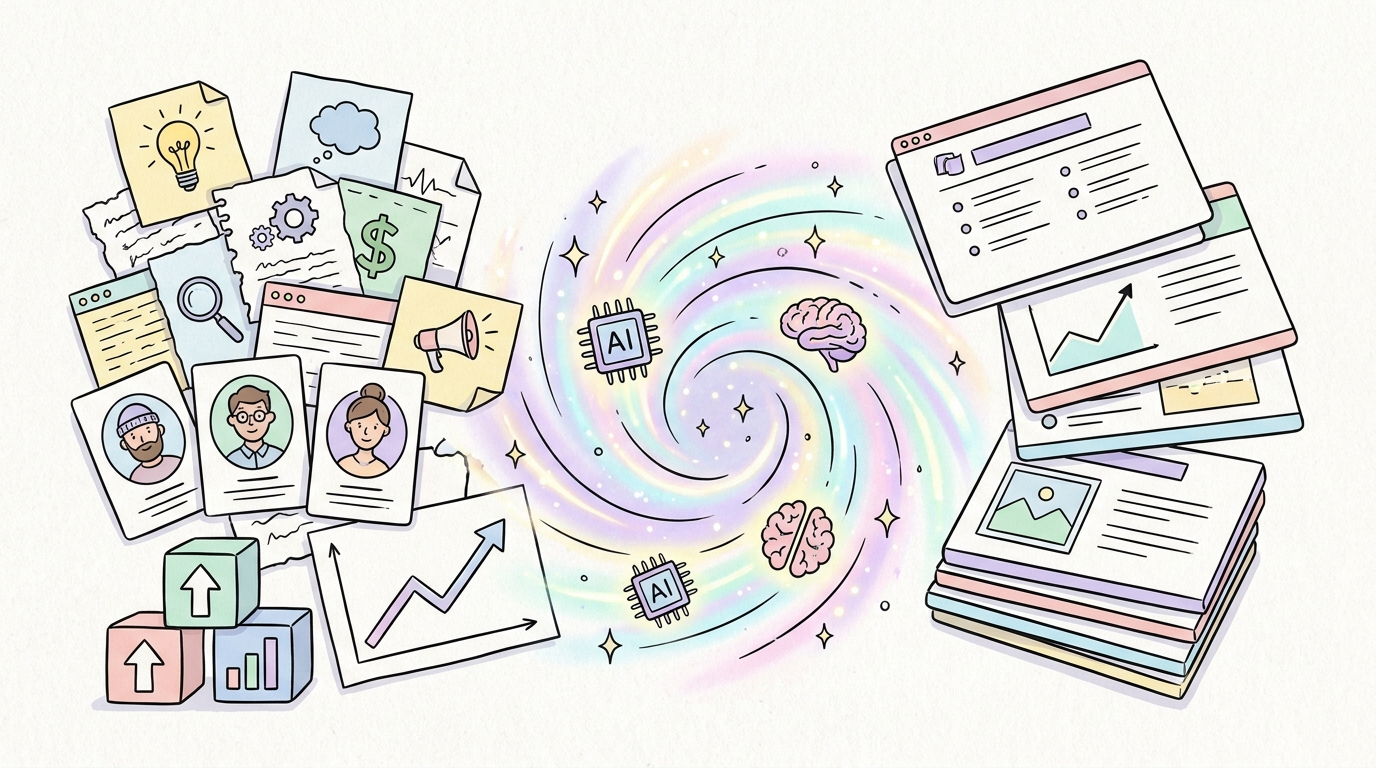
A pitch deck is a living fundraising asset. You may need one version for angels, another for seed funds, another for strategic partners, and a shorter version for warm intro calls. A one-shot deck generator can create a start. A shared workflow helps you keep improving the same story.
That is also why the internal link path should not stop at one blog post. This guide should pass readers toward Kollab's AI Pitch Deck Maker, the broader Kollab AI tools directory, and the Kollab product page so search engines can understand the relationship between educational pitch deck content, the tool page, and the core AI workspace.
Before you use AI, write a better founder brief
The quality of the generated deck depends on the quality of the brief. You do not need a polished memo, but you should give the AI enough context to reason about the business.
A useful founder brief includes:
Company name and one-line description.
Customer segment and buyer persona.
Problem and why it is urgent.
Product or workflow change.
Market category and expansion path.
Current traction, revenue, pilots, waitlist, or usage.
Business model and pricing assumption.
Competitors and alternatives.
Team background.
Funding stage and desired raise.
Any constraints, such as confidential metrics or brand tone.
Here is a compact prompt pattern:
Create an investor-ready pitch deck for a seed-stage startup. The product is [product]. The customer is [buyer]. The problem is [problem]. Current traction is [traction]. The market is [market]. The business model is [model]. We are raising [amount] to reach [milestones]. Draft the slide structure, key messages, proof points, speaker notes, and assumptions we need to validate.
You can paste that directly into Kollab's AI pitch deck generator, then refine the result in the same task.
The investor-ready slide structure
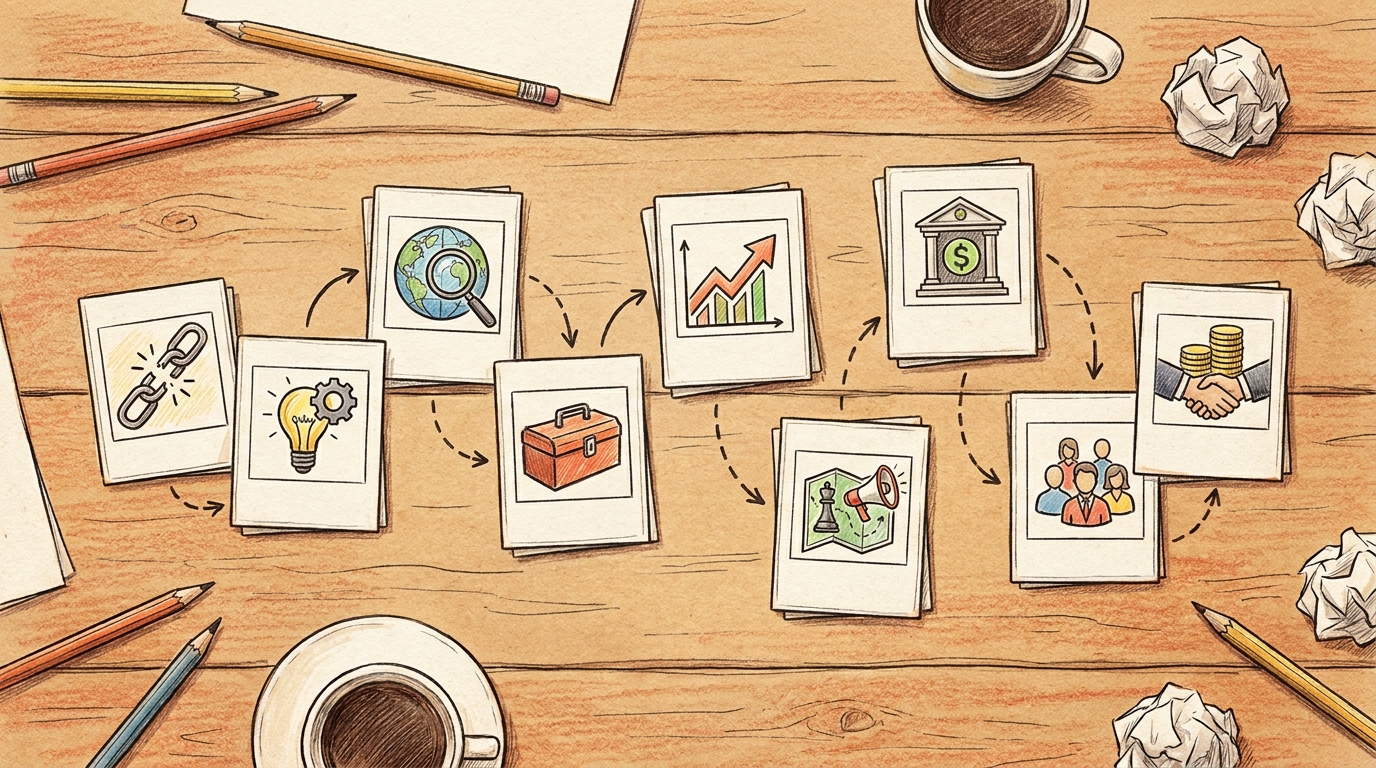
Most startup decks do not fail because the design is ugly. They fail because the story is unclear. A strong first draft should cover these core slides.
For a useful external benchmark, Stripe Atlas frames fundraising decks around narrative "pitch plots" rather than isolated slides, while SVB emphasizes that investors may spend only a few minutes deciding whether a deck earns a meeting. That is exactly why an AI pitch deck workflow should optimize for clarity, sequencing, and proof rather than just slide volume. See Stripe's guide to starting your fundraising pitch deck and SVB's guide on how to create an investor pitch deck.
| Slide | What the AI should clarify |
|---|---|
| Problem | The painful workflow, buyer urgency, and cost of doing nothing. |
| Solution | The product wedge and why the new experience is meaningfully better. |
| Market size | The initial market, expansion path, and assumptions behind the numbers. |
| Product | The workflow, demo story, and strongest product moments. |
| Traction | Users, revenue, pilots, retention, engagement, or credible early proof. |
| Business model | Pricing, sales motion, margin structure, and scale assumptions. |
| Competition | Alternatives, category map, and differentiated position. |
| Go-to-market | How the company reaches customers and why that channel can compound. |
| Team | Founder-market fit, relevant experience, advisors, and hiring gaps. |
| Financials and ask | Raise amount, use of funds, milestones, and investor next step. |
Your first AI-generated deck outline does not need every slide fully polished. It should reveal where the story is strong and where you need better evidence.
Step-by-step: create the first deck with AI
1. Start with the company story, not the slide design
Begin by asking the AI to summarize the company in three investor narratives:
A problem-led narrative.
A market-timing narrative.
A traction-led narrative.
This helps you decide what should lead the deck. For example, a company with strong usage but a crowded category may lead with traction. A company in a newly unlocked market may lead with timing.
2. Ask for a slide-by-slide outline
Once the narrative direction is clear, ask for a 10-12 slide outline. Each slide should include:
Slide title.
Main message.
3-5 bullets.
Proof points to include.
Suggested visual.
Speaker note.
Risk or assumption to validate.
This format keeps the output useful. It also prevents the AI from producing a deck that looks complete but hides weak reasoning.
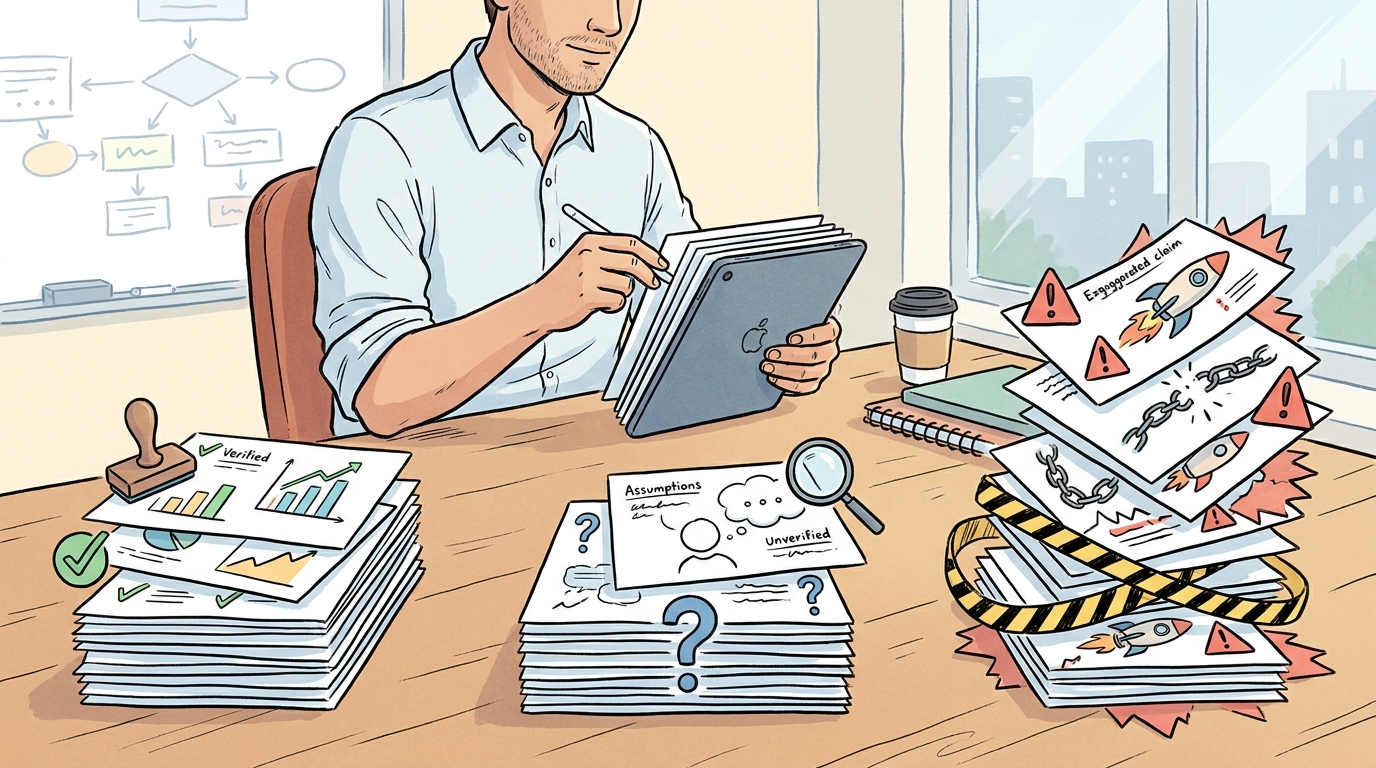
3. Separate facts from claims
AI can make a deck sound confident before the evidence is ready. Ask it to label each statement as one of three types:
Verified fact: backed by data you already have.
Reasonable inference: plausible, but needs support.
Unverified claim: should not appear in an investor deck until checked.
This is especially important for market size, competitor positioning, financial projections, and customer impact claims.
For market slides, the best AI output should push you toward bottom-up logic instead of a vague top-down TAM number. If you need a deeper reference, OpenVC's market slide best practices and Underscore VC's guide to a bottom-up market size slide are useful external resources to cite or review while validating the deck.
4. Generate speaker notes early
Speaker notes are not just for presenting. They expose whether the slide actually has a story. If the AI cannot explain why a slide matters in plain language, the slide probably needs work.
Ask for speaker notes in a direct founder voice:
Write speaker notes for each slide as if the founder is presenting to a seed investor. Keep the tone specific, evidence-aware, and concise. Do not overstate traction or market certainty.
5. Turn review feedback into the next version
A pitch deck improves through targeted critique. Instead of asking AI to "make it better," ask for focused revisions:
Make the problem slide more buyer-specific.
Rewrite the market slide for bottom-up logic.
Add objections an investor might raise.
Shorten the product slide for a 5-minute meeting.
Create an angel version and a seed fund version.
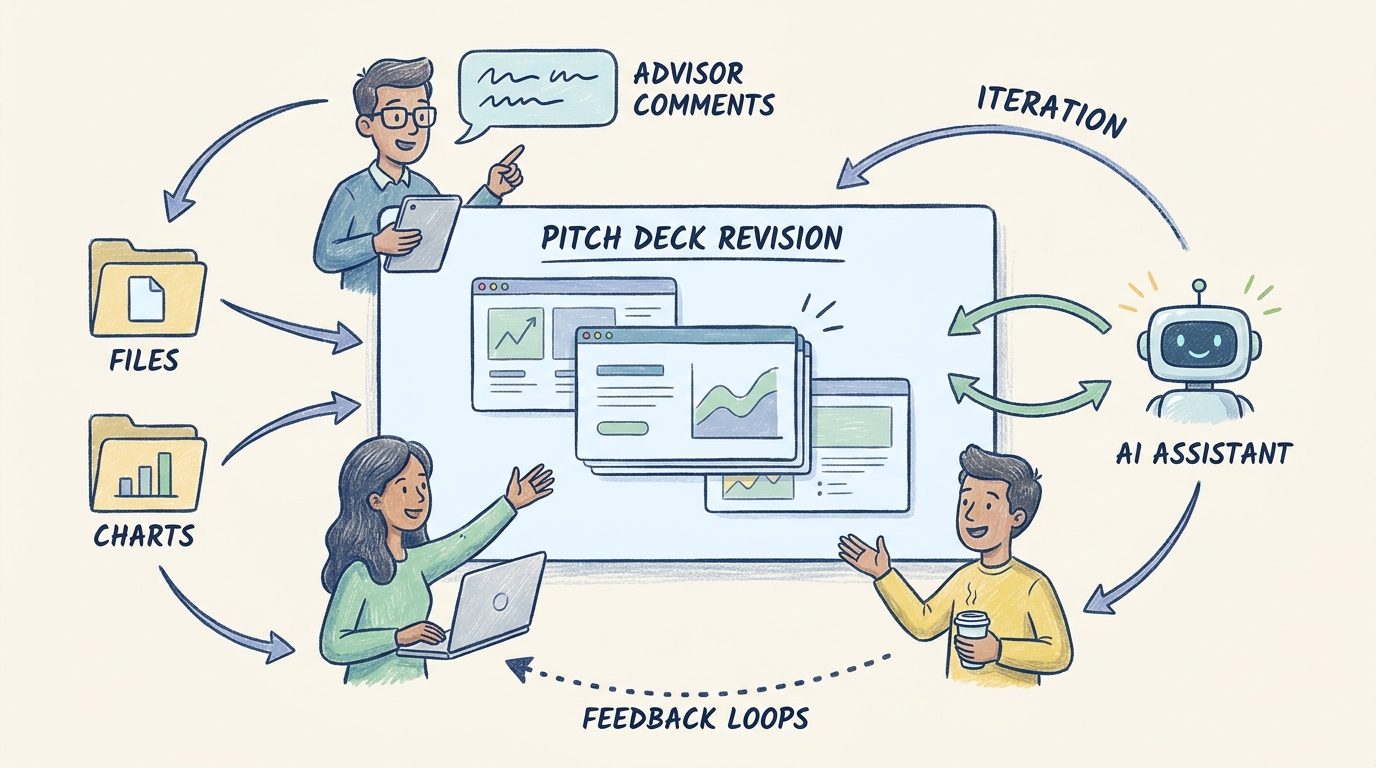
This is where Kollab is useful: the prompt, outline, files, comments, and revisions can stay inside one shared task instead of being scattered across chat history and slide files.
6. Convert the outline into a real presentation workflow
Once the AI-generated outline is validated, you still need a deliverable investors can read quickly. The practical workflow is:
Move the final slide outline into PowerPoint, Google Slides, Keynote, or a PDF deck.
Keep each slide to one main point, one proof element, and one clear visual direction.
Use speaker notes for the live conversation, not as extra text on the slide.
Create a shorter version for warm intros and a more detailed version for partner meetings.
Save investor questions and objections, then use them to revise the next deck version.
If your team is building the final slides in PowerPoint, this companion guide on how to use PowerPoint with AI automation can help you move from AI-generated outline to a cleaner presentation process.
If pitch deck creation is part of a broader repeatable workflow, also see Kollab's guide to AI workflow automation and the article on building a second brain that actually executes. These internal links help connect pitch deck creation with Kollab's larger positioning around AI-native team execution.
Example pitch deck AI prompt
Use this prompt as a starting point:
Create an investor-ready pitch deck for a seed-stage AI startup. The company helps field sales teams capture meeting notes, update CRM records, and create follow-up emails automatically. The buyer is a VP of Sales or RevOps leader. The problem is that field reps lose customer context after meetings and spend too much time updating systems. Current traction: 12 pilot teams, 4 paid customers, and early evidence that reps save 3 hours per week. The business model is SaaS per seat. We are raising $2M to reach 50 customers and build deeper CRM integrations. Generate a 12-slide outline with slide titles, key messages, proof points, suggested visuals, speaker notes, and assumptions to validate.
You can adapt this prompt in the pitch deck maker and keep iterating with your team.
What to review before sharing the deck
Before sending an AI-assisted pitch deck to investors, review these areas carefully:
Accuracy: Are numbers, customer names, market claims, and competitor claims true?
Confidentiality: Did you remove sensitive customer information or internal plans?
Narrative: Does the story build logically from problem to ask?
Specificity: Could this deck only belong to your company, or does it sound generic?
Visual clarity: Can each slide be understood in a few seconds?
Investor fit: Is the deck tailored for the stage and investor type?
Legal review: Are projections, claims, and fundraising language appropriate?
AI can accelerate the first draft, but founders still own the judgment.
How to connect your pitch deck workflow inside Kollab
Kollab's AI Pitch Deck Maker is the main tool page to use with this guide. It is designed for more than a one-time generation:
Paste a founder brief into the tool.
Generate the first investor deck outline.
Add traction notes, customer proof, screenshots, market research, and prior decks.
Ask the agent to rewrite specific slides for different investor types.
Keep co-founder and advisor feedback in the same workspace so the next version has context.
You can also browse the broader Kollab AI tools directory if you want to connect pitch deck work with other team deliverables, such as presentation planning, research briefs, or campaign assets.
Common mistakes when using AI for pitch decks
Mistake 1: Asking for a finished deck too early
If the business story is still unclear, a finished deck only makes the uncertainty look polished. Start with narrative options and assumptions first.
Mistake 2: Letting AI invent traction
A deck with invented metrics is worse than a deck with honest gaps. Ask the AI to mark missing proof rather than filling it in.
Mistake 3: Copying a generic template
Investor decks follow patterns, but the strongest decks feel specific. Use templates for structure, not language.
Mistake 4: Ignoring the team review loop
A pitch deck is usually reviewed by founders, advisors, sales, finance, and sometimes customers. If feedback lives in separate messages, the deck becomes hard to manage.
Why use Kollab for pitch deck AI
Kollab is designed for team work around AI outputs. That matters for pitch decks because the work does not end after the first generation.
With Kollab, you can:
Start from a free AI pitch deck creator.
Keep the generated outline in a shared task.
Add research notes, metrics, screenshots, or previous decks.
Ask the agent for investor-specific rewrites.
Let teammates review the same deck thread.
Preserve context for the next revision.
The result is not just a deck draft. It is a repeatable fundraising workflow.
Related resources
Use these links to go deeper after generating your first deck:
Kollab tools and product pages
Start here: Kollab AI Pitch Deck Maker.
Explore more team AI utilities: Kollab AI tools.
Understand the workspace behind the tool: Kollab product page.
Related Kollab articles
Compare workflows: AI Pitch Deck Creator vs Pitch Deck Template.
Build the final slides: How to Use PowerPoint: A Complete Guide from Basics to AI Automation.
Connect deck work to a repeatable operating system: AI Workflow Automation 2026.
Manage research, files, and iteration context: How to Build a Second Brain That Actually Executes.
Authoritative external references
Learn the standard investor context: Y Combinator's seed deck advice and Sequoia Capital's business plan framework.
Study fundraising narrative structure: Stripe Atlas on fundraising pitch decks.
Review investor deck fundamentals: SVB on creating an investor pitch deck.
Validate the market slide: OpenVC market slide best practices and Underscore VC on bottom-up market sizing.
FAQ
Can pitch deck AI create a complete investor deck?
It can create a strong first structure, slide copy, speaker notes, and visual direction. You should still review claims, numbers, legal language, and confidential details before sharing.
Is AI better than a pitch deck template?
A template gives structure. AI can adapt that structure to your company, audience, traction, and fundraising stage. The best workflow often uses both: template discipline plus AI-assisted narrative drafting.
What is the best prompt for an AI pitch deck generator?
Include product, customer, problem, traction, market, business model, competitors, funding stage, raise amount, and target investor. Ask for slide titles, key messages, proof points, speaker notes, and assumptions to validate.
How many slides should a startup pitch deck have?
Most early-stage decks are around 10-12 slides. The exact number matters less than the clarity of the argument.
What is the best free AI pitch deck maker?
The best free AI pitch deck maker depends on whether you need visual design, slide formatting, or narrative strategy. If you want a fast investor-story draft with slide order, proof points, and speaker notes, start with Kollab's free AI pitch deck maker, then review and refine the claims before sharing.
Can an AI pitch deck generator replace a founder?
No. An AI pitch deck generator can structure the story, draft slides, suggest visuals, and surface weak assumptions. The founder still needs to provide real traction, customer evidence, market judgment, and fundraising strategy.
Should I use AI before or after a pitch deck template?
Use AI before the template if the story is still unclear. Use a template after the narrative is validated, when the goal is visual polish and formatting speed.
Final takeaway
Pitch deck AI is most useful when it helps founders think more clearly. Use it to structure the story, expose weak assumptions, draft speaker notes, and create reviewable versions faster. Then keep improving the deck with real evidence and team feedback.
Start with Kollab's pitch deck AI creator when you want a practical first draft that can keep evolving inside a shared workspace.