
Traditional Second Brain vs. AI Second Brain: How Kollab Turns Your Knowledge Base into an Intelligent Entity That Thinks Proactively
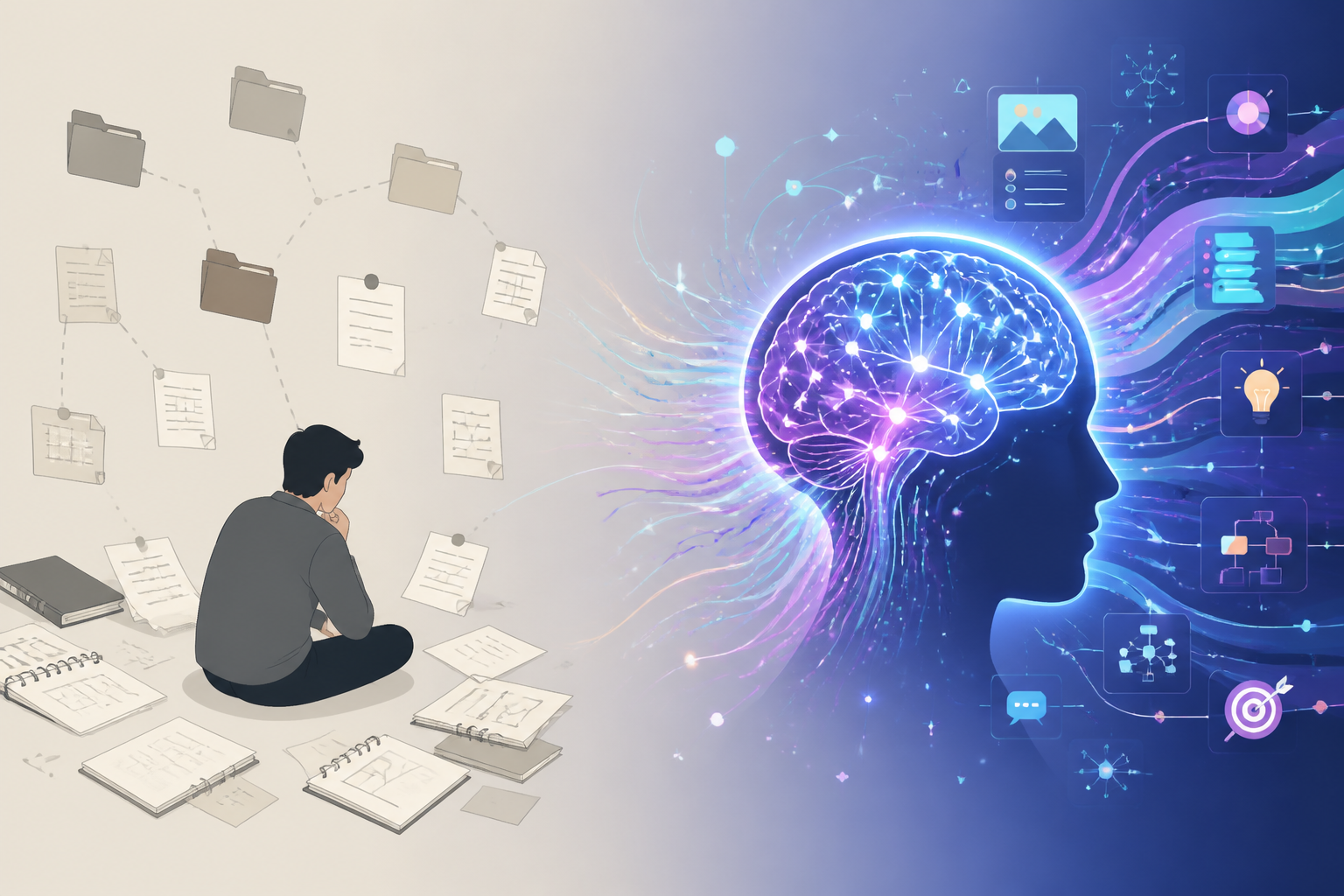
Have you ever found yourself in this situation: You open Obsidian and see over 2,000 notes, but have no idea where to find that “product competitor analysis” you wrote three months ago; you’ve built a beautiful knowledge base in Notion, but still have to manually scroll through the directory every time you search; you’ve installed a bunch of plugins and created countless templates, only to discover that your “second brain” is still mute—it stores a lot of information, but never proactively speaks to you.

This is the ceiling of traditional “Second Brains.” And Kollab is trying to break through it.
I. What Is a “Second Brain”? Where Did It Come From?
The concept of the “Second Brain” was systematically introduced by productivity writer Tiago Forte in his book *Building a Second Brain*. The core idea is simple: externalize what’s in your head—store your thoughts, information, and materials in a reliable system so your brain can focus on thinking, not memorizing.
His methodology is called CODE:
Capture: Save any useful information
Organize: Categorize using the PARA framework (Projects / Areas / Resources / Archives)
Distill: Extract the essence of each note
Express: Turn knowledge into creative output
This method has helped millions of people develop better note-taking habits. Tools like Notion, Obsidian, Logseq, and Roam Research have also emerged as defining products of our time amid this trend.
But the CODE method has a hidden assumption: you must actively and consistently use this system.
II. The Three Fundamental Limitations of Traditional Second Brains
1. It is passive—it only speaks when you ask
Traditional note-taking tools are essentially information repositories. You ask, it answers; you don’t ask, it stays silent. Your knowledge base doesn’t know you have an important meeting today, nor does it know you wrote a relevant competitor analysis last week that you could reuse. It won’t proactively suggest when you encounter a problem: “Hey, here are three related items you’ve saved before—would you like to take a look?”
2. It doesn’t connect—knowledge is isolated, not interconnected
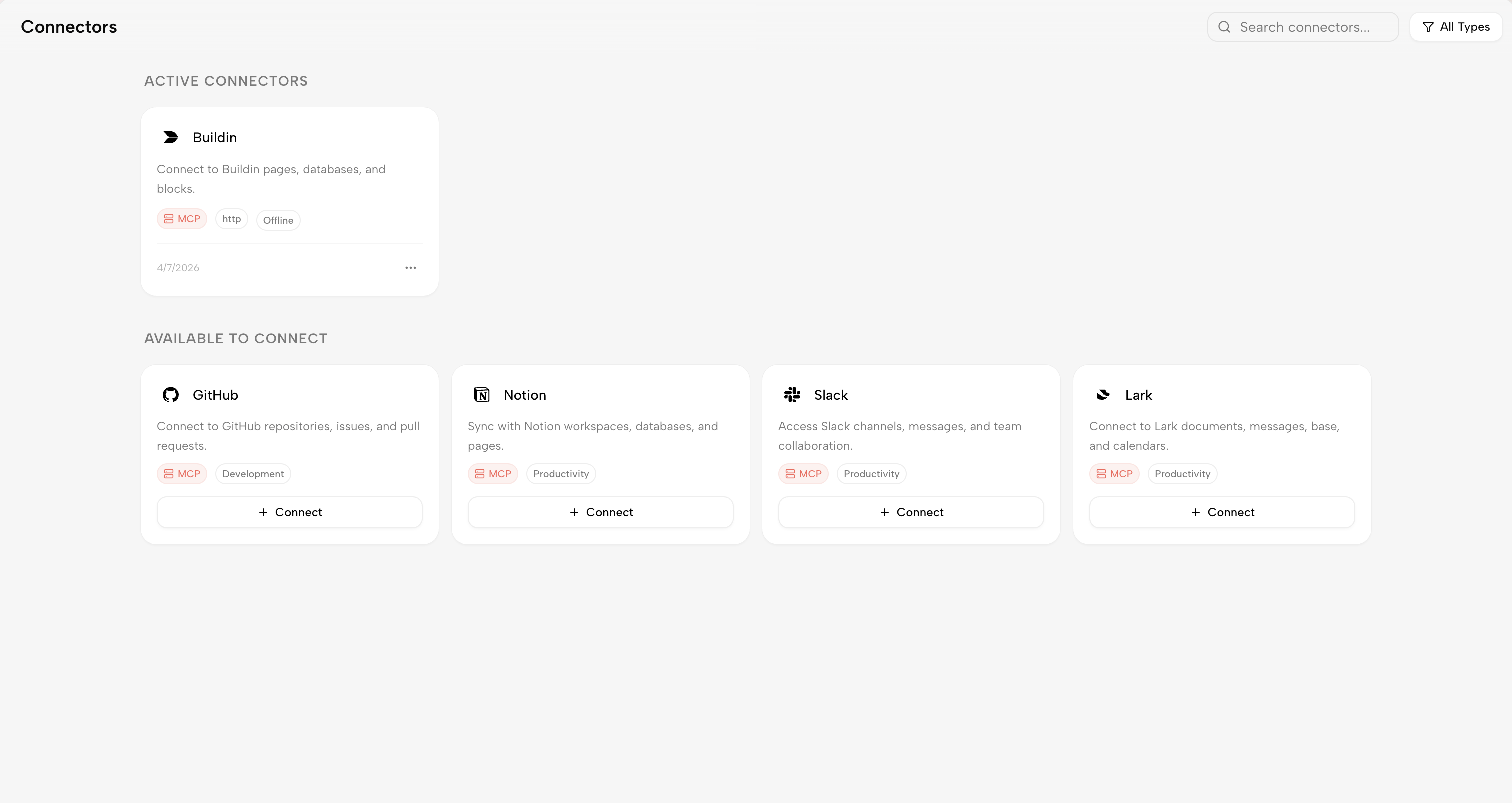
You’ve created client profiles in Notion, saved meeting minutes in Feishu Docs, have key discussions in Slack, and keep decision records in your email—but there’s no connection between them.
Your “second brain” doesn’t know that “this client,” “that meeting,” and “this email” all refer to the same thing.
3. It requires your maintenance—knowledge decay is inevitable
The biggest cost of building a knowledge base isn’t “building” it, but “maintaining” it. Once you stop organizing it, your notes will start to rot within three months: outdated information gets mixed in, you’ll find more things you can’t find than you can, you’ll gradually give up, and then start from scratch again. This is why most people’s “Second Brain” projects eventually turn into digital junkyards.
III. What Does an AI Second Brain Actually Offer?
Over the past two years, people have started integrating AI into note-taking tools, such as Notion AI, Obsidian’s Smart Chat plugin, and Mem.ai. This is a step forward—you can finally search using natural language.
But most “AI note-taking tools” are simply traditional repositories with a chat window tacked on . At their core, they remain passive: you ask a question, and it searches your documents for an answer. Knowledge remains siloed, maintenance still falls on you, and it still doesn’t think proactively.
A true AI Second Brain must achieve three things that traditional tools cannot: deep natural-language search, context-aware proactive recommendations, cross-source knowledge fusion, and the direct conversion of knowledge into actionable steps.
IV. How Kollab Makes the Knowledge Base “Think Proactively”
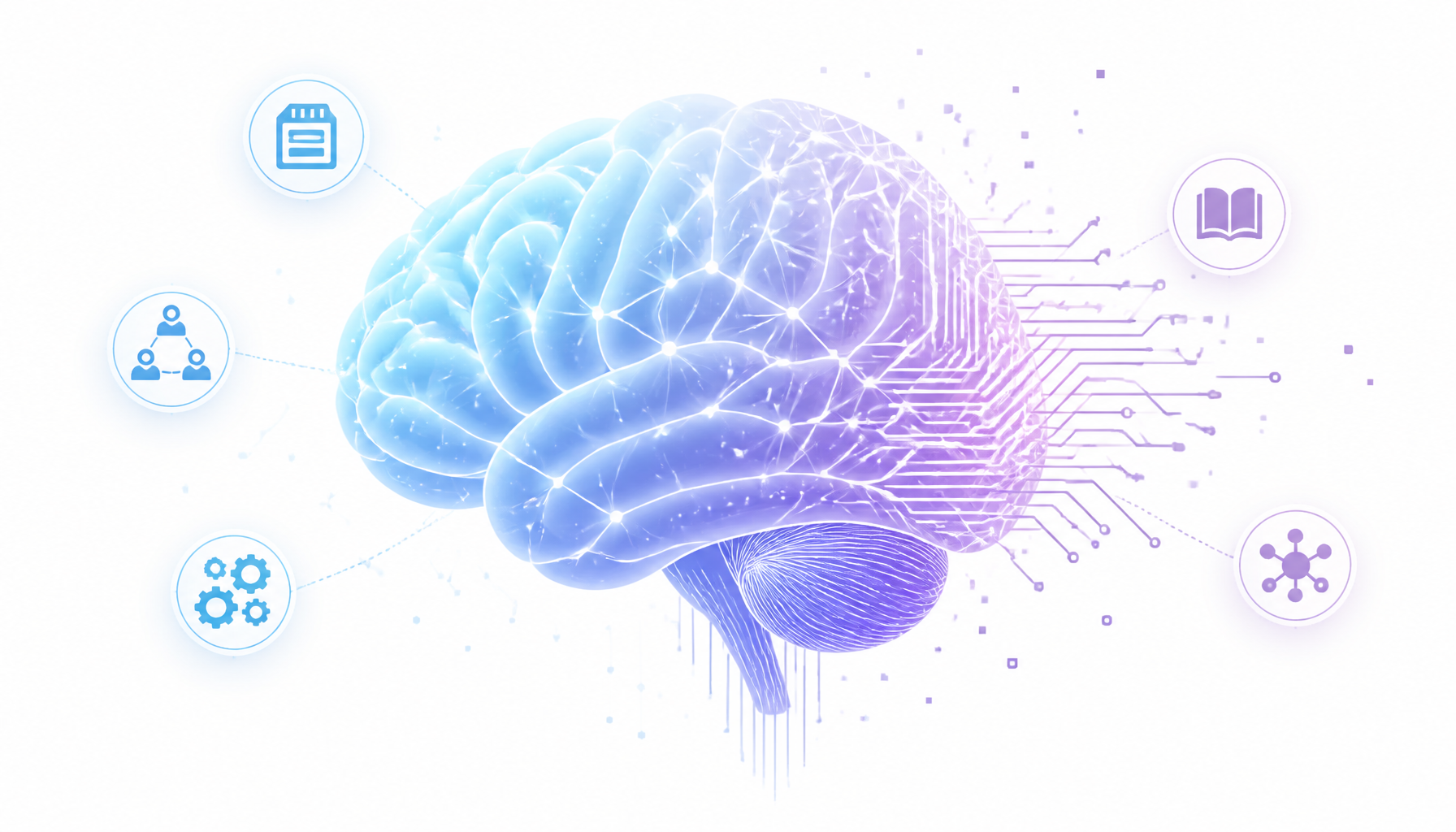
Kollab doesn’t simply add AI to a note-taking tool— it has built the AI Agent into its core architecture from the very beginning.
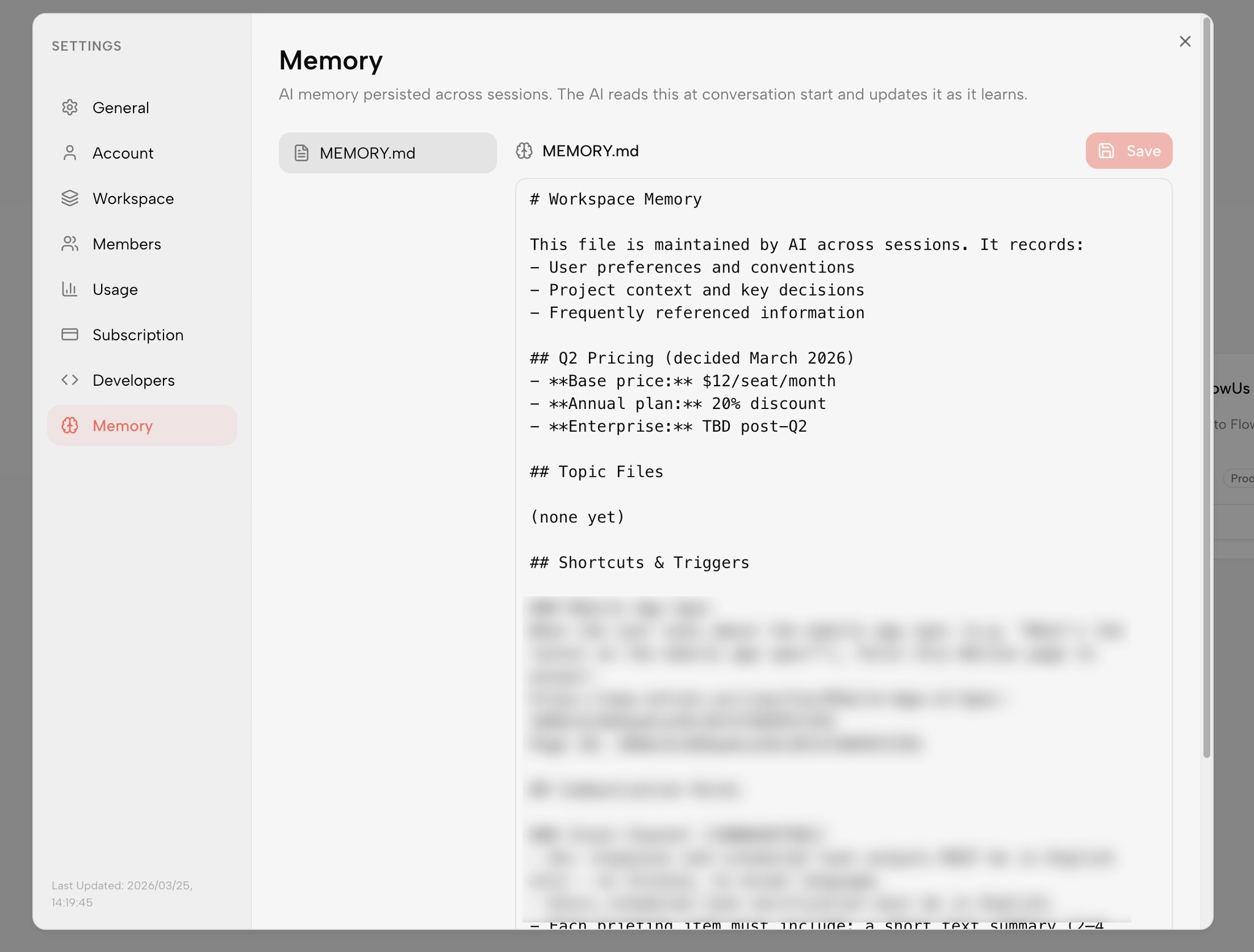
4.1 From “Storage” to “Memory”: Long-Term Context Awareness
Kollab remembers what you’ve done, said, and decided. When you’re discussing a new project, Kollab doesn’t just search for keywords—it recalls the pitfalls you encountered in a similar project three months ago, the requirements you confirmed with a client last week, and a competitor analysis you once bookmarked.
It’s not a database; it’s a document with a memory.
4.2 From “Responding” to “Proactive Engagement”: Context-Aware Proactive Recommendations
Imagine you’re drafting a proposal. Kollab’s AI Agent can automatically:
Identify the type of task
Find the most relevant historical cases and reference materials from your knowledge base
Proactively push them to you, eliminating the need for manual searches
It knows what you’re doing, so it knows what you need.
4.3 From “Knowledge” to “Action”: Agent-Driven Closed-Loop Execution
This is Kollab’s most critical differentiator: knowledge is no longer just knowledge—it becomes actionable intelligence.
Traditional tools: You have to open competitor analysis reports yourself, manually copy key points, and then go to your email client to write the message.
Kollab Agent: Understands your intent → Retrieves key information from the knowledge base → Combines it with your writing style and email history → Generates a draft directly → Sends it with one click.
From “I have information” to “I’ve completed the task”—Kollab takes care of the journey in between.
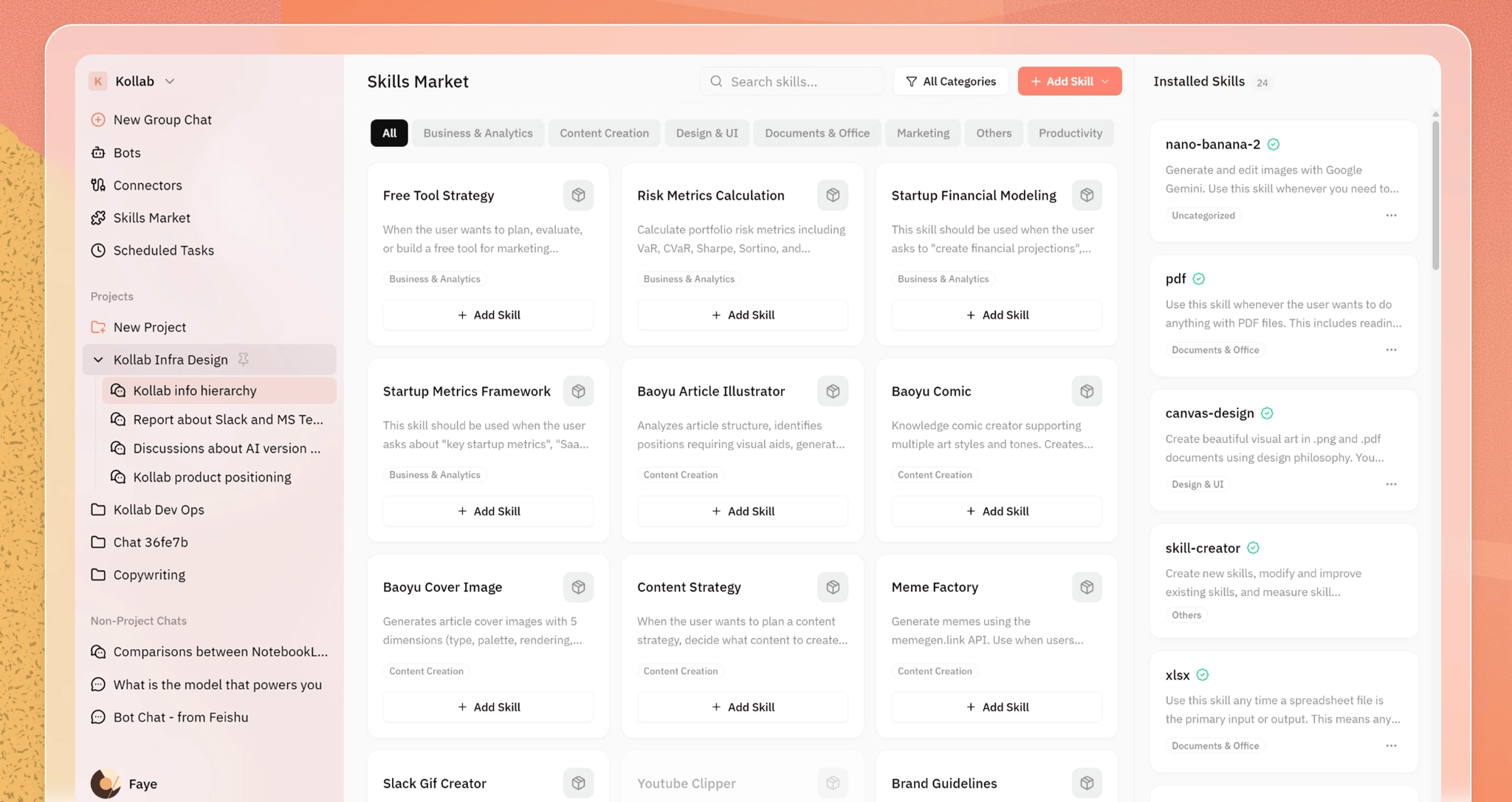
4.4 From “Individual” to “Team”: Shared Intelligence, Not Just Shared Documents
When teams use Kollab, the knowledge base is shared, but the intelligence is personalized. Everyone benefits from the collective knowledge accumulated by the team, while Kollab provides different priorities and suggestions based on your role and current task.
The team’s second brain isn’t just about putting documents in a shared folder—it’s about everyone’s understanding being mutually enhanced.
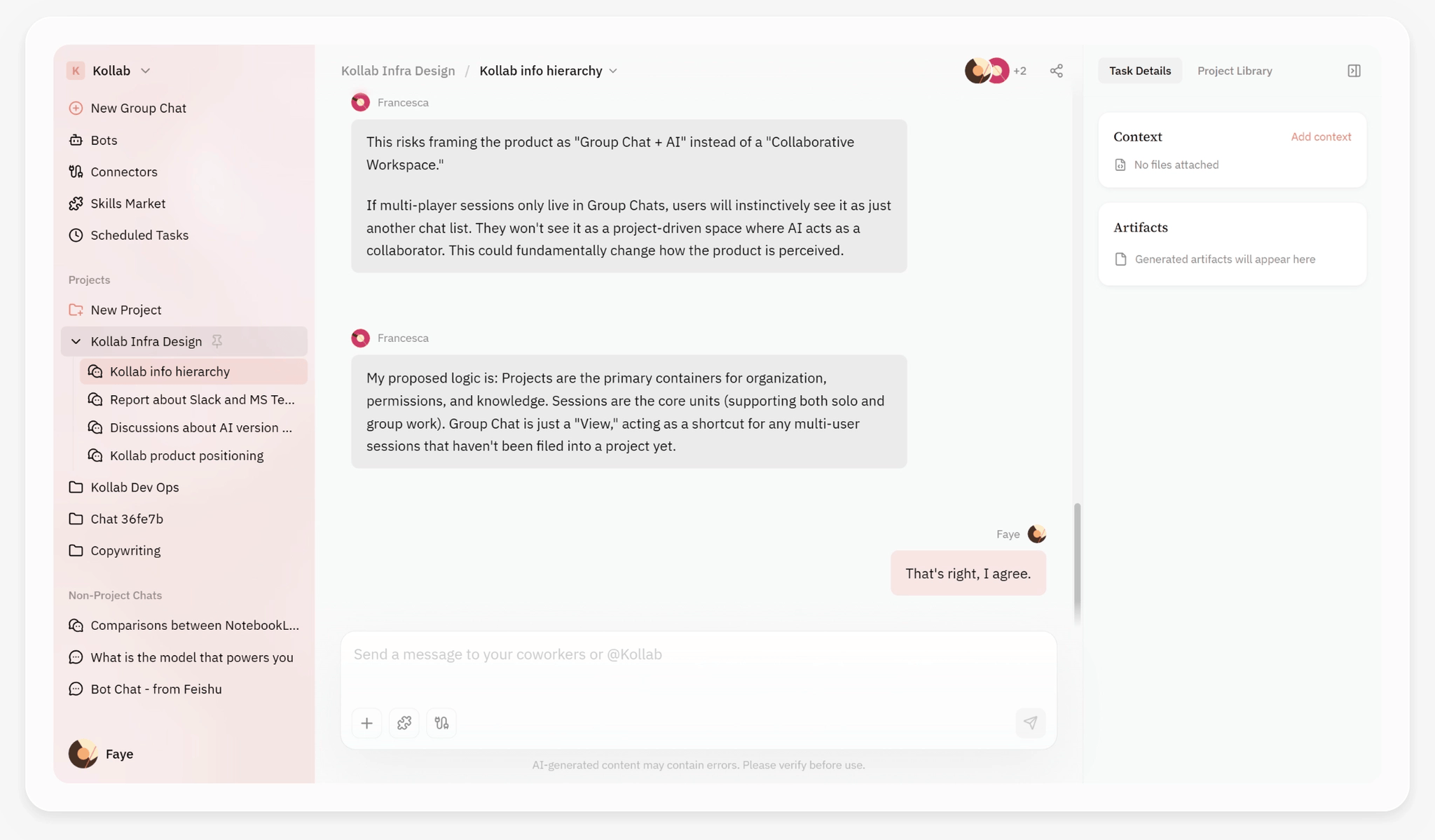
| Capabilities | Traditional Second Brain | AI Note-Taking Tools (Notion AI, etc.) | True AI Second Brain (Kollab) |
|---|---|---|---|
| Natural Language Retrieval | ✗ Keyword Search | ✓ Basic Q&A | ✓ Deep semantic understanding |
| Proactive push of relevant knowledge | ✗ | ✗ | ✓ Context-aware, proactive association |
| Cross-source knowledge integration | ✗ Silos | ✗ Limited to this tool only | ✓ Connects all sources |
| Turn Knowledge into Action | ✗ | ✗ | ✓ Agent directly executes tasks |
| Continuous learning and updates | ✗ Relies on manual maintenance | ✗ | ✓ Automatic ingestion and updates |
V. A Real-World Use Case Comparison
Suppose you’re a content manager tasked with writing an article today about “selecting AI tools.”
You, using a traditional Second Brain (Obsidian):
Open the search bar, type in “AI tools,” and get 47 notes
Scroll through them one by one and find 5 relevant ones
Manually summarize the key points from these 5
Open another window and start writing
Halfway through writing, you realize there’s an important piece of information in a Feishu document, so you switch over to look for it…
Two hours later, I finally started writing in earnest
If you use Kollab:
Tell Kollab: “I want to write an article on selecting AI tools, targeting decision-makers at small and medium-sized enterprises”
Kollab automatically retrieves: competitor data you’ve compiled over the past 6 months, related articles you’ve written before, and industry reports bookmarked by your team members
Generates an outline suggestion, complete with reference sources for each section
You approve the outline, and Kollab begins drafting
30 minutes later, you’re reviewing the draft
Same task, different experience.
VI. The Inevitable Direction of the Second Brain’s Evolution
Looking back at the evolution of the Second Brain concept:
Notebooks (paper)
Digital Notes (Evernote Era)
Bidirectional Linked Knowledge Graphs (Roam / Obsidian Era)
AI Q&A Overlay (Notion AI / Mem Era)
Native AI Agent Knowledge System (Kollab Era) ← We are here
With every evolution, “knowledge” moves one step closer to “action.” Kollab represents not just a better note-taking app, but a paradigm shift: the ultimate goal of knowledge management has never been to “store better,” but to “apply faster, think further, and achieve more.”
VII. Getting Started with Kollab: Start Here
If you currently use Notion or Obsidian to manage your Second Brain, migrating to Kollab doesn’t require abandoning your existing content—you can import it directly and let AI help you reorganize it.
Step 1: Connect your most frequently used knowledge sources (documents, web bookmarks, past notes) to Kollab
Step 2: Let Kollab “scan” your knowledge base to see what interesting connections it can uncover
Step 3: Test it on a real work task—you’ll find that your Second Brain has finally started speaking
Kollab — it doesn’t just remember what you say; it understands what you need. It’s time to upgrade your knowledge base to an AI agent.
Want to learn more about how Kollab builds an AI Second Brain? Try it for free now → kollab.ai