12 AI Writing Tools That Actually Work for Teams in 2026
Compare 12 AI writing tools for team collaboration, brand voice, approvals, reusable workflows, and shared review in 2026.
12 AI Writing Tools That Actually Work for Teams in 2026
For content teams, the challenge often lies in managing disconnected tools.
While using AI individually is straightforward, team collaboration, brand auditing, and cross-departmental publishing introduce specific requirements: maintaining consistent brand voices, managing approval workflows, and sharing prompts.
Below are 12 AI writing tools for 2026, evaluated by how well they support team collaboration, brand voice control, approval workflows, shared prompts, and reusable production processes.
If your team only needs one person to draft faster, a standalone AI writer may be enough. If your team needs briefs, source context, review steps, approvals, and repeatable content workflows to stay connected, start with an AI agent workspace for teams, then add specialized writing tools around it.
How to choose an AI writing tool for a team
Shared context: Can the tool remember project background, audience, brand rules, and source material?
Reusable workflow: Can your team save prompts, review steps, and production logic instead of rebuilding them in every chat?
Approval support: Can drafts move through editors, legal reviewers, managers, or clients without losing context?
Tool fit: Does the tool help with the exact deliverable, such as newsletters, product copy, research summaries, or professional email drafts?
Team handoff: Can teammates continue the work in the same place, or does every draft become an isolated one-off output?
For repeatable team processes, Kollab Skills turn writing instructions into shared AI workflows, while Kollab Bots bring those workflows into the team chat where requests usually begin.
1. Kollab
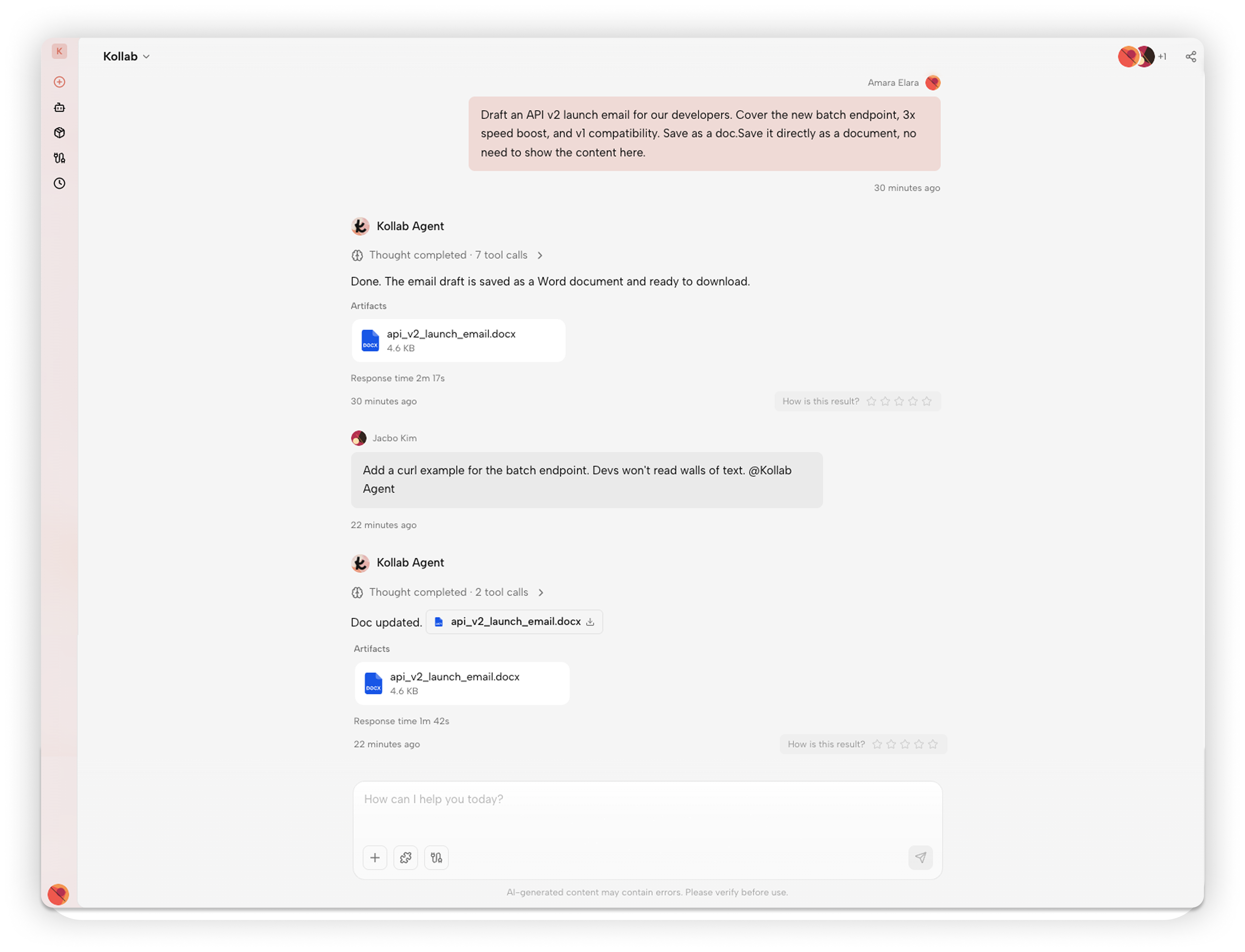
Kollab is designed to integrate document editing, task assignment, and collaboration processes. It supports connections with publishing interfaces, allowing AI to be used throughout the collaboration workflow.
Key Features
Integrated Workspace: Combines document editing, task assignment, and progress tracking.
Team Prompt Library: A central repository for managing and distributing AI writing instructions.
Pros
Standardized configurations allow new members to follow established team styles.
Provides visibility into revision history and collaborative logic.
2. Recall
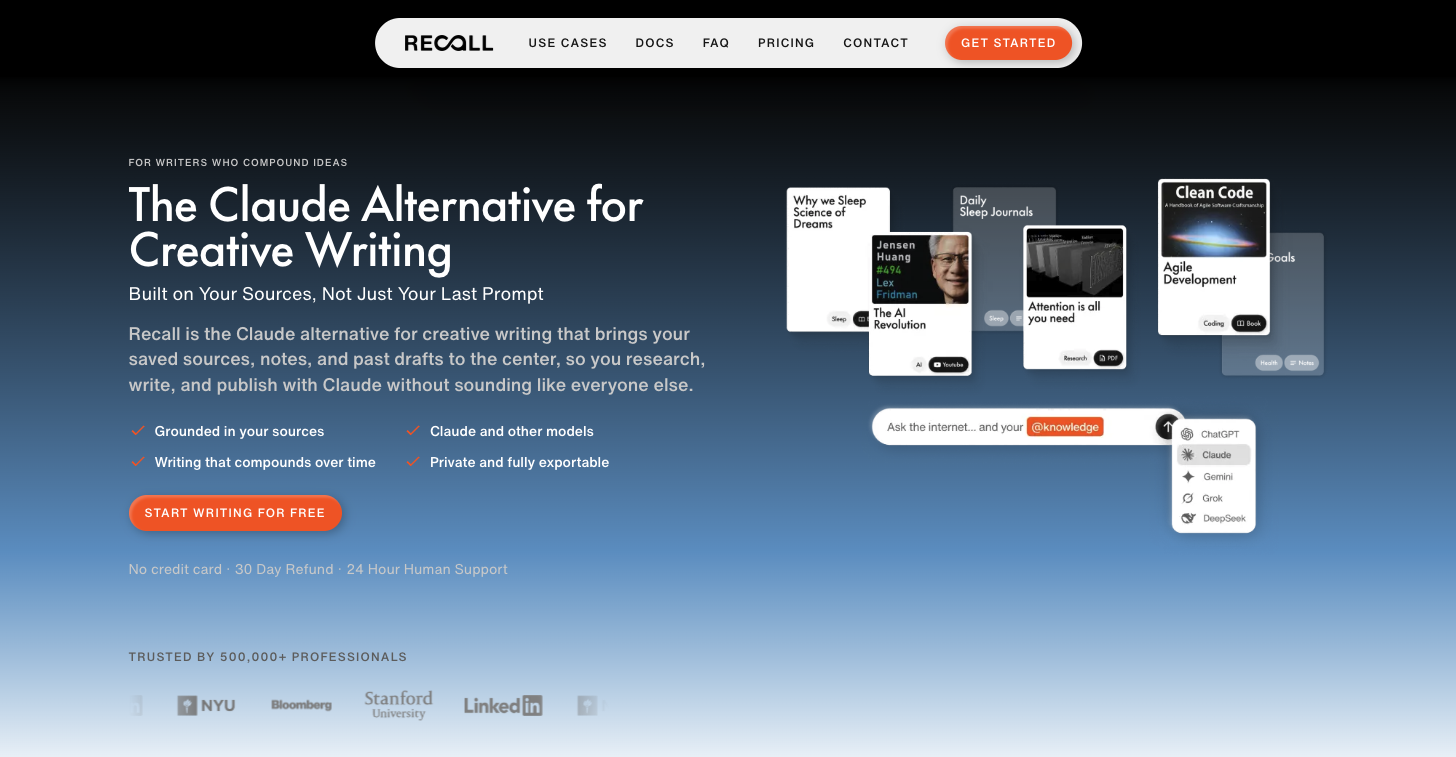
Recall is an AI-powered knowledge management tool built for research, writing, and lifelong learning. Instead of asking users to build folders or maintain backlinks by hand, it saves content with one click and lets AI handle the summarizing, organizing, and connecting automatically. Articles, videos, podcasts, PDFs, and notes that team members save come together into a knowledge base you can chat with directly, so writing starts from your own team's accumulated material instead of a fresh web search every time.
Key Features
Frictionless Capture: Save articles, YouTube videos, podcasts, PDFs, webpages, and notes straight from the browser or phone, so useful information doesn't get lost in a pile of open tabs and bookmarks.
Self-Organizing Library: AI summaries are generated the moment content is saved, with automatic tagging and categorization replacing the manual folder upkeep teams would otherwise do themselves.
Chat With Your Knowledge: Ask questions across the full library, a specific source, a single card, or the open web — answers prioritize citations from what the team has already saved, keeping outputs grounded and traceable.
Connected Knowledge Graph: Related ideas are automatically linked into a knowledge graph, and relevant content resurfaces while browsing, helping the team rediscover material they'd saved earlier while writing.
Pros
Writing can start from material the team has already collected, cutting down on repeat research.
Content is never used to train AI models, and everything can be exported to Markdown at any time — data stays portable.
3. Jasper
Jasper focuses on marketing content generation. It provides structured templates for various copy types and allows for specific brand persona configurations.
Key Features
- Scenario-Based Generation: Specific modules for ad copy, blog posts, and email sequences.
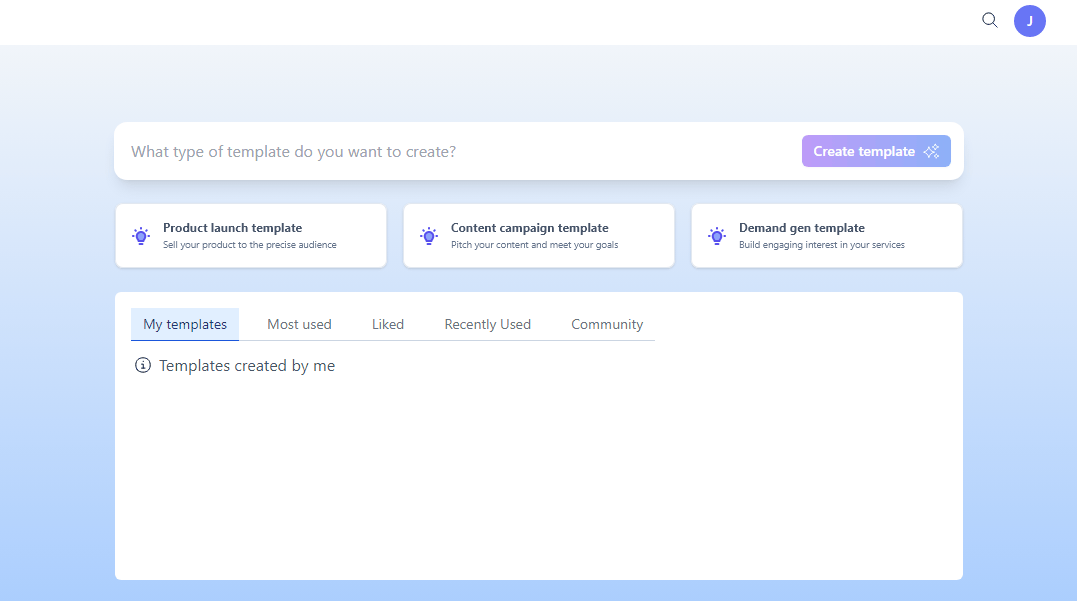
Brand Voice Configuration: Analyzes existing content to set specific brand tones.
Tool Integration: Supports connections with external optimization tools such as SurferSEO.
Pros
Designed around marketing frameworks and conversion-oriented structures.
Suitable for teams managing international content or multi-platform distribution.
Allows teams to store successful content patterns as reusable AI assets.
4. Buildin
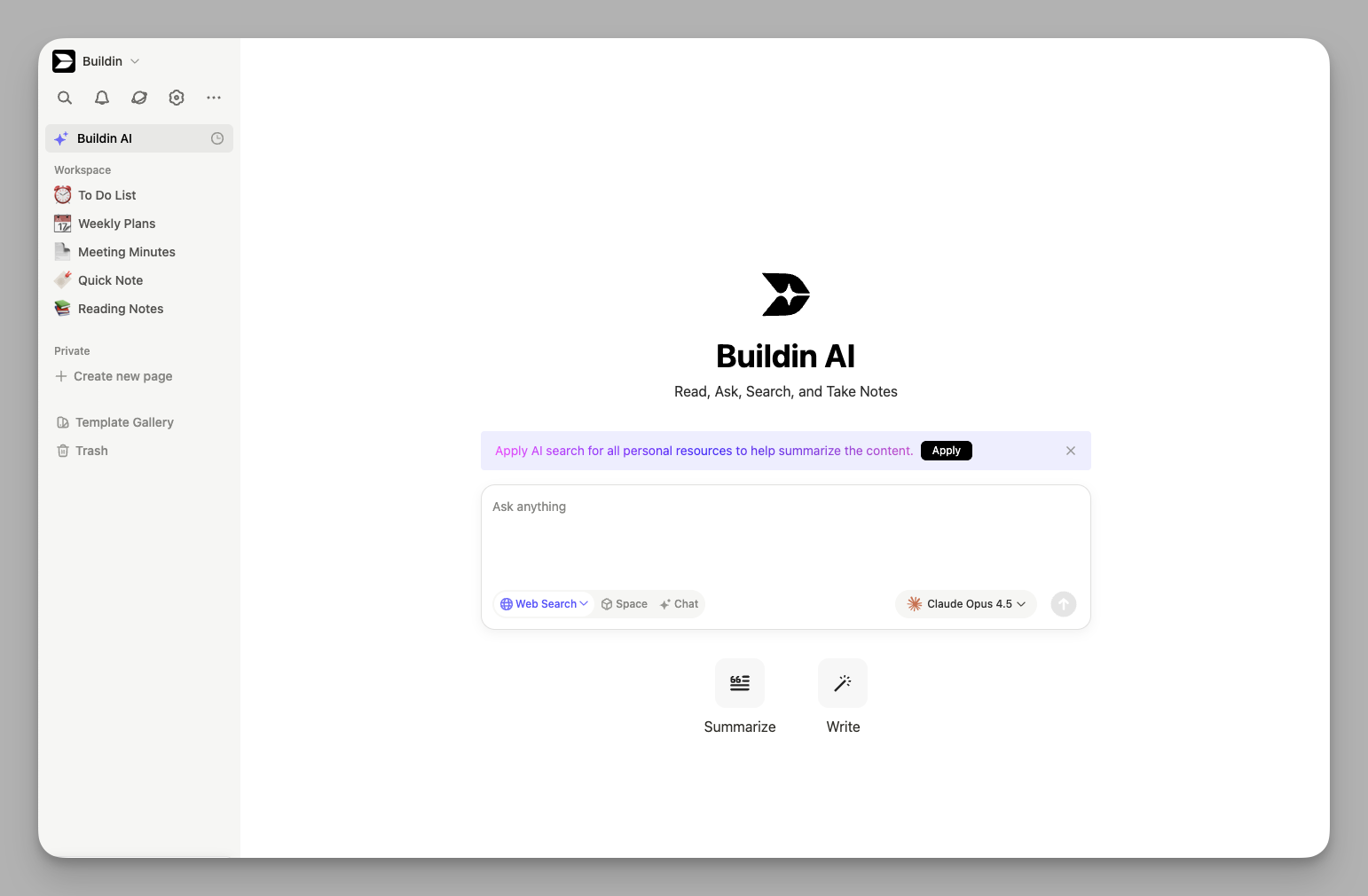
Buildin is a knowledge management platform for individuals and teams. It organizes information through pages and databases and includes features for content distribution and monetization.
Key Features
- Monetization Features: Supports setting notes or templates as paid content with subscription options.

- AI Knowledge Search: Provides AI-based retrieval, summarization, and creation across stored content.
Visual Organization: Includes mind maps and multi-dimensional databases for project management.
Notion Migration: Supports importing data from Notion via API while maintaining structure and formatting.
Pros
Combines notes, collaboration, mind maps, and cloud storage in one platform.
Allows creators to distribute digital assets without external platforms.
Private deployment options cater to specific enterprise security requirements.
5. Copy.ai
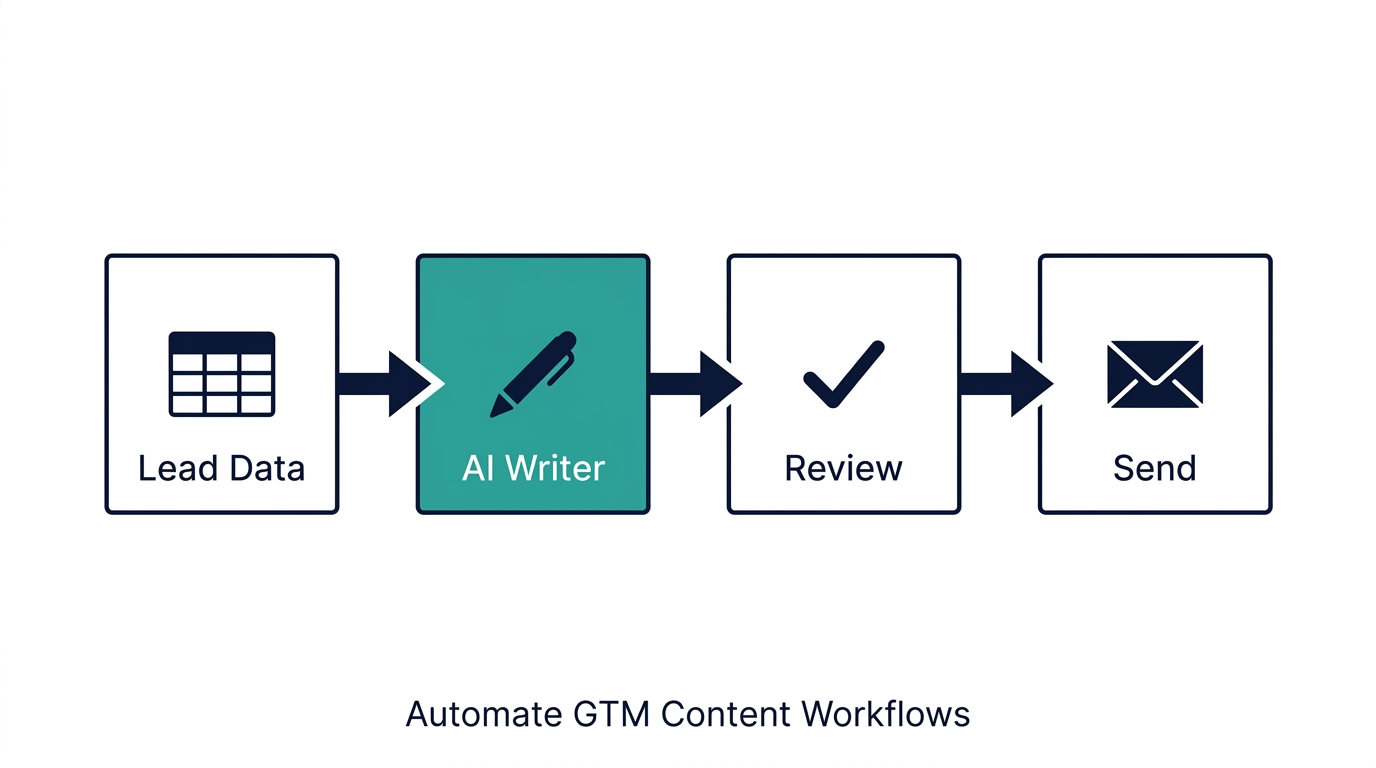
Copy.ai uses a workflow-based approach for high-volume content production, such as SKU descriptions or SEO articles. Its graphical interface allows teams to build automated generation sequences.
Key Features
Automated Workflows: Teams can design and reuse specific content generation sequences.
Localization Tools: Features for translation and cultural adaptation across multiple markets.
Bulk Processing: Supports generating multiple pieces of content simultaneously via spreadsheet imports.
Pros
Reduces repetitive manual tasks in high-volume production environments.
Helps maintain messaging consistency across different language versions.
Shared workflows allow for standardized production across the team.
6. Coda
Coda AI provides a canvas that integrates AI writing with databases and automated tasks. It allows documents to interact with underlying data structures.
Key Features
- Data-Linked Collaboration: AI can reference internal databases to generate reports or summaries.
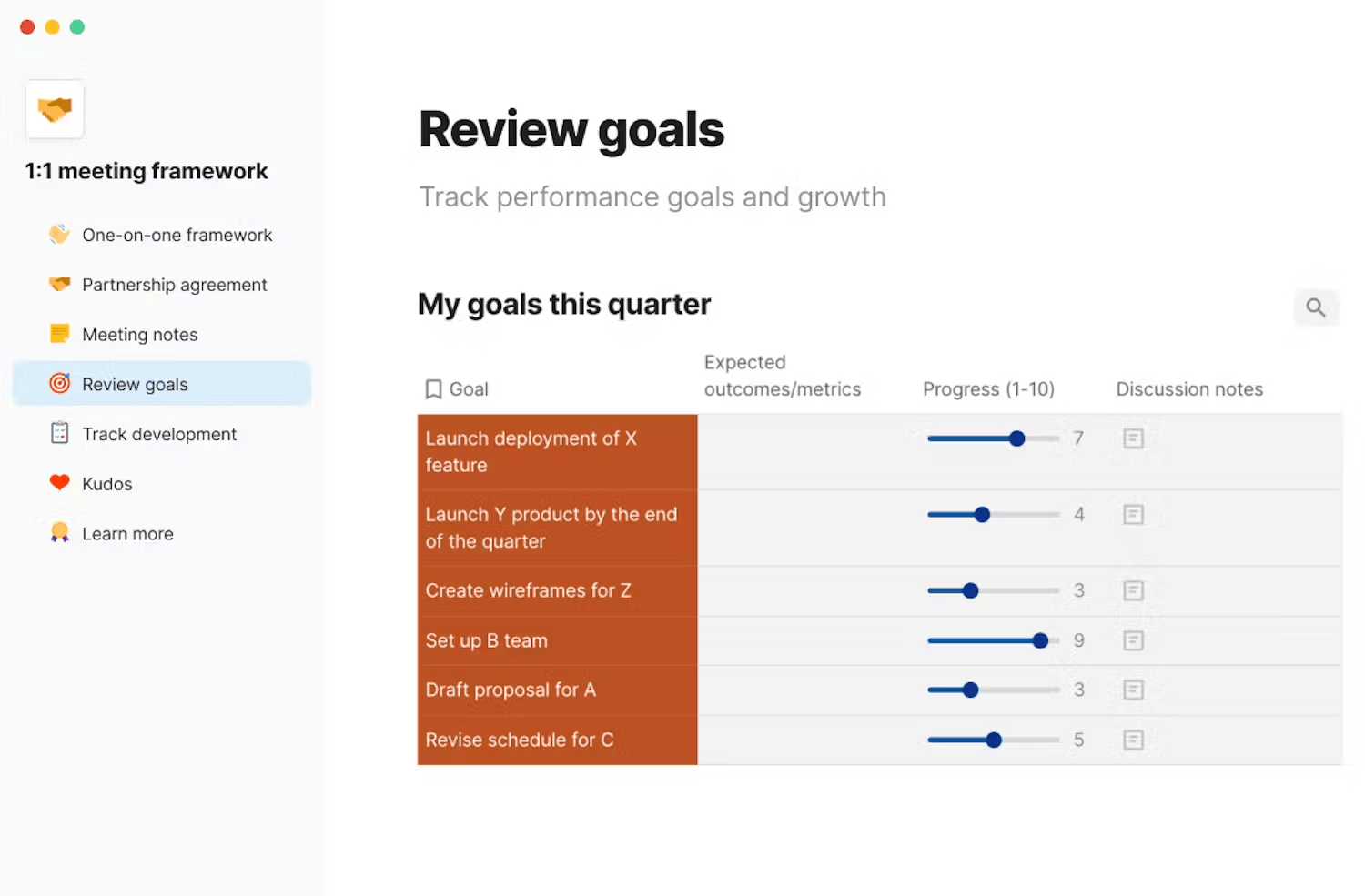
Custom Workstations: Teams can configure specific editing interfaces based on project requirements.
Task Automation: AI-led reviews can trigger status updates or notifications within the document.
Pros
Centralizes writing and project management within a single interface.
Flexible configuration options to match different team operational styles.
Includes permission controls suitable for multi-departmental use.
7. Writer
Writer is a collaboration platform designed for enterprise environments with specific compliance requirements. It uses a rule-based system for automated brand and regulatory checks.
Key Features
Style Guide Enforcement: A shared system that detects and corrects prohibited terms in real-time.
Compliance Checks: AI performs scans for brand and legal alignment before human approval.
Custom Model Training: AI can be trained on proprietary corporate data to align with internal writing standards.
Pros
Automates aspects of the review process to manage brand risk.
Standardizes tone and terminology across large-scale external communications.
Includes data isolation features for corporate information security.
8. QuillBot
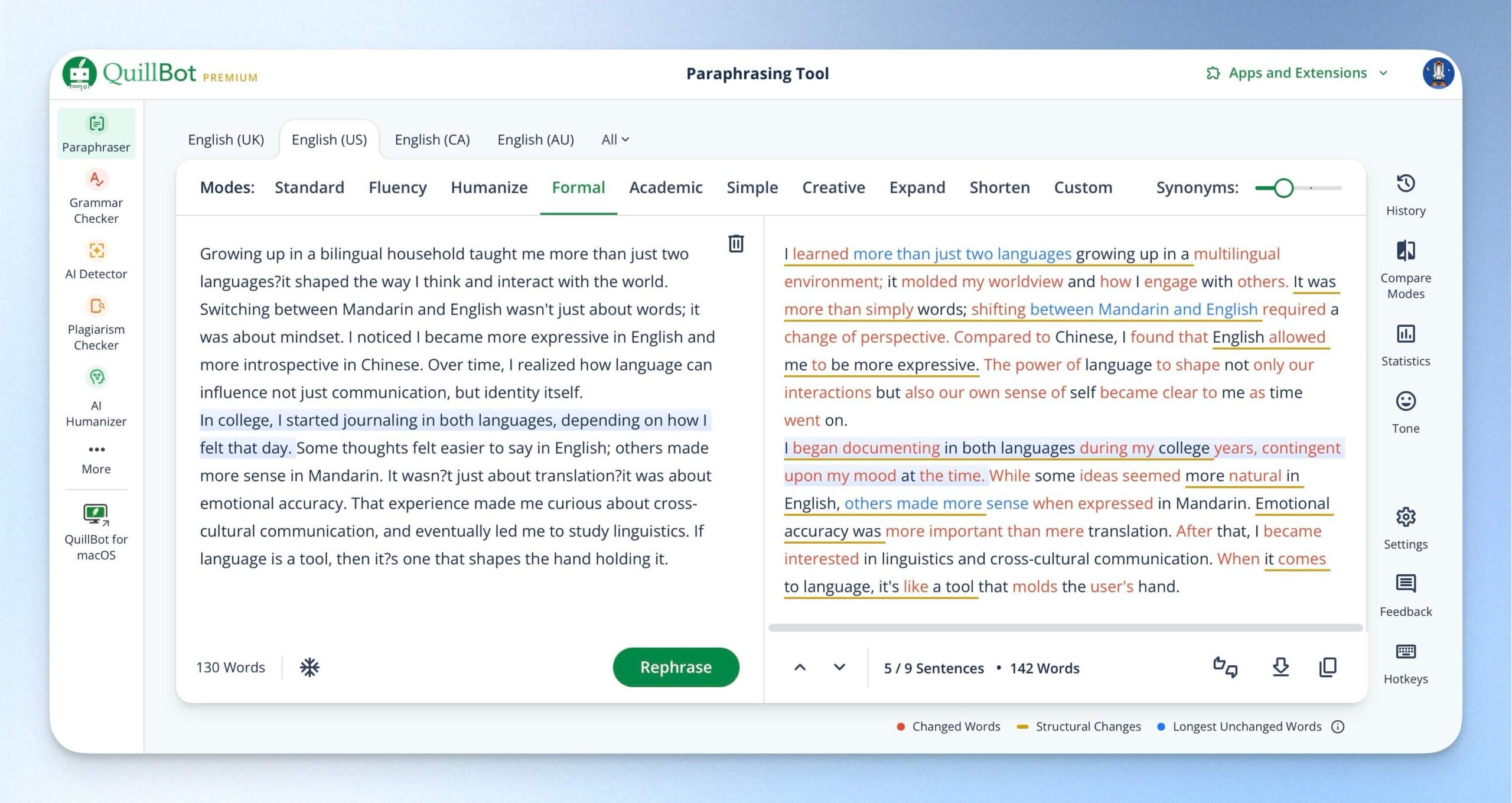
QuillBot functions primarily as a post-processing tool rather than a generative one. It focuses on restructuring and refining existing drafts to align with specific standards.
Key Features
Rewrite Modes: Includes preset modes (such as Formal or Creative) to standardize polishing.
Localization Support: Supports translation and cross-cultural editing in over 45 languages.
Summarization: Tools for extracting key points from reference materials.
Pros
Focuses on the refinement of existing content to reduce mechanical phrasing.
Useful for the optimization phase to align the quality of drafts from different contributors.
Operates as a plugin that integrates with existing writing workflows.
9. Lex
Lex is a collaborative writing tool best described as a Google Docs alternative built with AI in mind. It combines real-time collaboration, comments, version comparison, and AI editing suggestions in a single document, making it a fit for teams that need to polish and review the same draft together, repeatedly.
Key Features
AI Feedback & Rewrites: Ask the AI for feedback, brainstorming, or rewrite suggestions directly inside the draft, with no need to switch to an external chat window.
Real-Time Collaboration & Comments: Multiple people can edit at once and see each other's input live, with full commenting and version comparison so review notes stay attached to the document.
Publishing & Sharing: Generate a read-only link to share outside the team, or invite collaborators to edit directly through a web link — no extra app download required.
Advantages
AI suggestions, comments, and version history stay in one document, cutting down on feedback bouncing between tools.
Fits team writing workflows that need frequent, multi-person review and line-by-line polishing.
A shared link is enough to collaborate, lowering the barrier for outside reviewers such as clients or legal.
10. Sudowrite
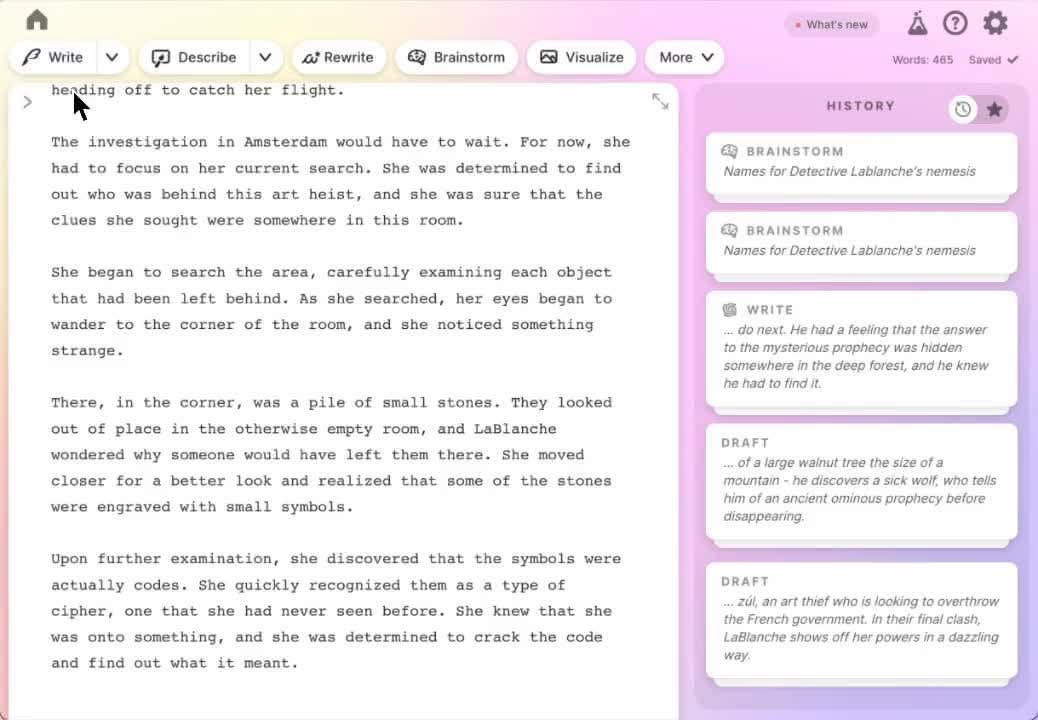
Sudowrite focuses on narrative and creative writing. It provides tools for creative teams to collaborate on storytelling and brand-focused narrative projects.
Key Features
Story Bible: A central repository for brand settings and characters to maintain consistency.
Sensory Expansion: Tools for adding descriptive detail to existing text.
Brainstorming Modules: Features for generating ideas and alternatives during the creative process.
Pros
Provides specialized tools for narrative-driven content.
Supports multi-person collaboration on projects with complex internal settings.
Designed for creative planning and brand storytelling teams.
11. Grammarly
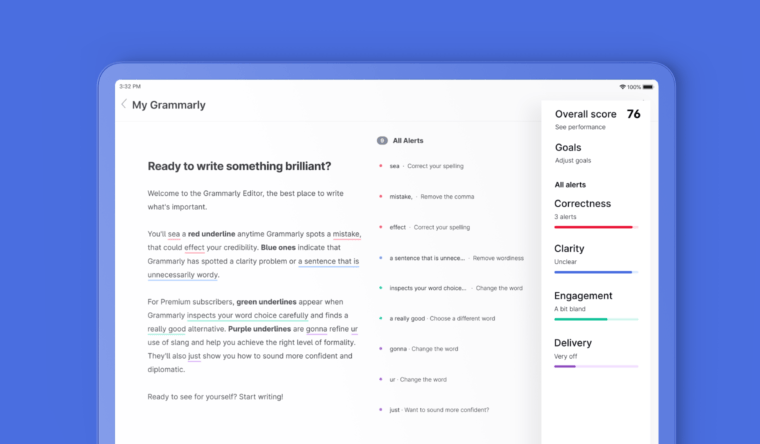
Grammarly provides a communication management system that evaluates writing quality across various platforms. It includes features for real-time evaluation of emails and messages.
Key Features
Style Guide Management: Administrators can set rules that are enforced across all team communications.
Tone Evaluation: Provides real-time alerts regarding the tone of written content.
Platform Integration: Works across various desktop and web-based work software.
Pros
Standardizes written output across different departments with minimal training.
Provides feedback to help maintain professional standards in external communications.
Real-time suggestions assist in maintaining consistency across different communication channels.
12. Notion
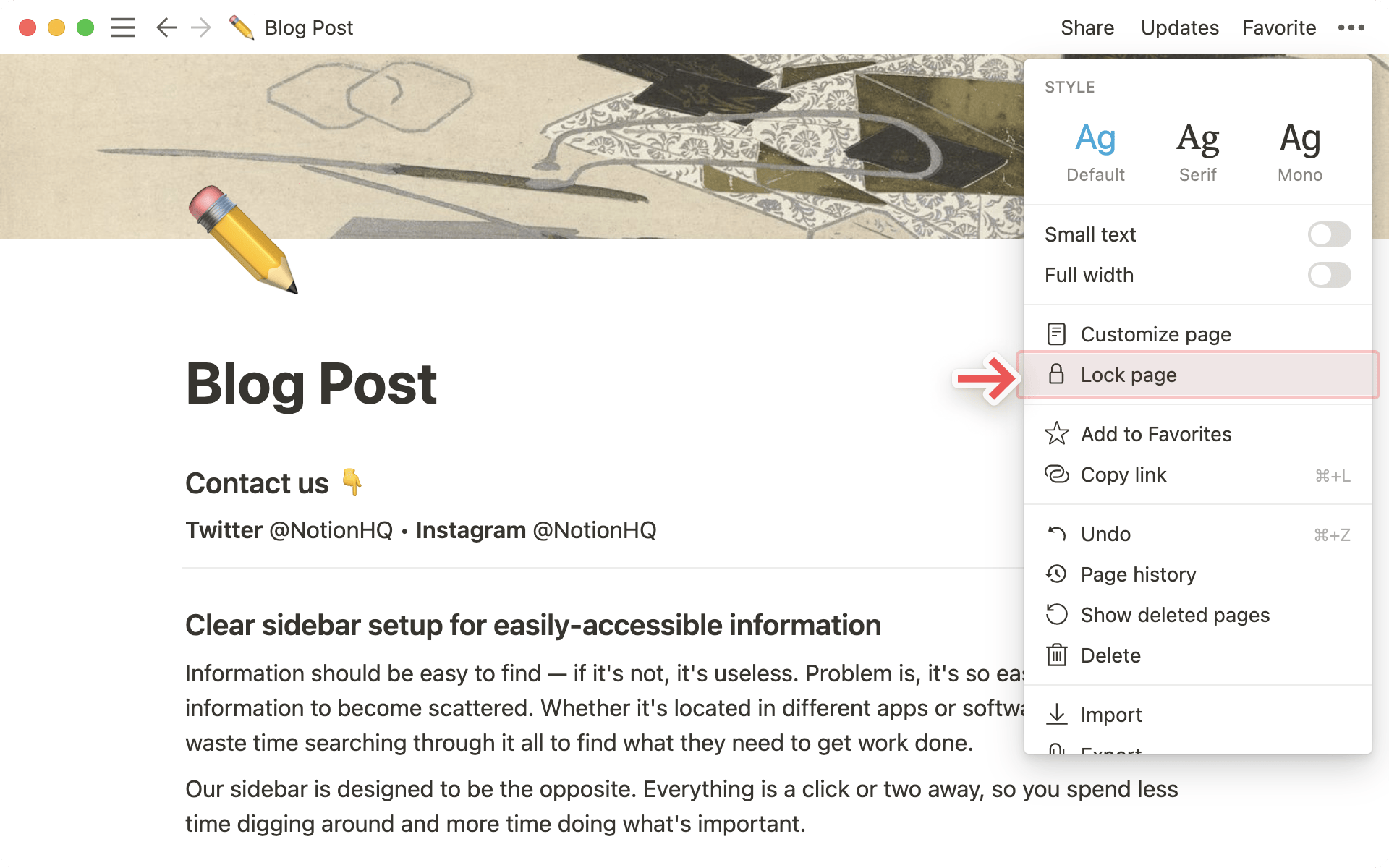
Notion AI integrates with the existing documents, projects, and notes stored within the Notion platform. It can reference historical data to inform new content generation.
Key Features
Document Indexing: AI references existing company documents when generating or editing content.
Collaborative Commands: Tools for summarization, translation, and extracting action items within the editor.
Document Conversion: Converts meeting notes into project plans or other structured formats.
Pros
Uses existing context within the platform to inform content generation.
Integrates writing, management, and archiving within a single system.
Serves as a reference tool for team-specific information.
Comparison Overview
| Tool | Primary Focus | Target Audience |
|---|---|---|
| Kollab | Workflow integration & Publishing | Teams requiring tool consolidation |
| Recall | Knowledge capture, AI summaries, and a team knowledge base | Teams that want to write from their own saved material first |
| Jasper AI | Marketing framework & SEO | Marketing agencies with SEO requirements |
| Buildin | Notes, Monetization & Private hosting | Content creators & firms needing private deployment |
| Copy.ai | Automated bulk production | E-commerce teams with high-volume needs |
| Coda AI | Fusion of docs, data & tasks | Teams using customized workflows |
| Writer | Compliance & Style guide enforcement | Regulated industries & large enterprises |
| QuillBot | Post-processing & Rewriting | Teams focusing on content refinement |
| Lex | Collaborative editing, comments, and version management | Teams that need multiple people to repeatedly review the same draft |
| Sudowrite | Narrative expansion & Ideation | Brand storytelling & creative teams |
| Grammarly | Quality & Tone monitoring | Teams requiring unified communication standards |
| Notion AI | Knowledge base retrieval & Integration | Teams with existing assets in Notion |
Recommended Configurations
1. Content Creators: Buildin + QuillBot Buildin manages notes and monetization, while QuillBot acts as a post-processing tool to refine drafts for different distribution channels.
2. E-commerce & Global Teams: Copy.ai + Grammarly Copy.ai generates bulk SKU descriptions via workflows, while Grammarly monitors the quality of customer-facing communications.
3. Marketing Agencies: Jasper AI + Buildin Jasper is used for initial marketing drafts, while Buildin stores client assets and manages project timelines and mind maps.
4. Regulated Industries: Writer + Kollab Writer handles automated compliance auditing, while Kollab manages internal approval hierarchies and the publishing process.
Conclusion
The selection of AI writing tools often depends on how well they integrate into a team's specific workflow.
For management, the implementation of AI involves evaluating how tools address voice consistency, approval fragmentation, and data silos. The objective is to transition from individual AI use to integrated team productivity.
Recommendation: Teams should consider a core AI agent workspace supplemented by specialized writing tools for specific tasks. Use Kollab Skills when the primary need is repeatable writing logic, Kollab Connectors when agents need source material from other tools, and the AI email generator when the deliverable is professional outreach, replies, or follow-ups. For a broader map of repeatable team workflows, browse the Kollab use case library.