Automazione dei workflow AI nel 2026: perché i processi dei team si bloccano
Scopri perché i processi dei team si bloccano ancora nel 2026 e come Kollab usa Skills, Connectors e attività pianificate per eseguire workflow AI.
AI Workflow Automazione nel 2026: Perché i processi del team sono ancora fermi
Stiamo vivendo in un'era di profonda contraddizione:strumenti digitalistanno proliferando a un ritmo senza precedenti, eppure l'energia umana viene prosciugata dacollaborazione frammentata. Nel 2026, la traiettoria operativa di ogni impresa è essenzialmente tessuta insieme da innumerevoli Workflows. Tuttavia, nelle mie profonde conversazioni con centinaia di leader di team, ho scoperto che la stragrande maggioranza di questi Workflows è in uno stato di "sub-salute". Spesso faticano a sopravvivere con ricordi frammentati, registri di chat sparsi attraverso vari istantapp di messaggistica, e una dipendenza eccessiva dall'autodisciplina dei membri del team.
Questo stato di cose provoca un persistente senso di ansia da esecuzione. Investiamo un tempo significativo nella documentazione dei processi e nell'acquisto di costosi software SaaS, eppure, quando arriva il momento della reale implementazione, tutto sembra tornare al punto di partenza: promemoria manuali, follow-up ripetuti e contesto sparso tra strumenti.
AI Workflow l'automazione si blocca quando i team automatizzano solo le notifiche. La vera automazione richiede cinque livelli connessi: contesto condiviso, accesso agli strumenti, logica di processo riutilizzabile, revisione umana e memoria persistente dello spazio di lavoro. Ecco perché abbiamo costruitoKollab: uno spazio di lavoro agente AI condiviso doveConnectorsfornire agli agenti l'accesso agli strumenti del team,Skillsrendere i processi ripetibili riutilizzabili, eBotporta quei Workflows in Slack, Telegram e altre conversazioni del team.
I 5 strati mancanti dell'automazione AI Workflow
Contesto condiviso: Gli agenti hanno bisogno di accesso allo stesso background del progetto, ai file, alle decisioni e alle conoscenze che utilizza il tuo team.
Accesso agli strumenti: L'automazione non può fermarsi alla chat. Gli agenti hanno bisogno di connessioni autorizzate ai sistemi sorgente, alle applicazioni di lavoro e alle superfici di erogazione.
Logica di processo riutilizzabile: I team hanno bisogno di Workflows salvati, non di prompt usa e getta che scompaiono dopo ogni sessione.
Revisione umana: La persona giusta deve ancora approvare, correggere o reindirizzare il lavoro ad alta responsabilità.
Memoria persistente: Workflows ricorrente ha bisogno di storia, preferenze e decisioni precedenti, non di un nuovo inizio freddo ogni volta.
1. La verità sull'automazione: la documentazione non equivale all'automazione
Molti team nutrono un serio fraintendimento secondo cui basta scrivere unSOP (Procedura Operativa Standard)inNotion o un Wikicostituisce il processo Building. Tuttavia, attraverso una pratica estesa presso Kollab, abbiamo scoperto un enorme divario tra "documentare un processo" ed "eseguire un processo."
Documentazione: In sostanza, questa è una revisione post-mortem o una guida statica. Dice alle persone cosa dovrebbero "teoricamente" fare. Tuttavia, si basa molto sulla memoria e sull'iniziativa dell'esecutore; durante i periodi di punta più intensi, questi documenti vengono spesso relegati allo scaffale posteriore.
Esecuzione: Questa è una risposta istantanea basata su una logica preimpostata. Ciò significa che il processo non è più un testo morto che giace in un documento cloud; invece, attraverso Kollab, diventa un motore di business autonomo e circolante automaticamente.
Attraverso Kollab, puoi trasformare quelle logiche aziendali dormienti nei manuali direttamente in Kollab Playbooks con capacità di esecuzione in tempo reale, assicurando che ogni Task critico raggiunga il 100% di completamento senza intervento umano.
2. Kollab: Un motore di crescita alimentato da AI per team moderni
Per raggiungere un vero ciclo chiuso di business, Kollab ha ridefinito la forma di Workflows. Non è solo uno strumento di supporto, ma uno spazio di lavoro intelligente che consente agli agenti AI di partecipare profondamente e contribuire al valore.
Spazio di lavoro condiviso
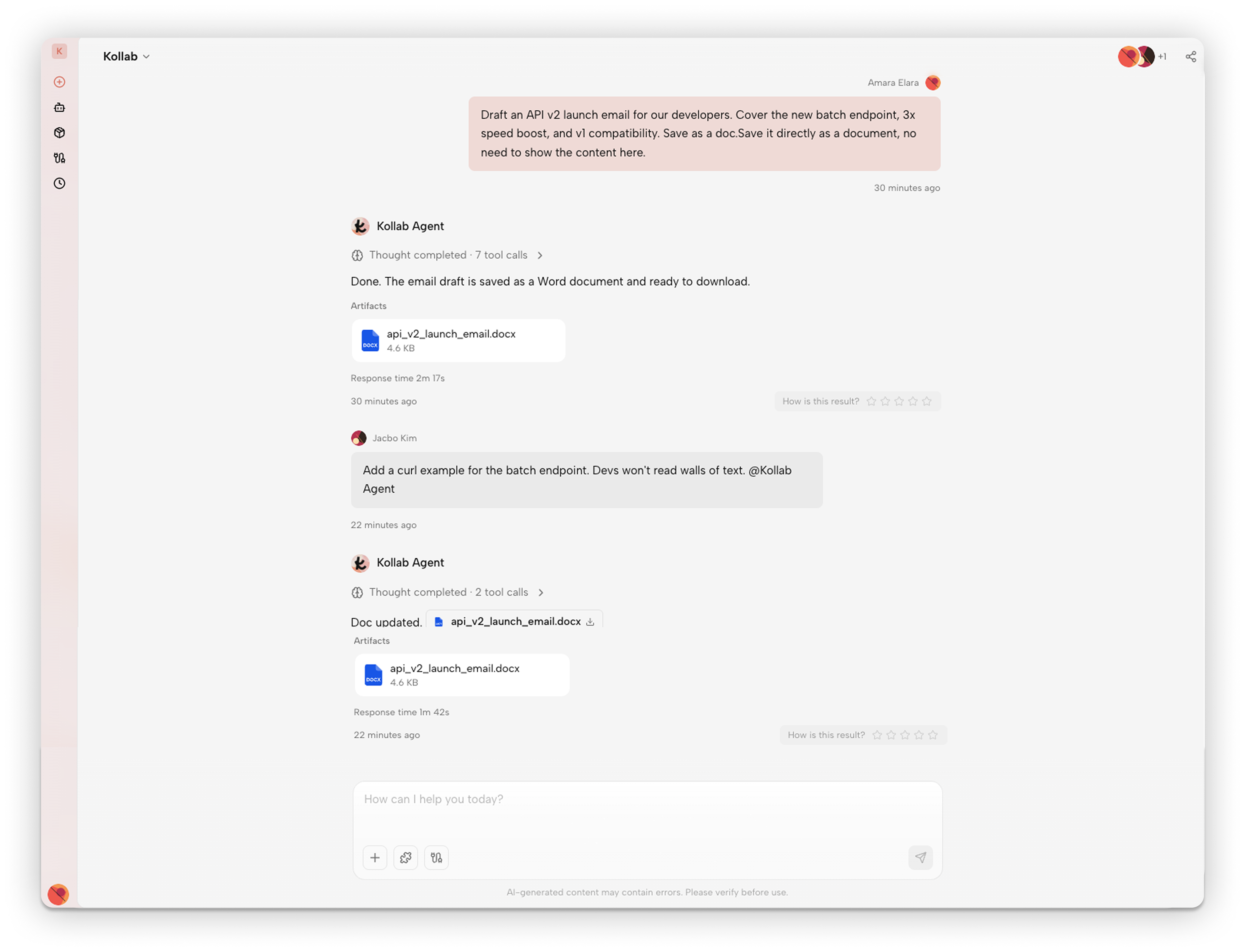
All'interno delle dimensioni Project e Task di Kollab, un agente AI non è più solo un semplice script in background, ma un "compagno digitale" che combatte al tuo fianco. La svolta principale di Kollab risiede nel suo supporto a più membri per entrare nello stesso Task simultaneamente per impegnarsi indialogo e collaborazione in tempo realecon l'agente AI. Puoi vedere in prima persona come l'agente chiami Skills per gestire gli affari, e puoi interrompere, correggere o fornire informazioni aggiuntive in qualsiasi momento durante la conversazione. Questo modello di interazione profonda trasforma lo spazio Kollab in una vera sala operativa, dove anche segmenti complessi che coinvolgono partner esterni possono raggiungere un consenso e completare la consegna all'interno di una sessione condivisa.
Interazione con bot incorporato
Crediamo che gli strumenti dovrebbero adattarsi alle abitudini umane, e non il contrario. Kollab può collegarsi ampiamente con varie piattaforme di comunicazione principali, inclusi strumenti popolari come Slack e Telegram. Basta emettere comandi all'interno dei tuoi canali di comunicazione esistenti, e Kollab chiamerà silenziosamente il tuo Skills preimpostato in background per gestire attività complesse attraverso più piattaforme. Ciò significa che il tuo team non dovrà mai lasciare i loro strumenti di chat abituali per far funzionare Kollab con compiti impegnativi. Ad esempio, se invii "aiutami a organizzare il feedback degli utenti di oggi" in Slack o Telegram, Kollab completerà automaticamente l'intero processo in background.
La Matrice di Capacità Skill e Connector
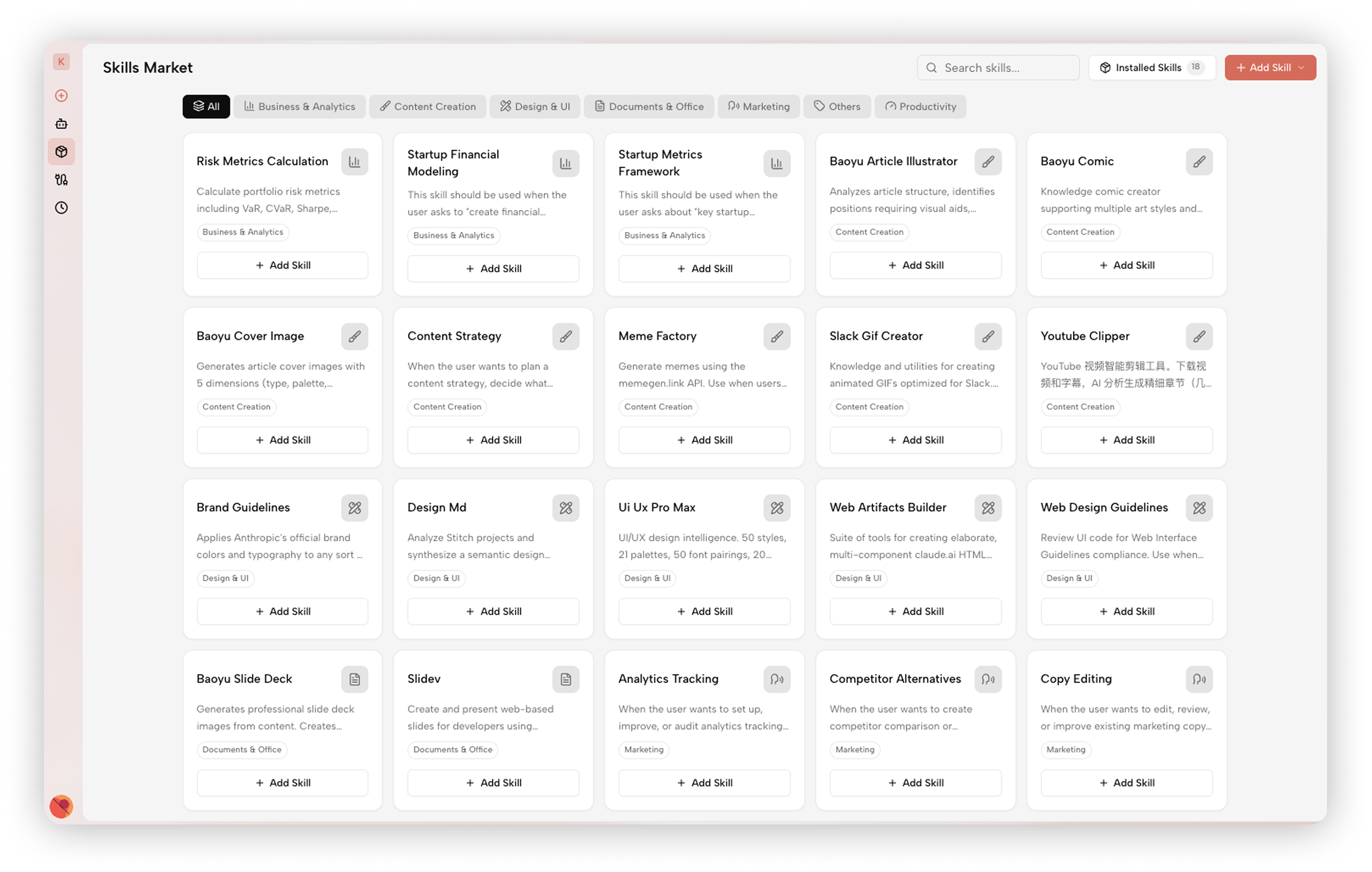
- Skill: Puoi incapsulare la logica aziendale più centrale e privata del tuo team in Skills all'interno di Kollab. Che si tratti di auditing della conformità finanziaria automatizzato o di distribuzione di contenuti multicanale, una volta definito in Kollab, è disponibile per l'intero team su richiesta.
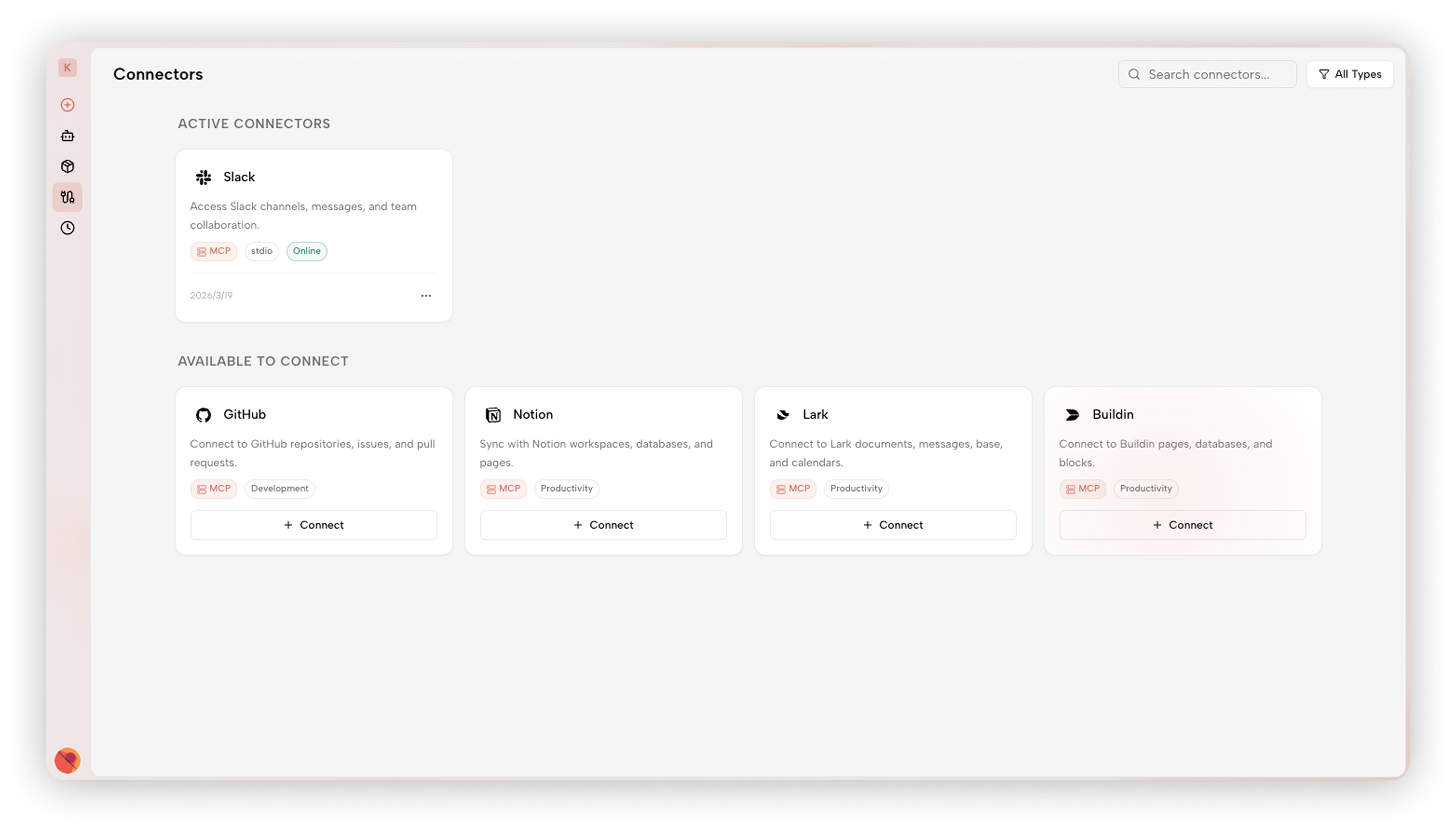
- Connector: Kollab può rapidamente collegarsi al tuo CRM esistente, ai database e a vari software d'ufficio tramite Connectors. Questo permette al AI all'interno di Kollab di leggere dati in tempo reale e agire, invece di fare inferenze basate su informazioni obsolete.
Memoria Intelligente e Tasks Programmato
Memoria: Mentre la maggior parte dei AI oggi possiede le basifunzioni mnemoniche, all'interno di Kollab, questa memoria è strutturata e condivisa tra il team. Kollab consente agli agenti di AI di avere capacità di memoria a lungo termine, permettendo a Kollab di mantenere la continuità cognitiva in progetti complessi che durano mesi e di ricordare preferenze aziendali specifiche.
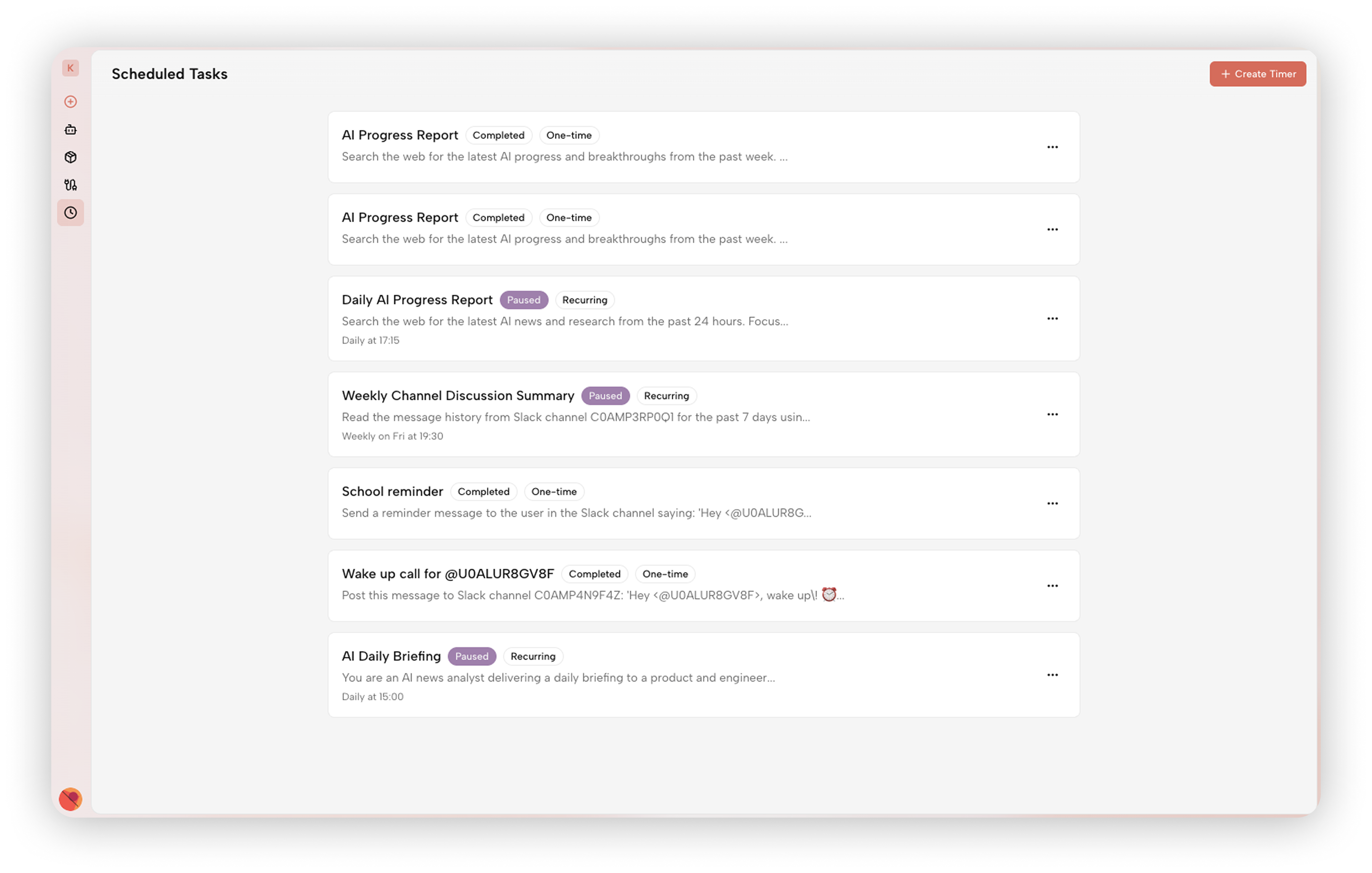
Programmato Tasks: Attraverso il meccanismo di attivazione automatizzato di Kollab, che si tratti di un riepilogo giornaliero attraverso i fusi orari o del monitoraggio periodico delle tendenze di mercato, Kollab consegnerà con precisione all'orario stabilito senza alcun promemoria umano.
3. Come iniziare la tua rivoluzione nell'esecuzione
Il percorso verso l'efficienza è in realtà piuttosto chiaro. Suggerisco di iniziare con i seguenti passaggi:
Identificare i punti dolenti ad alta frequenza: Trova un processo che sia il più frequente, il più dipendente dalla ripetizione manuale e il più soggetto a errori.
Mappa il percorso in Kollab: Elimina il superfluo e traccia onestamente il flusso di ogni passaggio all'interno di Kollab, chiarendo chi è responsabile dell'esecuzione e chi è responsabile dell'approvazione.
Potenzia il tuo agente con il Skills specifico: Configurare il corrispondenteKollab Skillsper il tuo agente e collegare il necessarioInterfacce Connectorper conferirle capacità operative. Ad esempio, un team può trasformaresegnalazioni di bug in problemi GitHub, esegui unpipeline di contenuti automatizzata, o impostare un ricorrenteleader di pensiero che monitora Workflow.
Affina attraverso la pratica: Utilizzare i meccanismi di feedback e di memoria di Kollab per ottimizzare continuamente le prestazioni di AI durante ogni esecuzione.
Considerazioni finali:
Sullo sfondo dell'ondata globale AI, la competitività principale di un'impresa sta passando da "quanto informazioni possiedi" a "la velocità di esecuzione del business." Il motivo per cui enfatizziamo così tanto l'"eseguibilità" in Kollab è che in questa era di sovraccarico di informazioni, solo output certi e percepibili possiedono valore commerciale.
Entrare a far parte di Kollab non significa solo scegliere un nuovo software; significa scegliere una filosofia di lavoro orientata al futuro: trasformarsi da un noioso "gestore di processi" a un vero "direttore d'impresa." Lasciamo che siano Kollab a occuparsi dei compiti che consumano energia, e restituiamo a noi stessi la creatività più preziosa e il potere decisionale.