Votre analyste AI World Cup : 32 équipes sans code

Utilisez Kollab AI Agent pour analyser les données de 2026 World Cup, suivre les groupes et créer des previews sans code.
Le2026 FIFA World Cupest le plus grand tournoi de l’histoire : 48 équipes, 16 groupes, 104 matches et plus de 1 400 joueurs représentant six continents. Trois nations hôtes (les USA, Canada et Mexico) partagent une scène qui n'a jamais été aussi imprévisible. Chaque groupe a une histoire. Chaque journée de match produit un nouveau scénario qui réécrit le récit de la veille.
Si vous êtes un créateur de contenu, un chercheur sportif ou simplement un fan de football dévoué qui souhaite publier quelque chose de plus intelligent qu'une prise de vue générique, vous êtes confronté au même problème : les données existent, mais leur synthèse prend des heures. Au moment où vous aurez comparé les classements avecexpected goals, vérifié les rapports sur les blessures et lu suffisamment de contexte pour se faire une idée réelle – le cycle de l'actualité des jours de match a déjà évolué.
Voici comment les gens utilisent le AI Agents de Kollab pour réduire ce cycle d'heures en minutes, sans toucher à un spreadsheet ni écrire une seule ligne de code.
⚽ Tournoi en un coup d'œil : 48 équipes · 16 groupes · 104 matchs · Plus de 1 400 joueurs · 3 nations hôtes · 40 jours du coup d'envoi à la finale
Le scénario
Disons que c’est la deuxième journée de la phase de groupes. Vous souhaitez rédiger une répartition de Group A - classement actuel, quelle équipe est surperformante par rapport à sonClassement FIFA, des leaders statistiques et une prédiction avec raisonnement pour savoir qui avance. Le genre de pièce qui prend 2 à 3 heures à un bon analyste de football pour être correctement rassemblée.
L'ancien flux de travail :OuvrirStatistiques officielles du match de FIFA, copiez les nombres dans un spreadsheet, faites une référence croisée avec unagrégateur de statistiques de football comme FBref, lisez trois articles en avant-première pour le contexte, puis écrivez à partir de zéro.
Le flux de travail Kollab :
Ouvrez une nouvelle tâche dans votre Kollab workspace - aucune configuration, aucune configuration requise
Tapez ce que vous voulez en langage clair : "Analysez Group A après la deuxième journée. Tirez le classement, identifiez qui est surperformant par rapport au classement FIFA et donnez-moi une prédiction avec raisonnement."
Le Agent effectue une recherche sur le Web, extrait les données de match actuelles et synthétise une analyse structurée : classements, leaders statistiques, résultats clés et prédiction raisonnée avec chiffres à l'appui.
Examinez le résultat, ajoutez votre point de vue et votre voix, et publiez ou exportez directement à partir du même workspace
Durée totale : moins de 10 minutes. Pas de changement d'onglet, pas de copier-coller, pas de spreadsheet. Le Agent gère la récupération et la synthèse des données ; vous gérez le jugement éditorial et votre propre voix.

📋 Ce que produit réellement le Agent
Group A · Analyse de la 2e journée
Classement : Allemagne 6 pts | Japon 3 pts | Maroc 3 pts | Costa Rica 0 pt
Constatation clé : le Maroc surperforme son classement FIFA (#14) – gagnant sur l'efficacité des coups de pied arrêtés et la structure défensive malgré la génération de moins d'occasions de jeu ouvert (xG : 1,4 générés contre 0,8 autorisés sur 2 matches).
Leader statistique : Allemagne — 14 tirs cadrés, 67 % de moyenne de possession, taux de réussite de presse le plus élevé du groupe.
Prédiction : l’Allemagne et le Maroc avancent. Le Japon a besoin d'un résultat contre l'Allemagne lors de la troisième journée pour rester en vie – peu probable compte tenu de la domination allemande, mais mathématiquement possible avec une victoire et une différence de buts favorable.
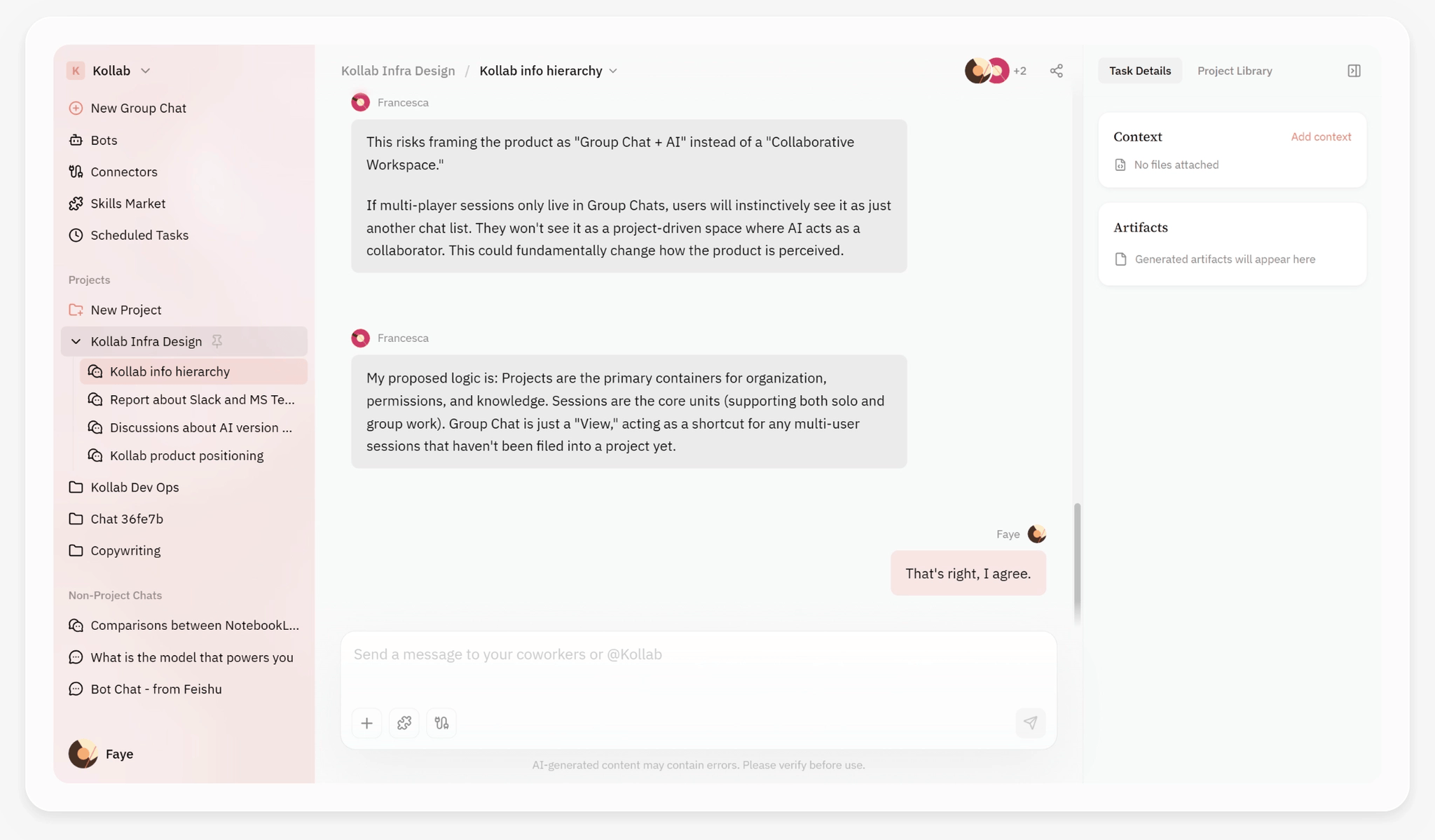
Voici à quoi ressemble un Kollab workspace dans la pratique : une tâche organisée dans le cadre d'un projet, avec une IA répondant en ligne aux côtés de votre équipe. Le panneau contextuel de droite conserve les artefacts et les fichiers joints au même endroit. Vous décrivez l’analyse dont vous avez besoin en texte brut ; le Agent gère la recherche et renvoie une sortie structurée que vous pouvez modifier directement dans le fil de discussion.
Ce que vous pouvez réellement construire
Voici quatre flux de travail spécifiques que les utilisateurs de Kollab exécutent actuellement pendant le tournoi :
🗂️ Générateur d'aperçu de matchNourrissez le Agent d'un match – « Argentine contre Maroc, Groupe C » – et demandez un aperçu couvrant l'historique des face-à-face, la forme récente, les confrontations des joueurs clés et un XI prévu. Ce que vous obtenez en retour : les résultats récents des deux camps, le récit tactique qui mérite d'être couvert, les détails des matchs individuels et une composition basée sur des modèles de sélection. Prêt à être publié tel quel ou à utiliser comme dossier de recherche pour un script YouTube, une newsletter ou un fil de discussion en direct. Temps d'installation : une phrase.
📊 Suivi de la phase de groupesDemandez à Kollab de créer un document « état des lieux » qui met à jour chaque journée de match avec le classement actuel, la différence de buts et les scénarios d'élimination en direct. Vous pouvez être précis : « Suivez ces 4 groupes – donnez-moi le classement après chaque journée, quelles équipes sont mathématiquement éliminées et ce dont chaque équipe a besoin lors de la troisième journée pour avancer. » Enregistrez-le en tant que compétence réutilisable et il fonctionnera de la même manière à chaque tour avec une seule invite. Quarante jours de contenu de phase de groupes, organisés.
🌟 Recherche sur les joueurs"Donnez-moi tout ce que j'ai besoin de savoir surLamine Yamalavant la phase à élimination directe »- le Agent extrait le contexte de carrière, les statistiques de ce tournoi (buts, passes décisives,portages progressifs, contribution pressante), une couverture médiatique pertinente et les deux ou trois moments qui définissent son parcours de tournoi jusqu'à présent. Recherche de fond pour une pièce longue en moins de 3 minutes. Fonctionne aussi bien pour le joueur de 23 ans que personne ne couvre encore que pour le joueur sur lequel tout le monde écrit déjà.
🎯 Moteur de prédictionComparez deux équipes sur 8 à 10 dimensions statistiques : taux de possession, tirs cadrés pour 90,expected goalsdifférentiel, hauteur de ligne défensive,intensité de pression (PPDA), le taux de victoire en duel aérien, l'indice de menace sur coup de pied arrêté, le pourcentage d'arrêt du gardien de but et la tendance récente de la forme - et ayez la Agent raison pour laquelle l'équipe a l'avantage structurel. Ce ne sera pas toujours vrai. Mais il sera raisonné et cité, ce qui rend le contenu plus intéressant qu'un aperçu instinctif – et donne à votre public quelque chose de spécifique contre lequel lutter.

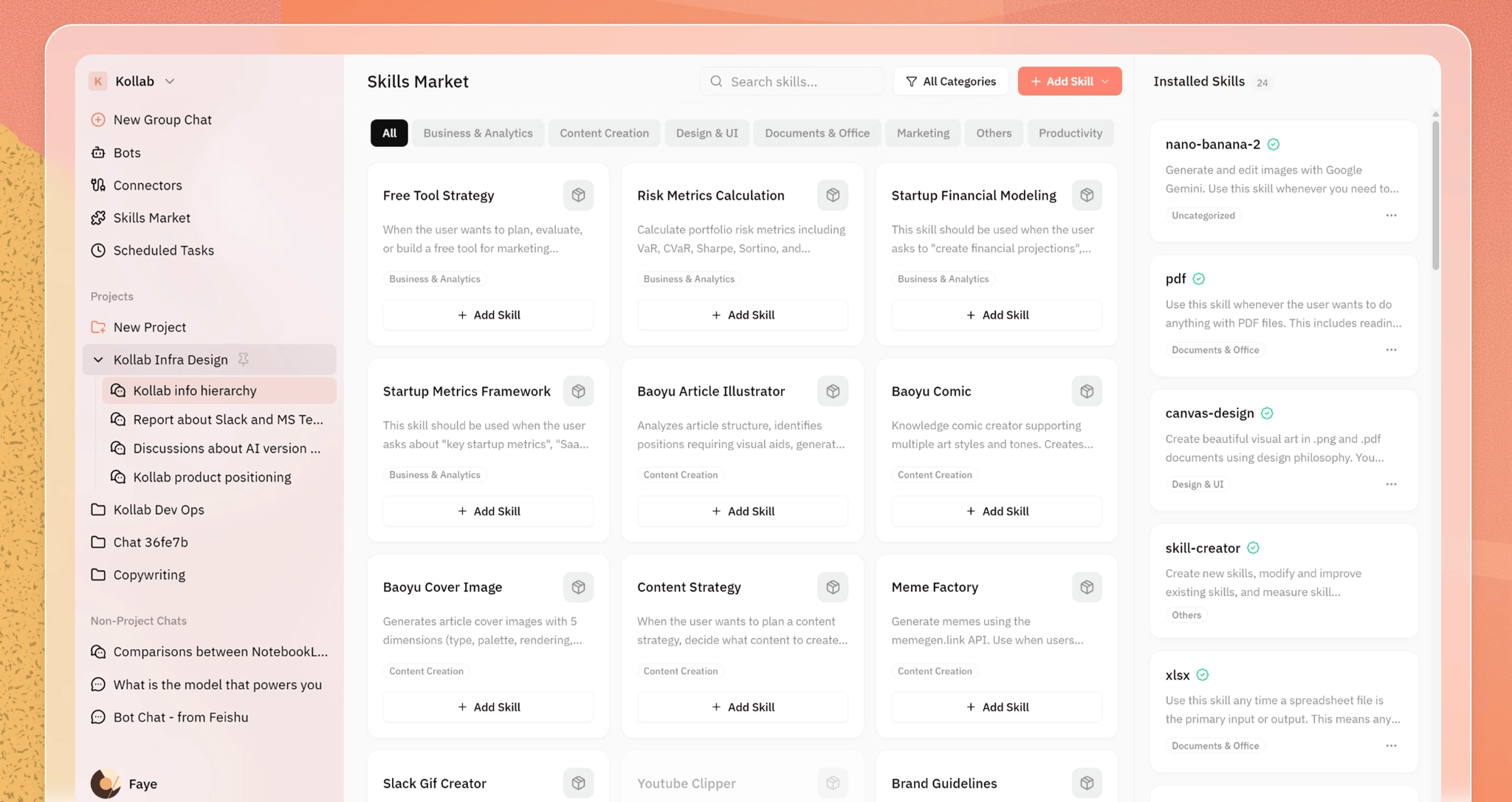
Ces quatre flux de travail constituent un point de départ et non un plafond. Le marché des compétences de Kollab contient des dizaines de fonctionnalités spécialement conçues, de la stratégie de contenu et de l'illustrateur d'articles à la modélisation financière des startups et aux directives de marque. Chaque compétence est un flux de travail préconfiguré que le Agent applique automatiquement ; en ajouter un prend quelques secondes. Vous n’écrivez pas d’invites à partir de zéro à chaque fois.
Pourquoi la fonction de mémoire est importante ici
Le World Cup dure 40 jours. C'est long pour maintenir le contexte en vie lors de la phase de groupes, des huitièmes de finale, des quarts de finale, des demi-finales et d'une finale. À chaque session, les intrigues changent. Les équipes atteignent leur apogée ou s'effondrent. Les favoris d'avant-tournoi justifient ou non la facturation.
La mémoire de Kollab maintient le contexte de votre projet en vie au fil des sessions. Ouvrez votre World Cup workspace le jour 30 et le Agent se souvient de ce que vous avez établi le jour 1 : quelles équipes vous suivez, quels angles vous avez déjà publiés, quelles prédictions vous avez faites et si elles ont tenu. Supposons que le cinquième jour, vous identifiiez que le taux de conversion défini au Maroc est sous-évalué par la plupart des analystes. Le jour 22, vous ouvrez le workspace et demandez : "Que s'est-il passé avec les coups de pied arrêtés du Maroc ? Cet angle a-t-il tenu le coup ?" Le Agent connaît votre thèse établie et vous donne une mise à jour appropriée, pas un récapitulatif générique.
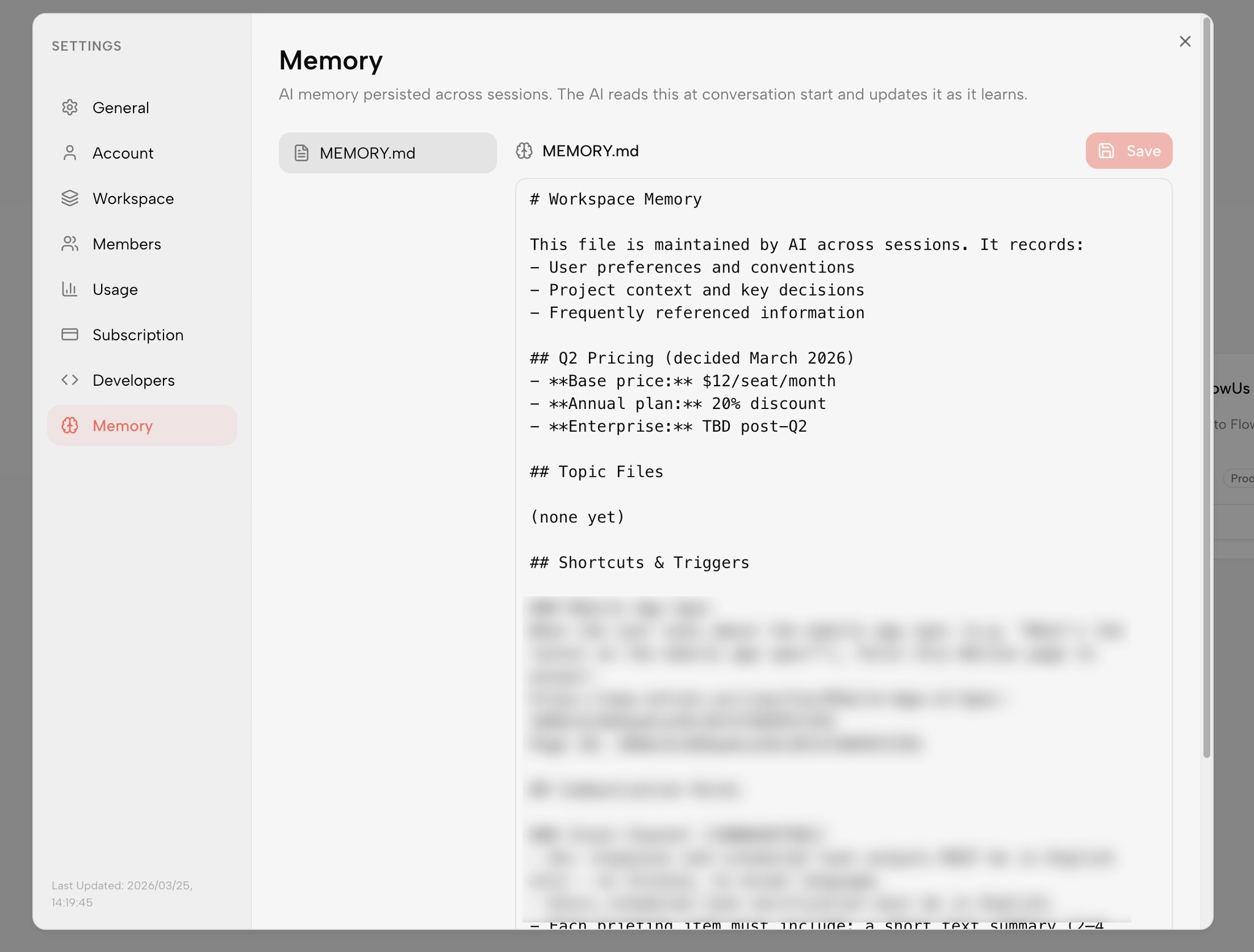
La mémoire de Kollab est un fichier de connaissances structuré qui persiste à chaque session : il ne s'agit pas d'une transcription de discussion, mais d'un enregistrement actif que Agent lit au début de chaque conversation. Vous pouvez l'inspecter et le modifier directement dans les paramètres. Lorsque vous ajoutez une note contextuelle ou que le Agent apprend une nouvelle convention, il la réécrit automatiquement ici.
Pour les projets de longue durée – et un tournoi en est l’exemple parfait – un contexte persistant fait la différence entre un outil que vous réinitialisez à chaque session et un collègue IA qui connaît réellement votre rythme. Aucun autre outil d'écriture d'IA ne conserve ce type de mémoire de projet par défaut.
Aucun code requis. Sérieusement.
💬 Invites réelles que les gens utilisent réellement :
• « Comparez les chiffres de contrôle des milieux de terrain de la France et du Portugal lors de la phase de groupes » • "Donnez-moi les 3 scénarios que je devrais regarder en quarts de finale" • « Quelles équipes ont le plus surclassé leur classement d'avant-tournoi FIFA ? » • « Écrivez un aperçu de 500 mots de l'Allemagne contre l'Espagne avec les statistiques de possession et le contexte tactique » • « Qui est le plus grand joueur de ce tournoi jusqu'à présent ? » • "Résumez ce qui s'est passé dans le groupe B et prédisez les résultats des huitièmes de finale"
Ce n'est pas un workflow pour les data scientists. Vous ne configurez pas d'API, ne configurez pas de webhooks, n'écrivez pas de code SQL et ne touchez pas à une seule formule spreadsheet. Vous décrivez ce que vous voulez dans un langage simple et le Agent gère la recherche, la récupération et la synthèse. La complexité est invisible – et c’est précisément le problème.
Le résultat est un texte modifiable, directement dans votre workspace. Le Agent vous donne du matériel structuré sur lequel travailler : une base factuelle, des chiffres à l’appui et une ligne directrice logique. Vous ajoutez votre voix, votre opinion et votre cadrage. Le résultat est plus rapide à produire que tout ce que vous construirez manuellement – et il ne se lit pas comme si une machine l’avait écrit seule, car c’est vous qui façonnez le montage final.
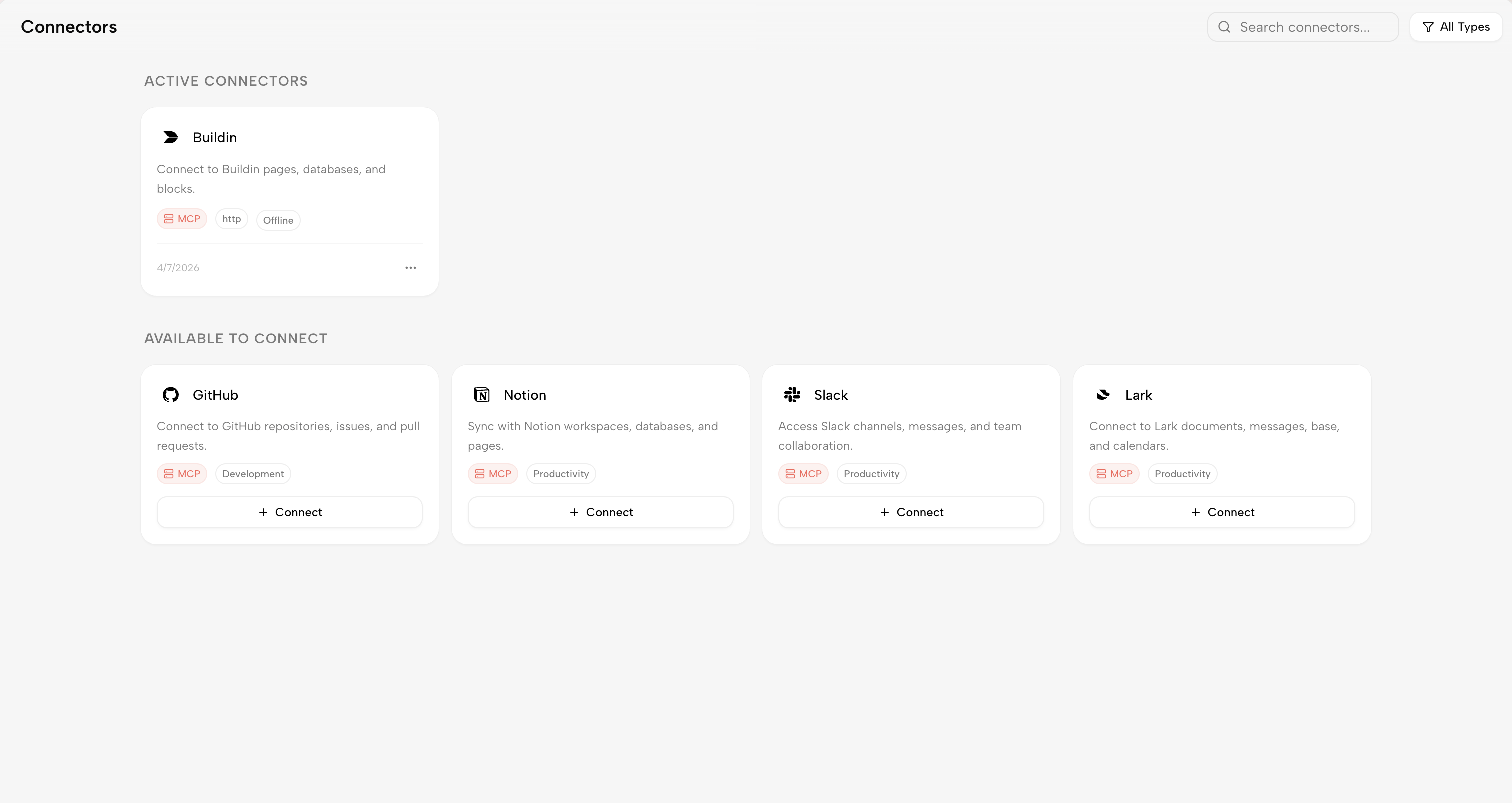
Pour la récupération des données, le panneau Connecteurs de Kollab rend littérale la revendication « pas de code ». GitHub, Notion, Slack, Lark — chacun se connecte en un seul clic, sans clé API ni flux d'authentification à gérer. Lorsque vous demandez au Agent d'extraire des données, il interroge les connecteurs actifs et renvoie le résultat directement dans votre workspace.
Essayez-le pendant le tournoi
Kollab est gratuit au démarrage. Si vous couvrez le World Cup — en tant que blogueur, rédacteur de newsletter, équipe de contenu sportif ou simplement fan de football dévoué qui souhaite penser en public — créez un workspace en moins de 5 minutes. Choisissez un groupe ou une équipe. Posez une question au Agent. Voyez ce qui revient. Le tournoi est en direct et chaque journée de match est une nouvelle opportunité de publier quelque chose que votre public ne peut obtenir nulle part ailleurs.